On this page
The gap between slats decides how a screen looks and what it does. Too tight and it reads as a solid wall, too wide and you can see straight through. Uneven gaps are worse: the odd one at the end is the first thing people notice.
This guide covers the slat sizes and gaps most screens use, how to choose between privacy and airflow, and the simple sum that makes every gap come out the same.
What you need to know
- 65x16 and 90x16 aluminium are the most common slat sizes.
- 9 mm is the usual off-the-shelf gap. 5 mm is near solid. 20 mm lets plenty of air and light through.
- Work out the slat count from the width, round it, then work back to the real gap.
- Decide early if the end slats sit hard against the frame or get the same gap as the rest.
- Most slat systems want a support about every 1.8 m.
What size slats are most common?
Aluminium slats are sold by face width and thickness. The face is what you see. The thickness is how deep the slat is, usually 16 mm. Most are hollow, with a 1.2 mm or so wall and sometimes a web down the middle for stiffness.
| Slat | Where you see it |
|---|---|
| 50x16 | Small screens, window screens, finer look |
| 65x16 | The everyday size for fences, screens and gates |
| 90x16 | Bolder look, fewer gaps on wide screens |
| 100x16 | Feature screens and big runs |
Wider slats need fewer gaps to cover the same height, so a 90 mm screen looks calmer than a 65 mm one at the same gap. Check the real face width with your supplier. Some "90 mm" slats are 90 x 16.5, and half a millimetre adds up over 20 slats.
What gap should you leave between slats?
Most screens use one of these gaps:
- 5 mm: close to solid from straight on. Good for a neighbour's window or a bin area.
- 9 mm: the common ready-made gap. Several off-the-shelf slat panels and systems in Australia are sold at 9 mm.
- 10 mm: the round number a lot of custom screens use. It looks the same as 9 mm to most people.
- 20 mm: more open. You see shapes and movement through it, and it lets plenty of air and light through.
There is nothing magic about these. They are just the numbers suppliers stock spacers and panels for. Any gap works as long as it is the same all the way up.
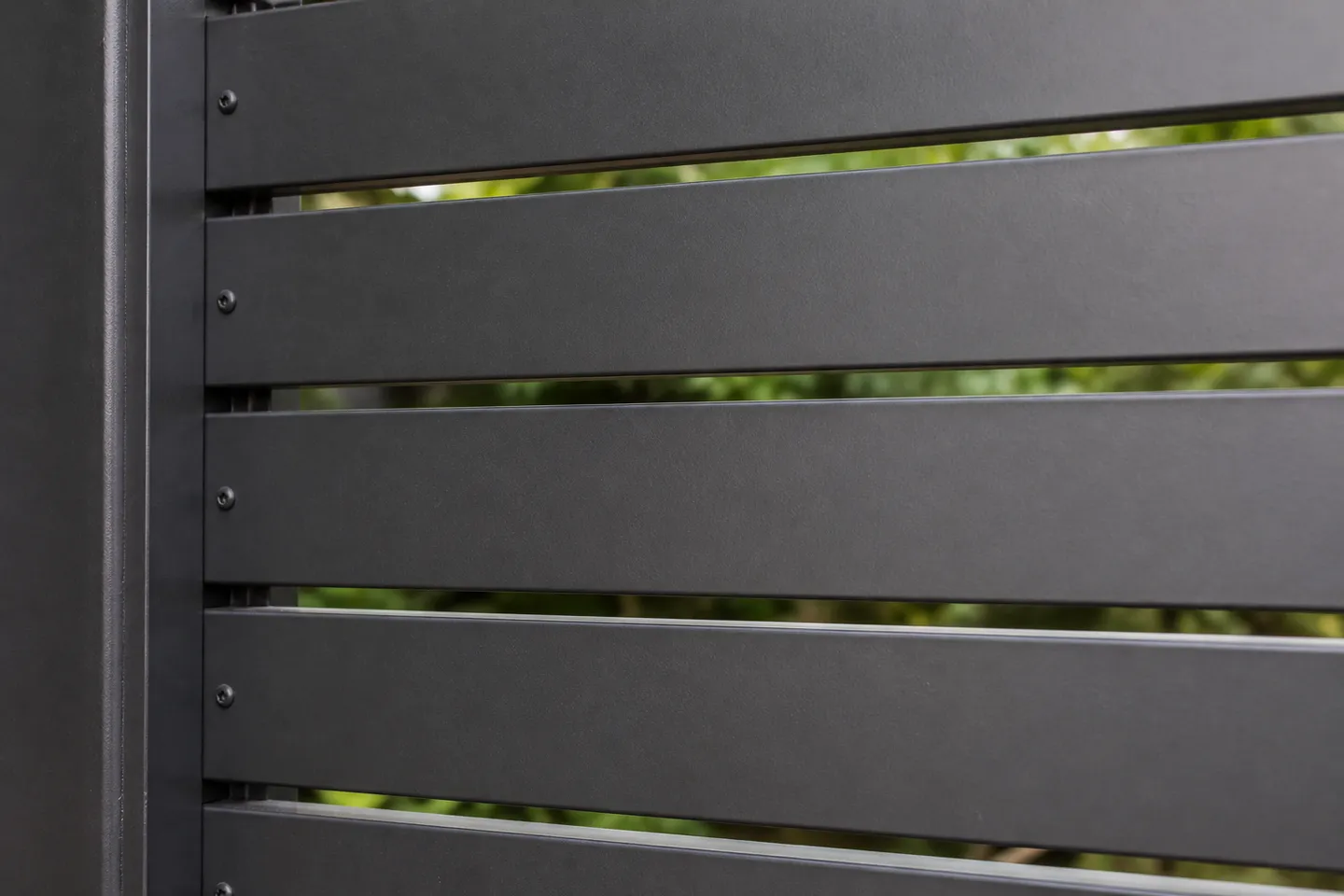
Privacy or airflow: how do you choose the gap?
A simple way to compare gaps is the open area: how much of the screen is gap. It is the gap divided by the slat width plus the gap.
| Slat and gap | Open area | What it feels like |
|---|---|---|
| 65 slat, 5 mm gap | About 7% | Near solid |
| 90 slat, 10 mm gap | About 10% | Private, calm look |
| 65 slat, 9 mm gap | About 12% | Private from most angles |
| 90 slat, 20 mm gap | About 18% | Semi-private |
| 65 slat, 20 mm gap | About 24% | Open, lots of airflow |
Open area is only part of it. Angle matters more than people expect. A screen that looks solid from across the yard can be easy to see through if you stand close and look along it. Dark slats against a bright background also make gaps stand out.
For a pool pump or an air conditioner, go wider so the machine can breathe. For a neighbour's window, go tight. For a screen on a windy site, a wider gap takes some load off the posts.
How do you work out even spacing to fit a width?
You almost never get a whole number of slats at your exact gap. So you pick the nearest whole number of slats, then let the gap move a little to suit. Here is how, with the same gap at both ends:
Work out the rough slat count
Slats = (space minus gap) ÷ (slat width plus gap). For an 1,800 mm high screen with 65 mm slats and a 9 mm gap: 1,791 ÷ 74 = 24.2.
Round to a whole slat
Round to the nearest whole number. 24.2 becomes 24 slats.
Work out what is left
24 slats × 65 mm = 1,560 mm. The space minus the slats is 1,800 minus 1,560 = 240 mm of gap to share out.
Share it across the gaps
With a gap at each end, there is one more gap than slats: 25 gaps. 240 ÷ 25 = 9.6 mm per gap.
The same sum for an 1,800 mm space with other sizes:
| Slat | Target gap | Slats | Real gap |
|---|---|---|---|
| 65x16 | 5 mm | 26 | 4.1 mm |
| 65x16 | 9 mm | 24 | 9.6 mm |
| 65x16 | 10 mm | 24 | 9.6 mm |
| 65x16 | 20 mm | 21 | 19.8 mm |
| 90x16 | 10 mm | 18 | 9.5 mm |
| 90x16 | 20 mm | 16 | 21.2 mm |
If the real gap must never go under your target, round the slat count down instead of to the nearest. The gap gets a bit bigger. If it must never go over, round up.
What about the gaps at the ends?
You have three choices at the ends, and each one changes the sum:
- Same gap at the ends. The first and last slat sit one gap away from the frame or post. One more gap than slats. This is what the table above uses.
- Hard against the frame. The end slats touch the frame top and bottom. One fewer gap than slats, so the gap = (space minus all slats) ÷ (slats minus 1).
- Exact gap, leftover at the ends. Every gap is exactly your number, and whatever is left is split between the two ends.
On a horizontal screen, also think about the bottom. A gap of 50 mm or so above the ground keeps the bottom slat out of wet soil and lets you whipper snip under it. That gap is separate from the slat gaps.
How do you fix the slats?
There are three common ways:
- Screwed to posts. Each slat is screwed to the posts with tek screws, often from behind or through a cover strip so the heads do not show.
- A slat system. The slats slide into a channel on each post, with clip-in spacers that set the gap for you.
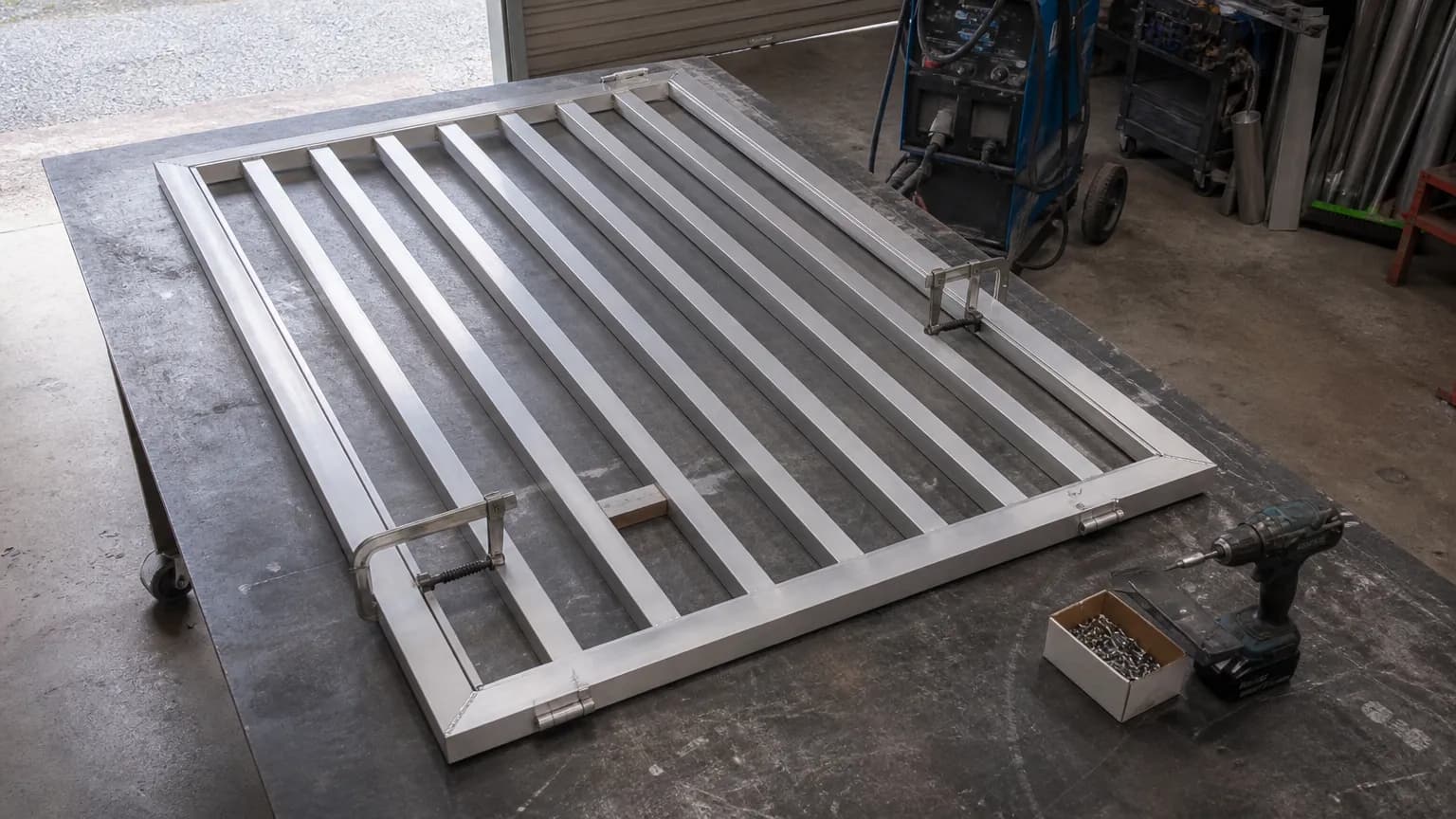
- Welded into a frame. The slats are welded into an aluminium frame in the workshop, and the panel is fixed to posts on site. Stiffest and neatest, and the gaps are locked in.
Long slats sag and rattle. Most suppliers rate their slats to span about 1,800 mm between supports, and some systems go further. Past that, add a post or a centre support. You can also see aluminium slat fence and privacy screen in the glossary.
Should slats run horizontal or vertical?
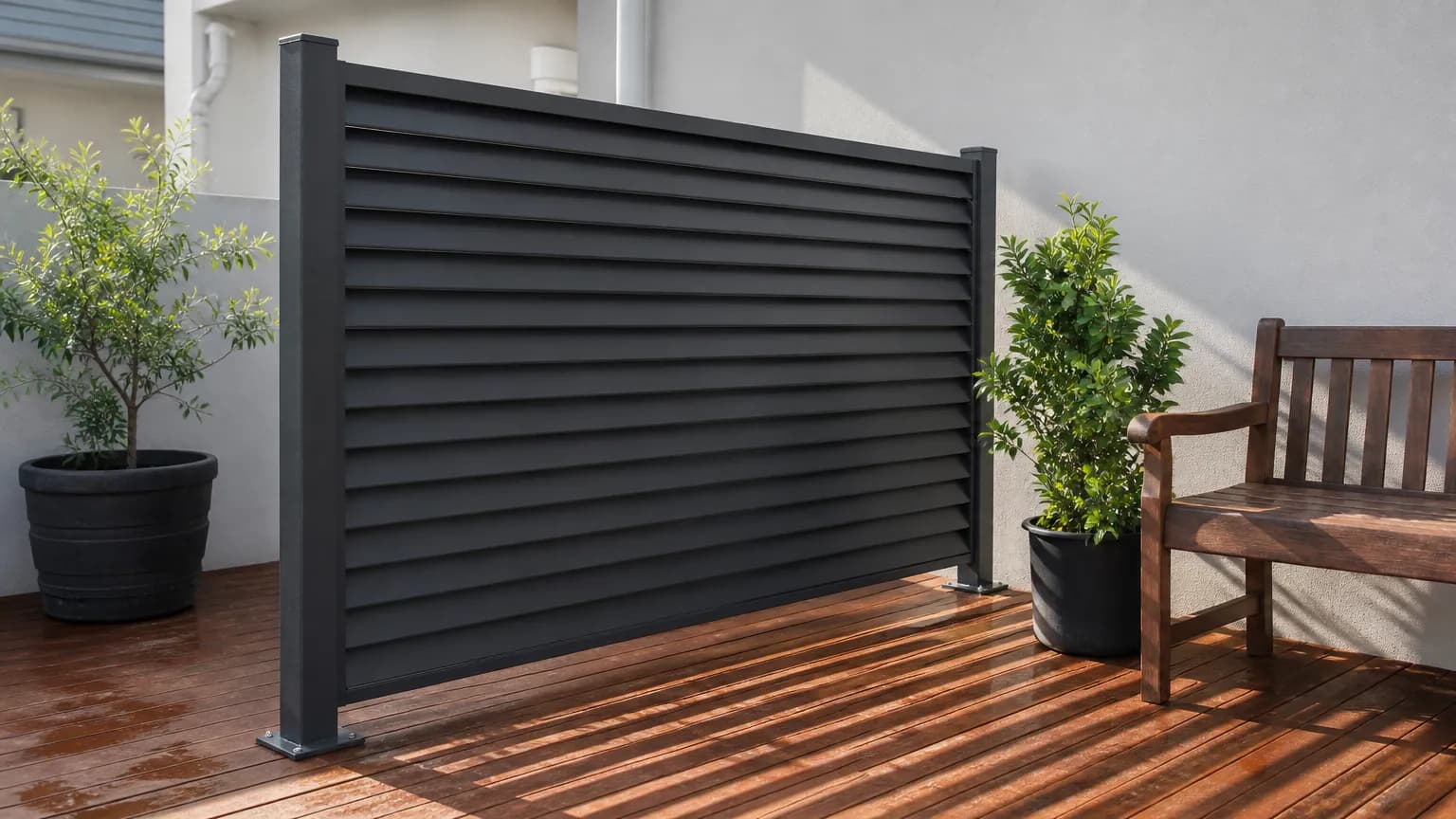
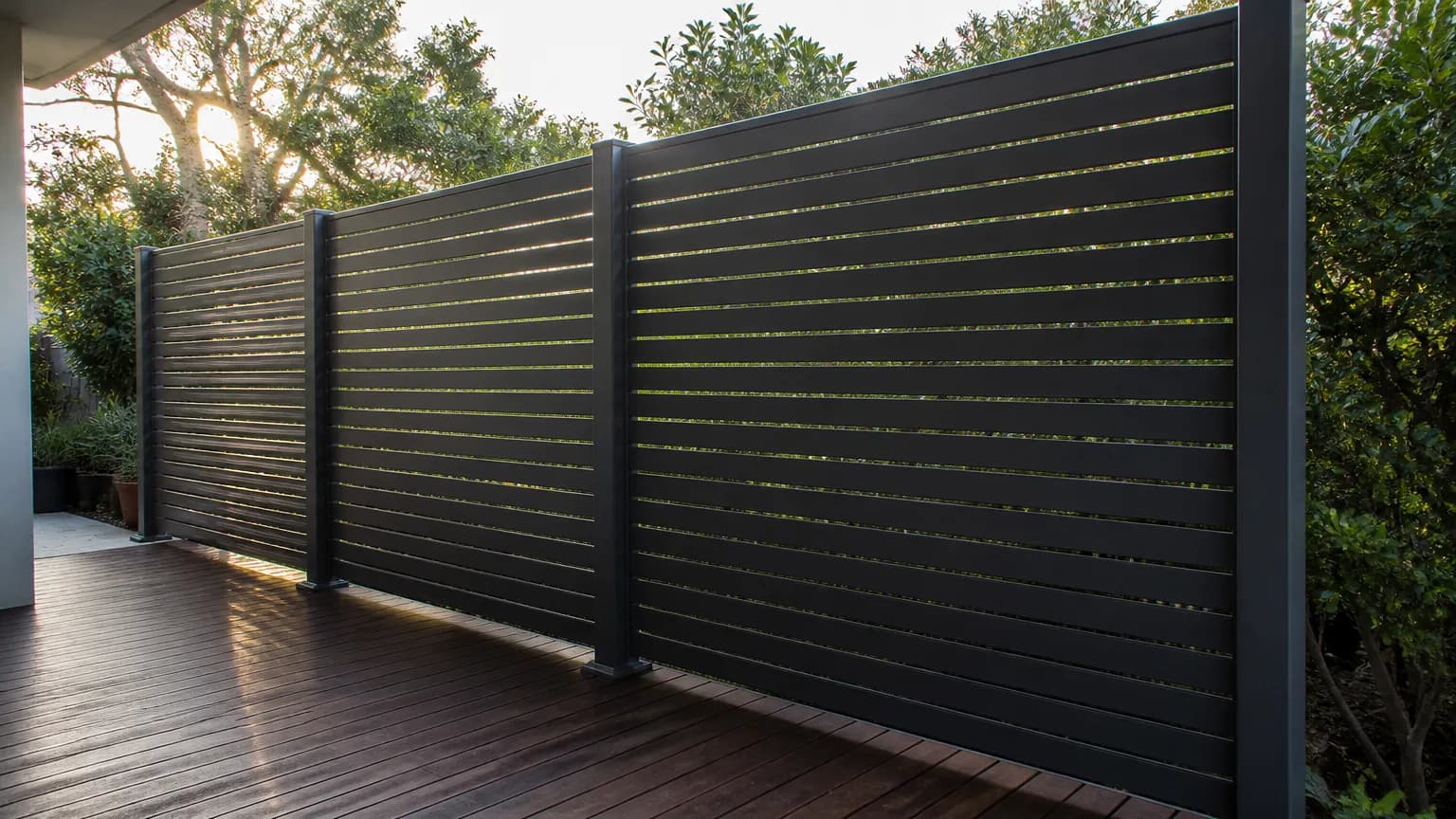
Horizontal is the common look on modern homes. It makes a run look longer and lower. The gap is set up the height, so the sum above uses the screen height.
Vertical slats make a screen look taller. The gap is set across the width, so the same sum uses the width instead. Vertical slats also shed water and dirt better, because nothing sits on top of them.
Either way, the maths does not change. On a gate, the same sum spaces battens across the leaf, as shown in how to build an aluminium pedestrian gate. For a louvred screen instead of slats, see how to choose louvre blades, and for laying out a fence, see picket fence design.
Common questions
What is the standard gap for aluminium slat fencing?
9 mm is the most common ready-made gap, and some systems also offer about 20 mm. Custom screens can use any gap, as long as it is even from one end to the other.
Can you see through a 10 mm slat gap?
From straight on and a few metres back, not much. Up close or at an angle, you can see shapes and movement. For near-solid privacy, go to 5 mm or add a second layer.
How many slats do I need for a 1.8 m screen?
With 65 mm slats and a 9 mm gap, about 24 slats for 1,800 mm. With 90 mm slats and a 10 mm gap, about 18. Use the sum in this guide for your exact size.
What spacer should I use between slats?
A spacer cut to the real gap from your sum, not the rounded target. Slat systems come with clip-in spacers at set gaps. For welded panels, a block of timber or offcut aluminium works.
Is 65 or 90 mm slat better for a privacy screen?
Both give good privacy at a tight gap. 90 mm slats need fewer gaps for the same height, so the screen looks calmer and is slightly more private. 65 mm is easier to find and handles shorter spans well.
Do wider slat gaps help with wind?
Yes. A wider gap lets more wind through, so the screen and posts carry less load. A 65 mm slat at a 20 mm gap is about a quarter open, against about 7% at a 5 mm gap.
Written by Harry Tolley
Harry builds CAD60 with his dad, who has run a fabrication business for 20 years. We write these guides from what goes wrong in a real shop.