On this page
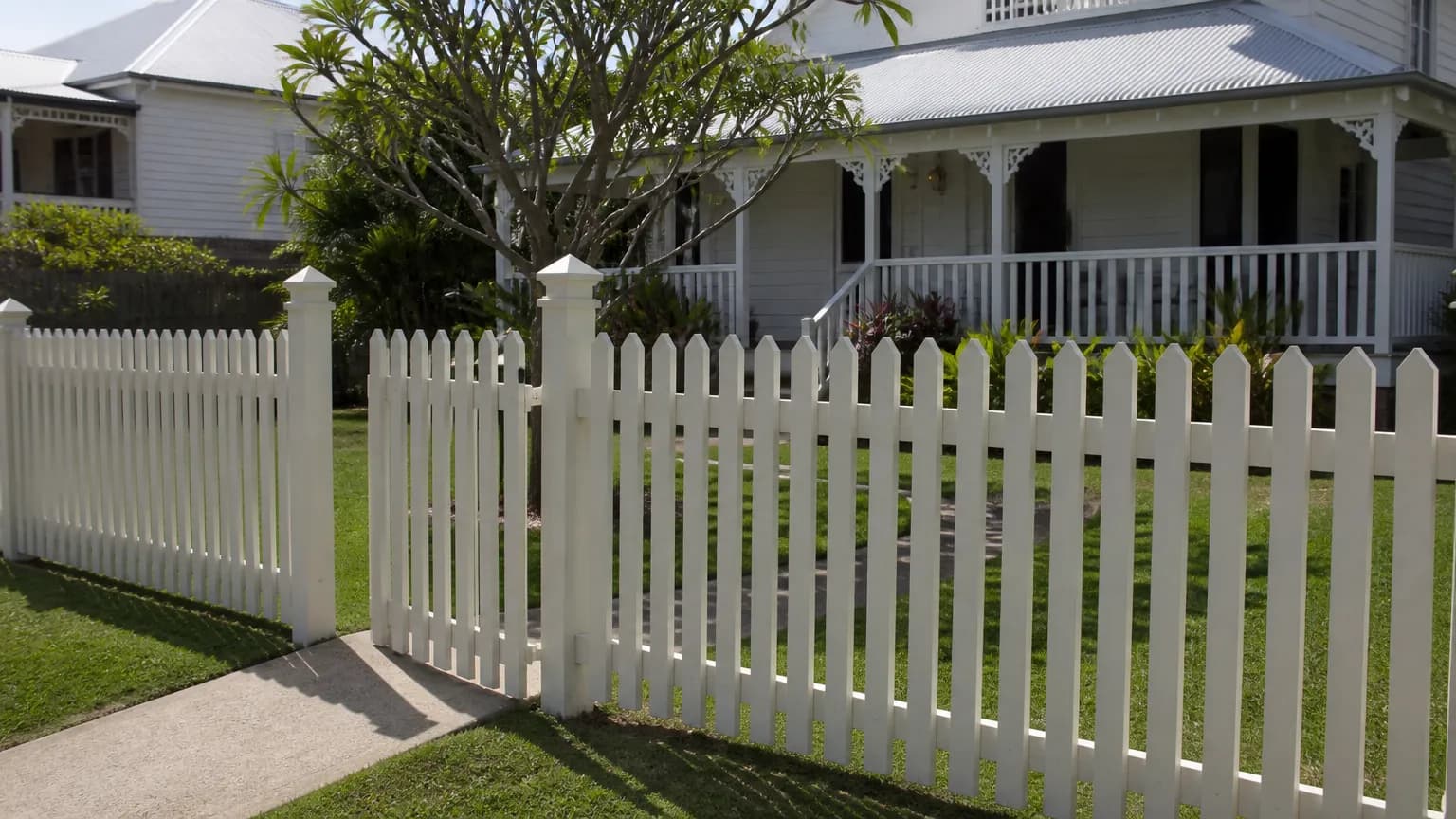
A picket fence is simple. Upright boards, called pickets, fixed to two or three horizontal rails, held up by posts. The design comes down to a few choices: timber or aluminium, the size of the pickets, the gap between them, the shape of the tops, and the rails and posts that carry it all.
Timber is the classic. Aluminium pickets are now just as common on new homes, because they never need painting and come powder coated. This guide covers both, with the sizes shops and suppliers use.
What you need to know
- Timber pickets are usually 70x19 DAR treated pine. Aluminium pickets are often 65x16 tube with a 1.2 mm wall.
- Common gaps are 40 to 50 mm. Work out the exact gap from the post spacing so every gap matches.
- Pointed and dog ear are the everyday timber tops. Aluminium pickets take cast caps or spear tops.
- Timber rails run 70x35 to 90x45. Aluminium rails are commonly 40x40 tube.
- Keep timber posts about 2 m apart and no more than 2.4 m. Aluminium panels set the post spacing for you.
Should you use timber or aluminium pickets?
Both make a good fence. They are built differently, though, and that changes how you design and draw them.
| Timber pickets | Aluminium pickets | |
|---|---|---|
| Typical picket | 70x19 DAR treated pine | 65x16 tube, 1.2 mm wall |
| Rails | 70x35 to 90x45 timber | 40x40x1.6 tube |
| Fixing | Pickets screwed or nailed to the rail face | Welded panels, bracketed to the posts |
| Tops | Cut into the board: pointed, dog ear, round | Cast caps, flat tops or spears |
| Finish | Paint or stain, redone every few years | Powder coat from the factory |
| Best for | Period homes, custom heights and curved tops | New homes, low upkeep, a crisp Hamptons look |
Timber is easy to cut on site and suits a scalloped or arched top. Aluminium comes as welded panels, usually around 2 m wide, so the job is mostly setting posts and bracketing panels between them. If you want a custom size in aluminium, you are welding the panels yourself, and that is where a drawing earns its keep.
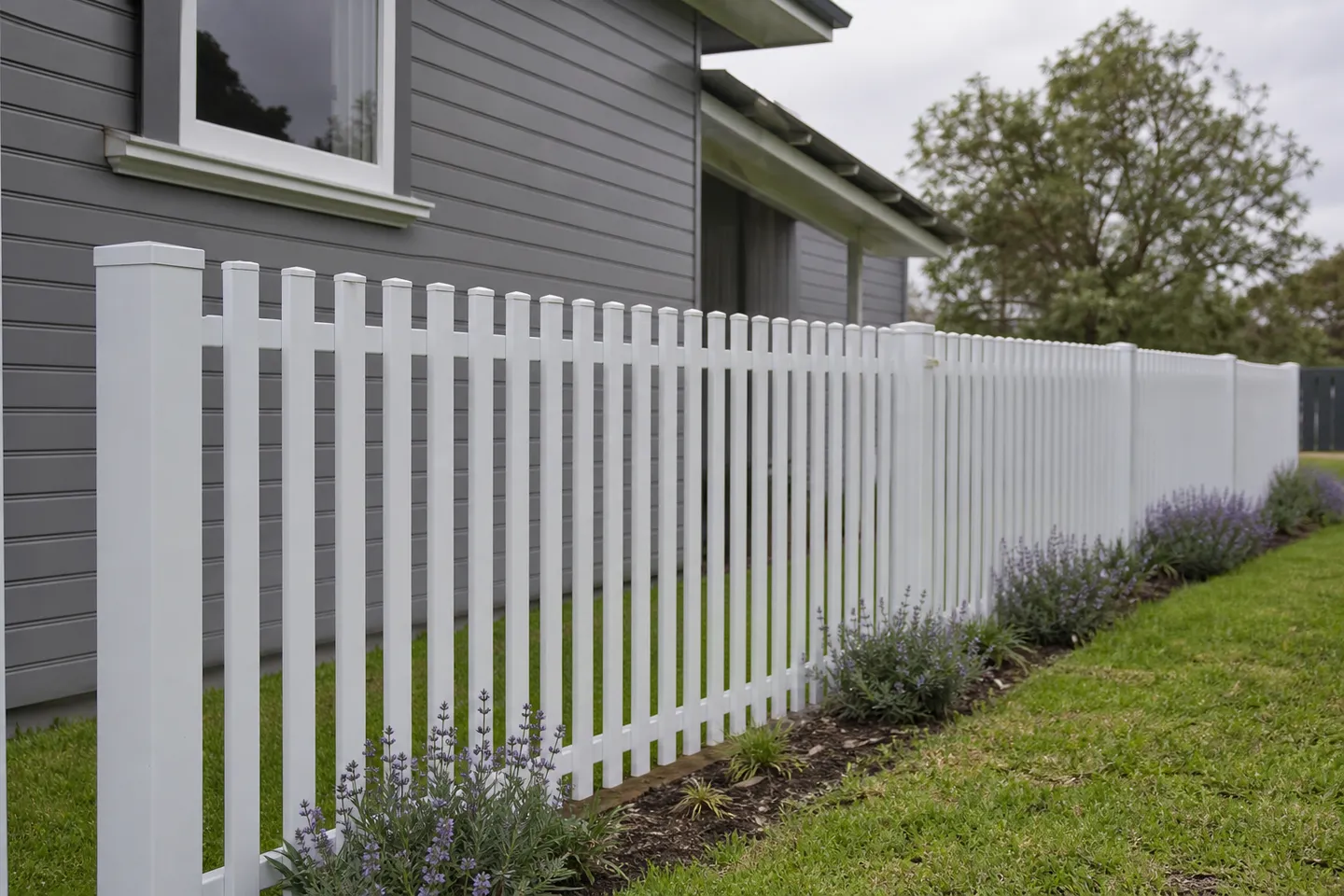
How far apart should pickets be?
Most timber picket fences run a gap of about 25 to 50 mm. Aluminium picket panels with 65 mm pickets commonly use a 40 mm gap. Wider gaps look lighter and use fewer pickets. Tighter gaps look fuller and give more privacy.
Pick a target gap, then work out the real one so every gap in the bay is the same. For a bay with a gap at each end, next to the posts:
- Take one target gap off the space between posts. Divide the rest by the picket width plus the gap. Round down. That is your picket count.
- Take the total picket width away from the space between posts.
- Divide what is left by the picket count plus one. That is your real gap.
Worked example: 2400 mm between posts, 70 mm pickets, 50 mm target gap. Take off one gap to get 2350 mm, then divide by 120. That is 19.6, so 19 pickets. 19 pickets take 1330 mm. That leaves 1070 mm across 20 gaps, so each gap is 53.5 mm.
Close the gap right up and a picket fence turns into a paling fence. Same boards, same rails, no daylight through it. For full privacy, lap the palings in two layers so each cover board overlaps the boards behind it.
Which picket top should you choose?
On a timber picket the head is cut straight into the board with a saw or a router, so the shaft and head are one piece. There are five common shapes.
| Top | The cut | Where it suits |
|---|---|---|
| Pointed (Gothic) | A symmetric point, about 70 mm tall on a 70 mm picket | The classic front fence |
| Dog ear | Both top corners clipped at 45 degrees, flat shoulder between | Quick to cut, common on paling fences |
| Round | A half circle, half the picket width | Softens a front fence |
| French Gothic | A stepped decorative point | Feature fences on period homes |
| Flat | A plain square cut | The plainest and cheapest to cut |
A dog ear is just two straight saw cuts, so it is the fastest shaped top to make. Aluminium pickets are hollow, so their tops are cast caps pushed into the tube or a spear head. The spear-top fence entry covers those.
The line along the tops can also curve. A scalloped top dips toward the middle of each bay, and an arched top rises. The rails stay level. Only the picket lengths change, and every picket in the bay ends up a different length, so the drawing needs a picket length schedule.
How many rails does a picket fence need?
Two rails is normal for a low front fence. Add a third rail, centred between the other two, on a taller fence or a wider bay so the pickets do not bow.
Timber rails are usually 70x35 or 90x45 DAR. The rail has to span from post to post, and a longer span wants a deeper rail. Set the top rail down from the tips, about 200 mm on a typical fence, and the bottom rail about 100 mm up from the picket feet. Rails can butt between the posts or run across the post faces.
Aluminium picket panels commonly use 40x40x1.6 rails, set about 100 mm in from the top and the bottom of the pickets. The pickets are welded to the rails, so the panel holds itself square.
What size posts, and how far apart?
For timber, 100x100 or 125x75 posts are common. Keep them about 2 m apart, and no more than 2.4 m, or the rails start to sag between posts. Concrete them in, around 600 mm deep for a typical front fence. A post cap or a pointed cut on top keeps water off the end grain.
You do not have to use timber posts with timber pickets. A galvanised or aluminium post lasts longer in the ground and still looks right painted to match. CAD60's timber picket models let you pick timber, galvanised or aluminium posts, set in concrete, bolted to a slab or on a footplate.
With aluminium panels, the panel width sets the post spacing. A 2035 mm panel plus brackets puts the posts a little over 2 m apart. 65x65 aluminium posts are a common match. For heavier gate posts, see the gate post size guide.
How is a picket gate built?
A timber picket gate has no welded frame. It is ledged and braced. The same rails the pickets are fixed to act as ledges, and each one carries a hinge. A single diagonal brace, cut from the same timber, runs from the bottom hinge corner up to the top latch corner. It pushes back as the gate tries to drop. Leave the brace off and the latch edge will sag. The brace direction guide explains why it has to run that way.
Ledges for a gate should be at least 90x45, a step up from the fence rails. Hardwood costs more and weighs more, but it holds a wide leaf better than treated pine.
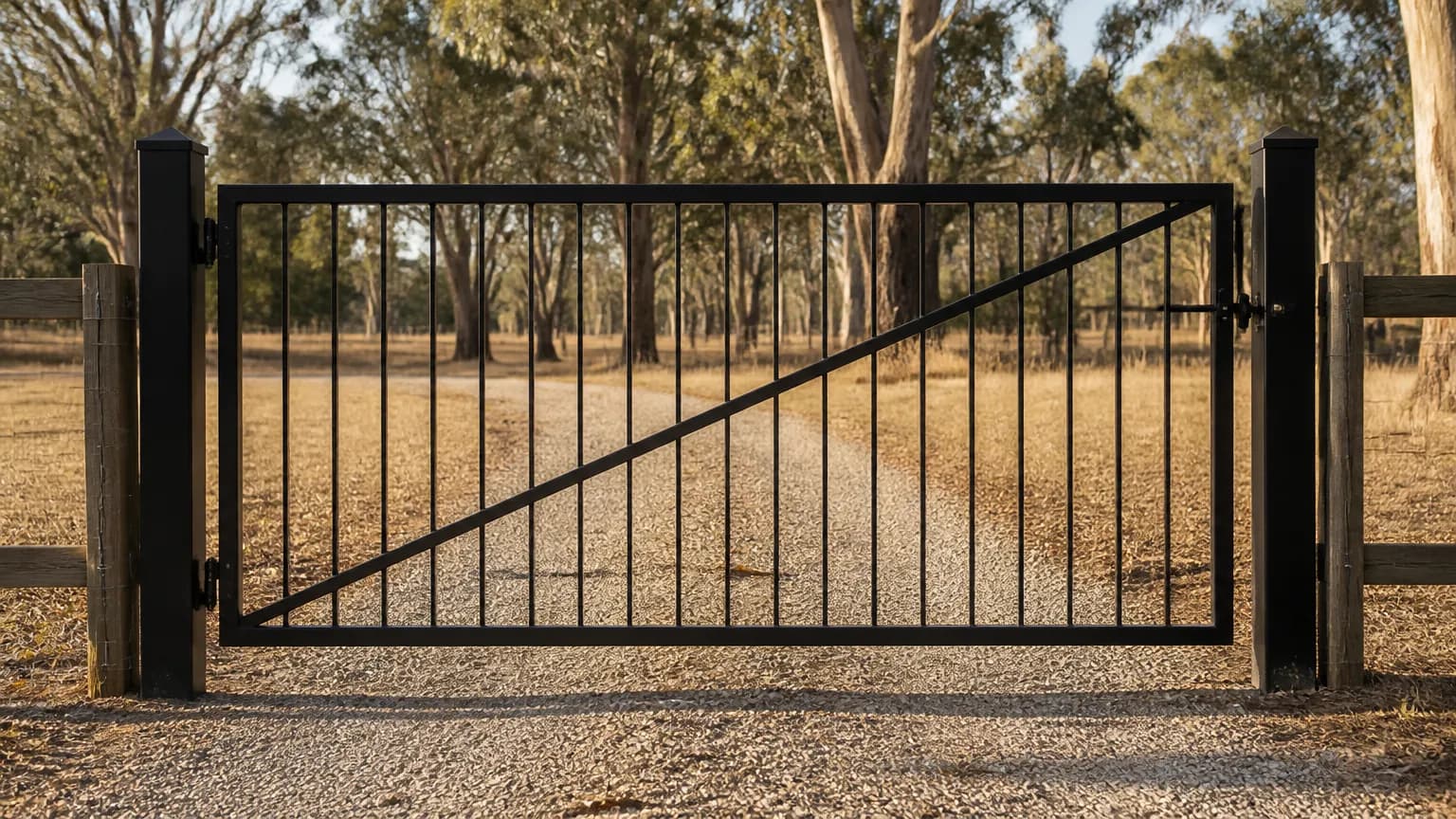
An aluminium picket gate is a welded frame, often 40x40x1.6 tube, with the pickets welded inside it. It hangs on bolt-on or weld-on hinges like any other small metal gate. Keep the picket height and the gap under the gate the same as the fence, so the picket line runs straight across the gate. Picket fence and gate drawings can be made in one go: see fence design software for the options.
Common questions
What size are timber pickets?
70x19 DAR treated pine is the standard. 65x19 looks finer on a low fence and 88x19 suits a taller one or wider gaps.
What is the difference between a picket fence and a paling fence?
The boards and the fixing are the same. A picket fence leaves a gap between boards. A paling fence butts or laps them so you cannot see through.
Are aluminium picket fences any good?
Yes. They come powder coated, do not rot and never need painting. The trade-off is less freedom: shaped tops and curved lines are easier in timber.
Should I use treated pine or hardwood?
Treated pine is the standard fencing timber: cheaper and widely stocked. Hardwood costs more and weighs more but lasts longer exposed and carries a heavier gate leaf.
How many pickets do I need for a 2.4 m bay?
With 70 mm pickets and a target gap of 50 mm, 19 pickets, giving a real gap of 53.5 mm. Take one gap off the space, divide by picket width plus gap, round down, then share out what is left.
How do you make a scalloped picket fence?
Keep the rails level and cut each picket to a different length so the tops follow a curve that dips between the posts. The end pickets at each post stay full height.
Written by Harry Tolley
Harry builds CAD60 with his dad, who has run a fabrication business for 20 years. We write these guides from what goes wrong in a real shop.