On this page
- What size post do you need for a gate?
- Why is a post size chart only a starting point?
- How deep should a gate post be?
- Does the hinge post need to be bigger than the latch post?
- What wall thickness should a gate post have?
- Should a gate post be concreted in, on a footplate or bolted to a wall?
- What size posts do sliding and cantilever gates need?
- Watch it done in CAD60
- Common questions
Most gates that drop were hung on a post that was too small or set too shallow. The gate gets the blame, but the post moved first. Get the post right and the hinges and frame have an easy life.
Below is a post size chart for aluminium gate posts, by gate type and leaf width, with rough footing sizes. Treat it as a starting point, not an engineer's answer. The section after the chart explains when to go bigger.
What you need to know
- A light aluminium pedestrian gate up to about 1 m wide is usually fine on 65x65 SHS posts.
- Single swing driveway leaves want about 100x100 SHS with a 4 mm wall and a bigger footing.
- A typical pedestrian gate footing is about 300 mm across and 600 mm deep.
- Solid infill, high wind, soft soil or a tall gate all mean a bigger post and a deeper footing.
- Keep aluminium posts from touching the concrete directly, and do not use fast-set concrete.
What size post do you need for a gate?
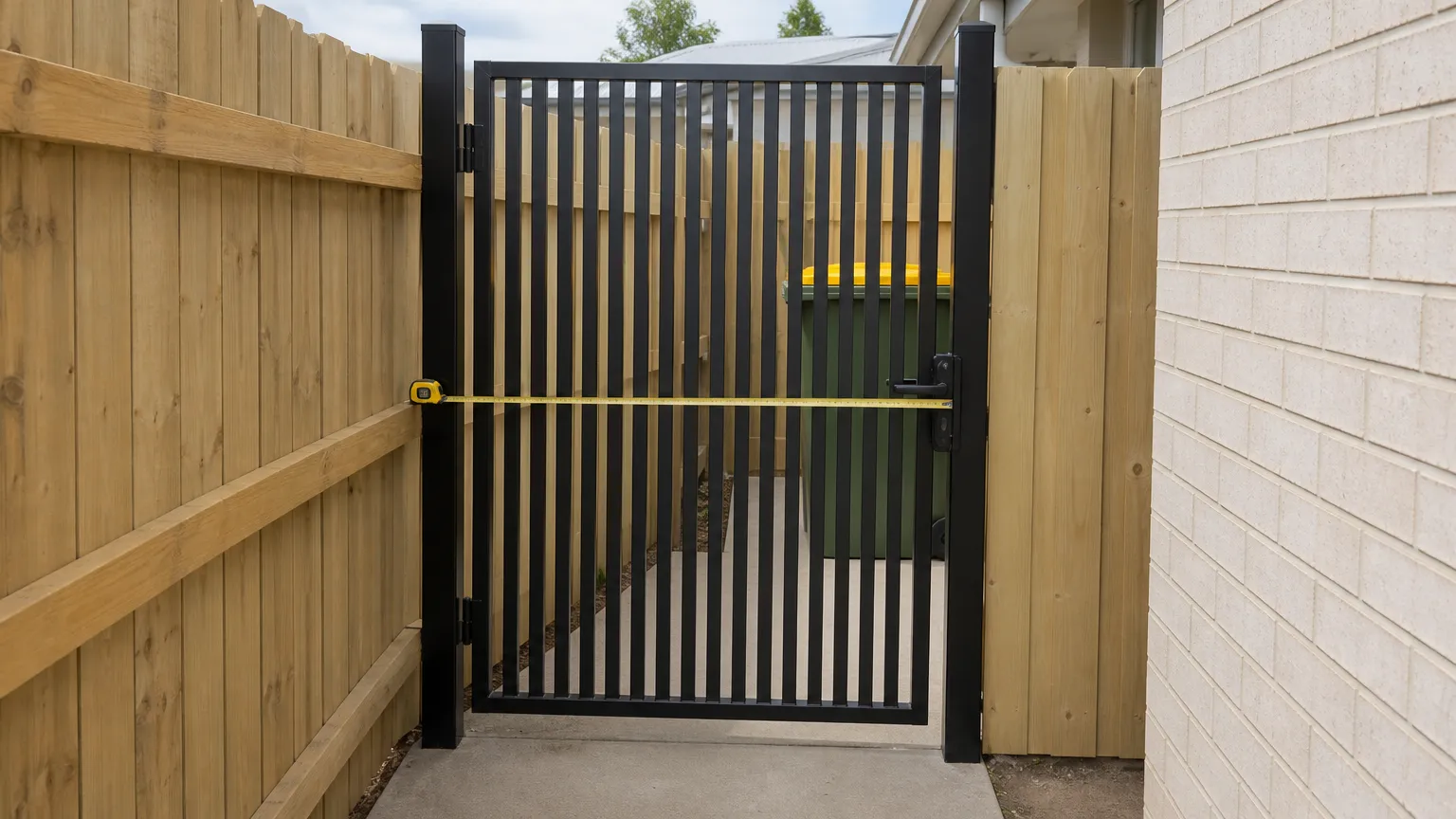
Size the post for the leaf it carries: its width, its weight and how much wind it catches. This chart assumes square aluminium tube (SHS), a gate up to about 1.8 m high, open infill like battens with gaps, and firm ground.
| Gate type | Leaf width | Post section (aluminium SHS) | Footing (diameter x depth) |
|---|---|---|---|
| Pedestrian gate | Up to 1.0 m | 65x65x3 | 300 x 600 mm |
| Wide pedestrian gate | 1.0 to 1.2 m | 75x75x3 | 300 x 600 to 750 mm |
| Single swing driveway gate | 1.2 to 2.5 m | 100x100x3 to 100x100x4 | 400 x 750 to 900 mm |
| Single swing driveway gate | 2.5 to 3.5 m | 100x100x4 at least, consider 125x125 | 400 to 450 x 900 mm |
| Double swing gate (per leaf) | Up to 1.5 m | 75x75x3 to 100x100x3 | 300 to 400 x 750 mm |
| Double swing gate (per leaf) | 1.5 to 2.5 m | 100x100x4 | 400 x 900 mm |
| Sliding gate guide and catcher posts | Any | 75x75x4 | 300 x 600 mm |
For a double gate, size the posts for one leaf, not the whole opening. A 3 m opening hung as a pair is two 1.5 m leaves, each on its own post.
The pedestrian rows line up with common trade practice. The worked spec in our standard pedestrian gate sizes guide uses a 75x75 post, 600 mm deep in a 300 mm hole. Aluminium post kits sold for DIY slat fencing call for holes around 200 to 250 mm across and 600 mm deep. The driveway rows are where you should be most careful, and where most trouble starts.
Why is a post size chart only a starting point?
A chart cannot see your site. These four things change the answer, and any one of them can push you up a size:
- Wind on solid infill. A solid or slatted leaf with small gaps is a sail. A 2 m by 1.8 m solid leaf catches a lot of wind, and all of it ends up at the hinge post. Go up a size and deeper.
- Soil. Sand, fill and reactive clay hold a post far less well than firm ground. Clay swells and shrinks and can push a post out of plumb over the seasons. Go deeper and wider.
- Gate height. A 2.1 m leaf on a 2.2 m post pulls harder on the footing than the 1.8 m gate this chart assumes.
- Weight and use. A gate that gets slammed or leaned on many times a day needs more margin than one opened once a week.
For big, heavy or exposed gates, get an engineer to size the post and footing. That is normal for commercial work and worth it on any large driveway gate.
How deep should a gate post be?
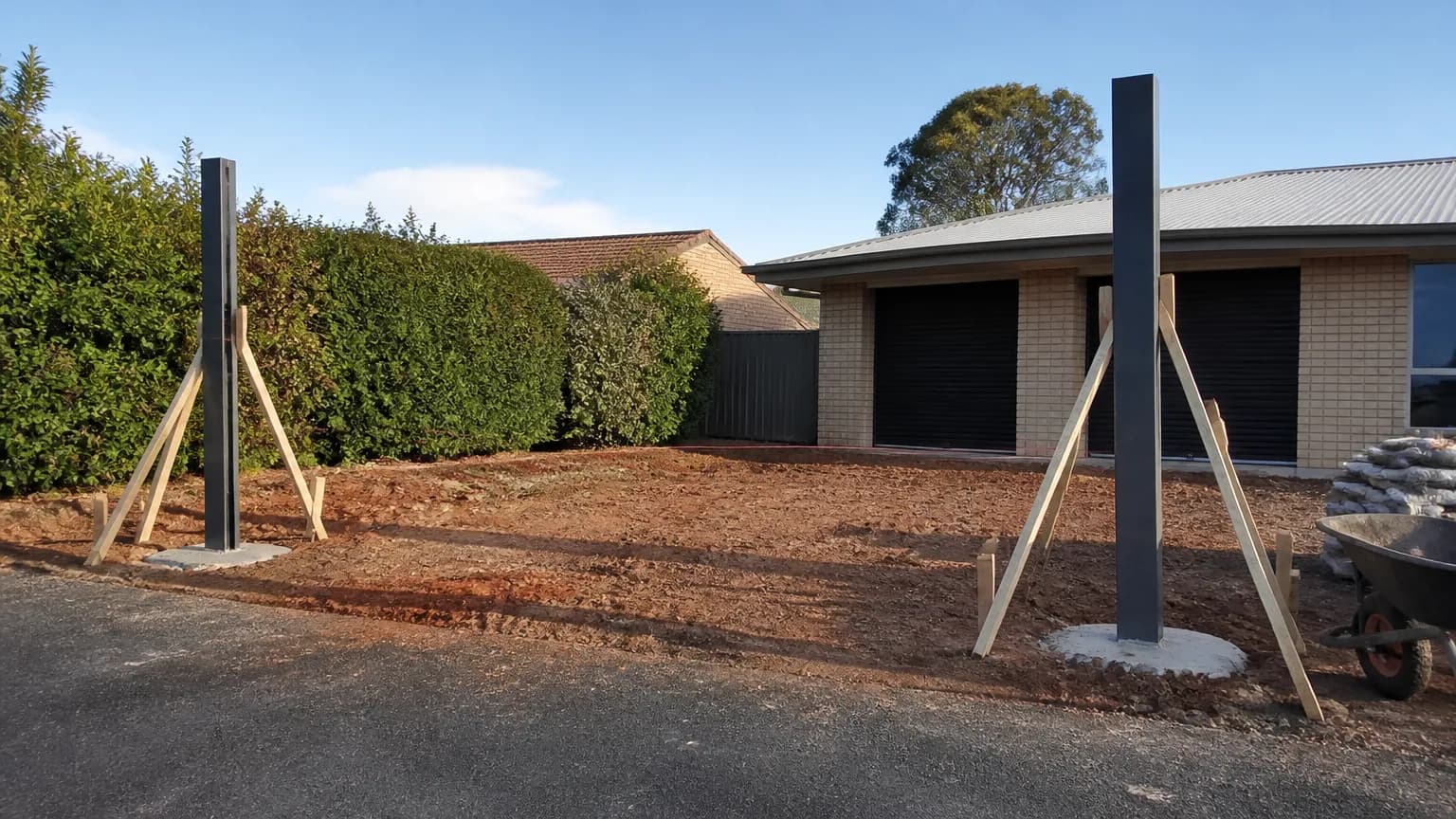
For a typical aluminium pedestrian gate, about 600 mm deep in a 300 mm diameter hole. For a tall or heavy gate, 750 to 900 mm deep in a 400 mm hole. Some aluminium post makers ask for at least 450 mm of the post itself buried in the concrete.
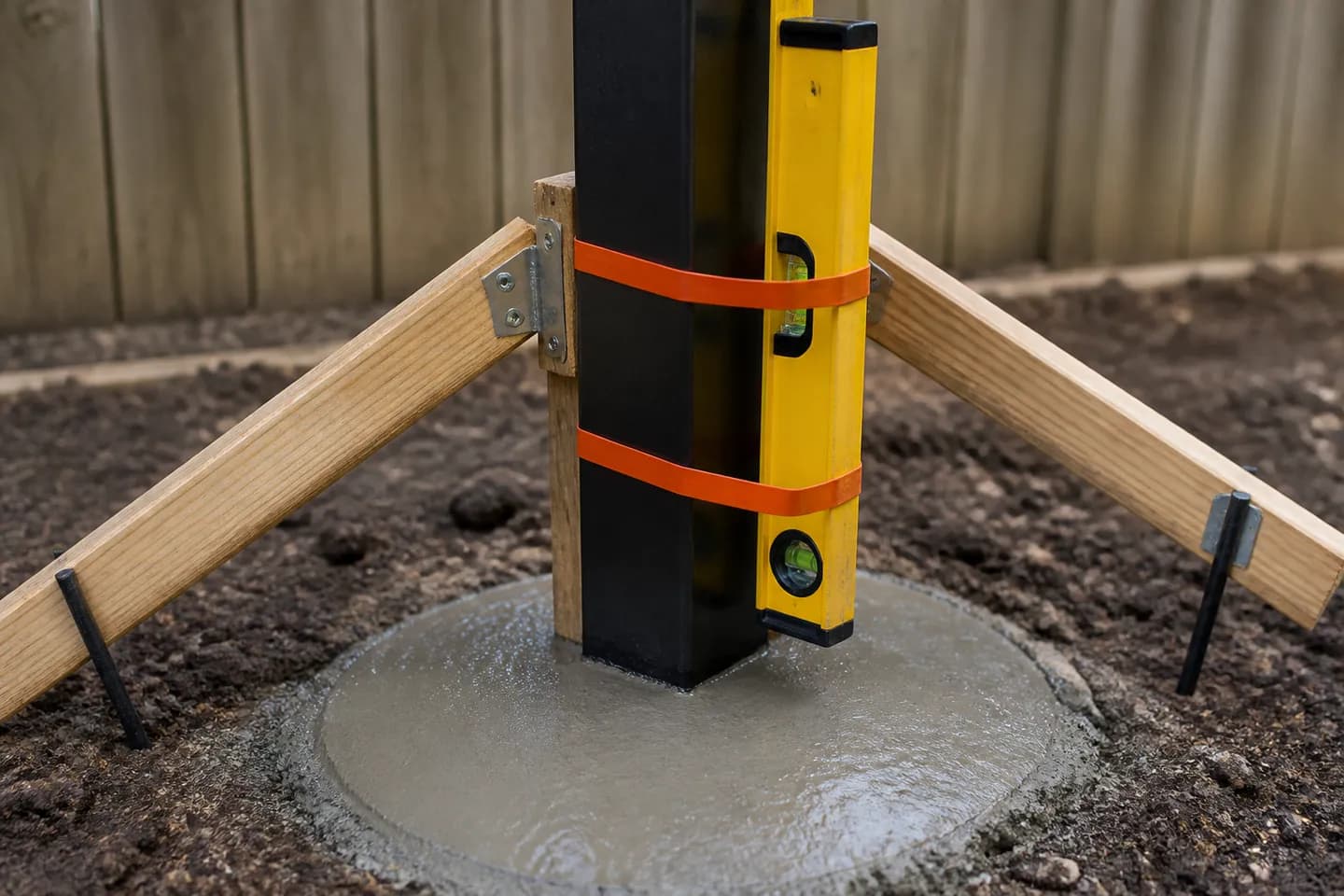
A few things matter as much as the depth:
- Keep aluminium off the concrete. Wet concrete attacks bare aluminium. Makers like Stratco say to coat the buried part with bitumen paint or use a spigot base.
- No fast-set concrete on aluminium posts. Bunnings' ProtectorAl gate guide says this in bold. Use a normal mix.
- Slope the top. Finish the concrete just above ground and slope it away from the post so water runs off.
- Let it cure before you hang the gate. A post that shifts 2 mm while the concrete is green turns into a much bigger drop at the latch end.
Does the hinge post need to be bigger than the latch post?
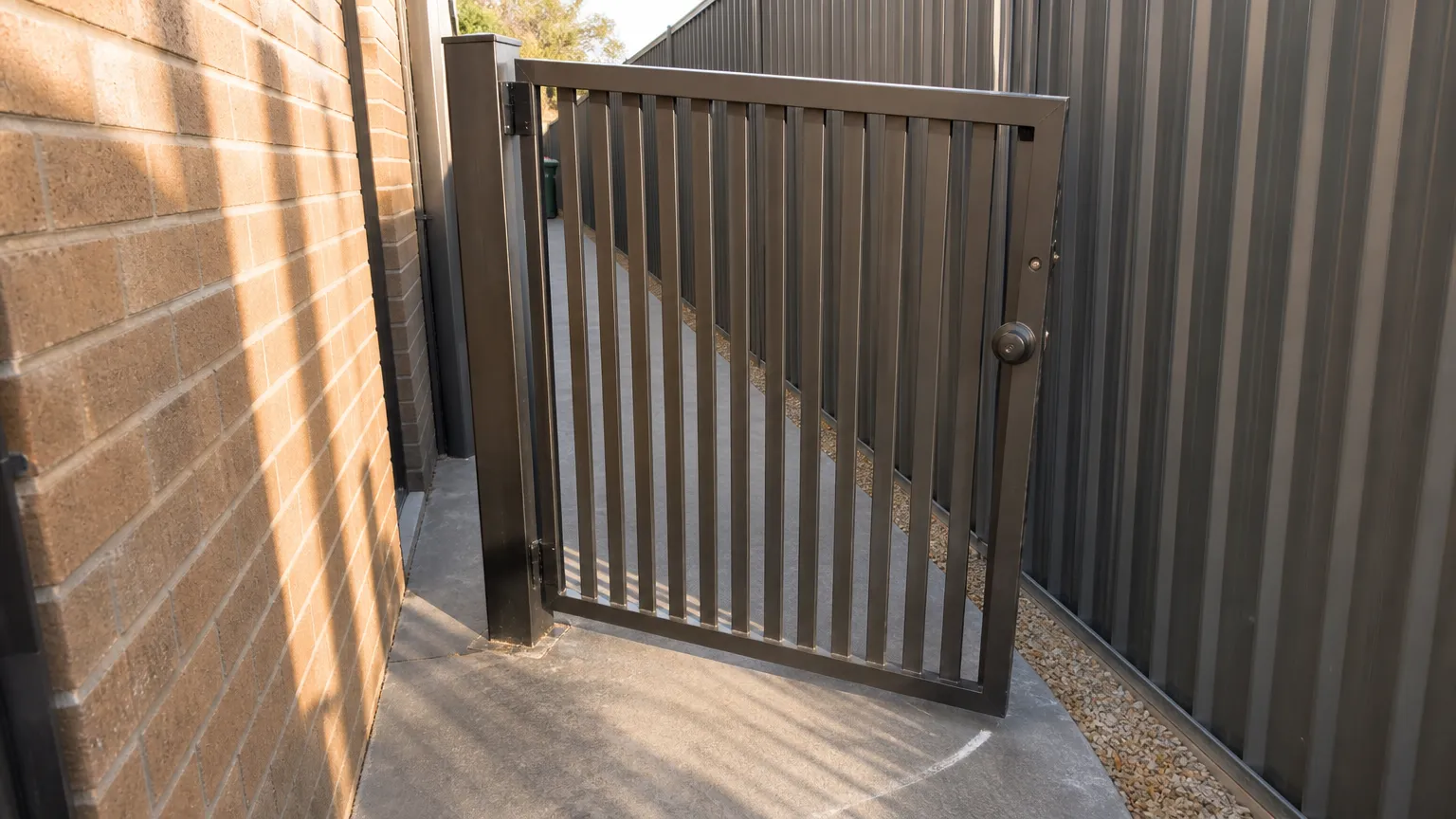
The hinge post does the work. It carries the whole leaf and gets twisted every time the gate swings. The latch post only takes the gate closing against it. So if you size only one post up, make it the hinge post.
Most people still use the same size for both, because a pair of matching posts looks right. On a double gate, both outside posts are hinge posts, so size both for the leaf.
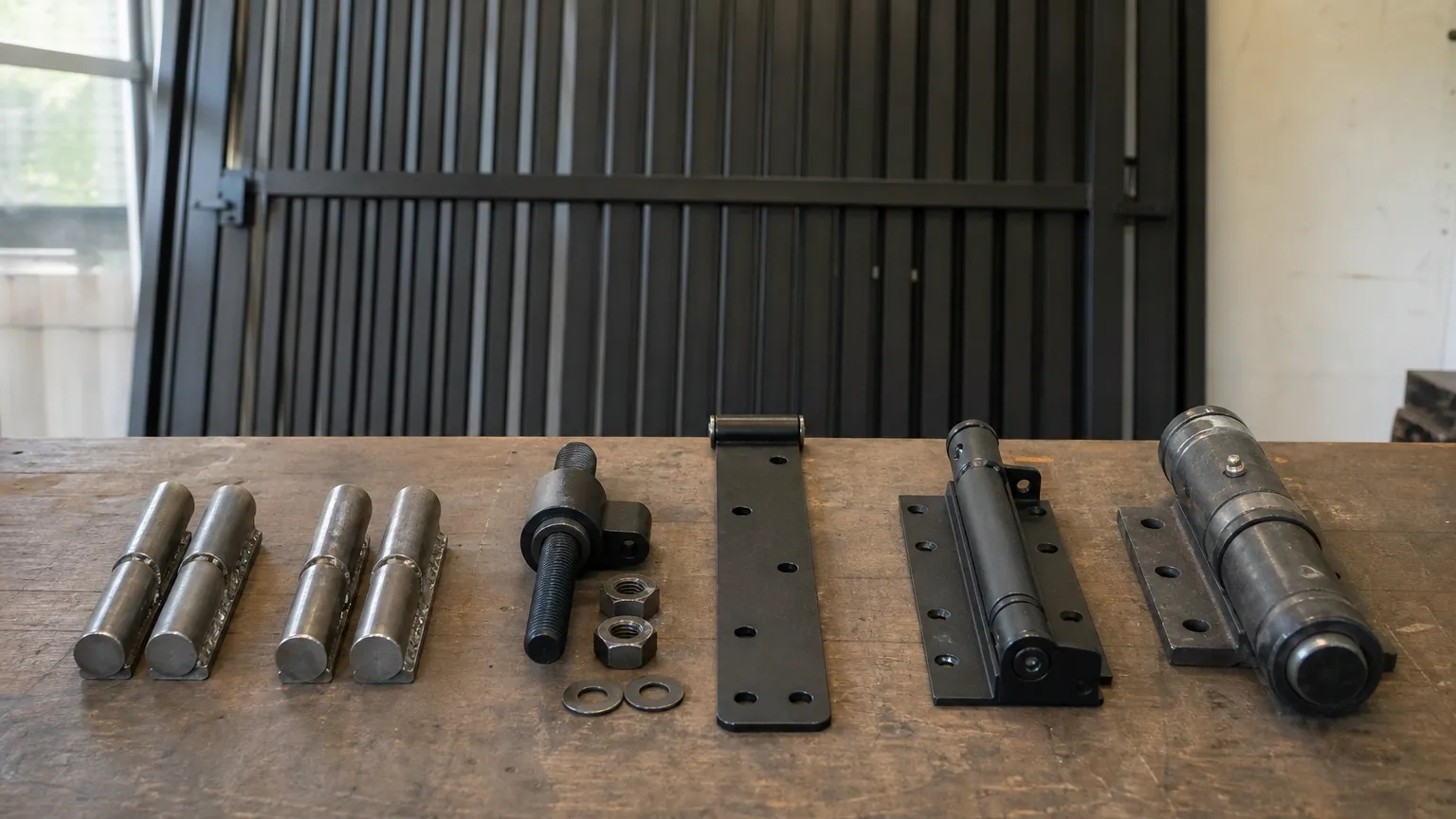
Hinges and posts work as a set. A heavy-duty hinge on a small post just moves the weak point. See gate hinge types for matching the hinge to the leaf.
What wall thickness should a gate post have?
For aluminium, 3 mm is a common wall on 65x65 and 75x75 posts. For 100x100 driveway posts, a 4 mm wall is a safer default. Thin-wall fencing posts, under about 2 mm, suit fence panels but not hinge posts.
A bigger section usually helps more than a thicker wall. Going from 75x75 to 100x100 stiffens the post far more than going from 3 mm to 4 mm on the same size. The RHS vs SHS guide explains why. Square tube suits posts because the load can come from any direction.
Should a gate post be concreted in, on a footplate or bolted to a wall?
There are three common ways to fix a gate post:
- Concreted in. The strongest and most forgiving for a swing gate. Use it wherever you can dig.
- On a footplate. A plate welded to the bottom of the post, bolted to a slab with dynabolts or chemical anchors. A 150x150 plate, 10 mm thick, with four holes is a common start for a pedestrian gate. The slab has to be thick and sound enough to hold the anchors.
- Bolted to a wall. Only as strong as the wall. A single-skin brick wall can pull out under a heavy gate. If you are not sure of the wall, concrete a post in beside it.
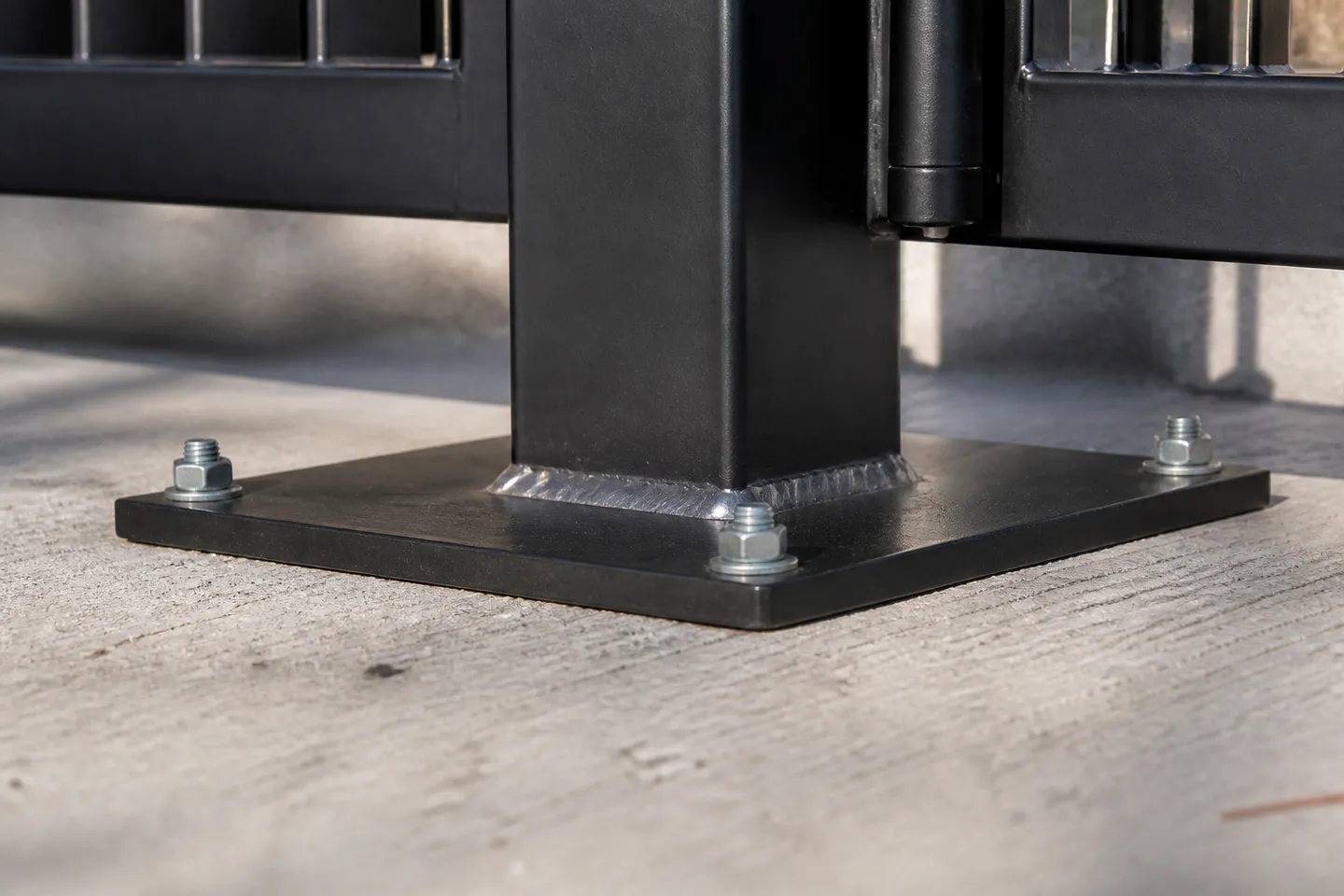
On a heavy driveway leaf, footplates are the weak point. The whole twist of the gate goes through four bolts and the edge of a slab. A concreted post is the safer choice there.
What size posts do sliding and cantilever gates need?
A tracked sliding gate sits on its wheels, so its posts do not carry the weight. The guide post keeps the top of the gate upright and the catcher post takes it when it closes. CAD60's tracked sliding gates start these posts at 75x75x4 SHS with 600 mm in concrete, which matches the chart.
A cantilever gate is different. Its roller posts carry the whole gate, so they need more. CAD60's cantilever models start the roller posts at 90x90x4 SHS with 900 mm in concrete. Long or heavy cantilever gates often sit their rollers on a concrete pad instead. See cantilever vs sliding gates for how the two compare.
If your gate has already dropped and you think the post is to blame, start with how to fix a sagging metal gate.
Watch it done in CAD60
Common questions
What size post do I need for a 1 m pedestrian gate?
For a light aluminium gate around 1 m wide and 1.8 m high, 65x65x3 SHS posts in a 300 mm by 600 mm footing are a common start. Use 75x75 for a heavier gate or solid infill.
What size post do I need for a 3 m driveway gate?
As a single leaf, start at 100x100x4 SHS in a 400 to 450 mm hole about 900 mm deep, and consider a bigger post or a gate wheel. As a pair of 1.5 m leaves, 75x75 to 100x100 posts are usually enough.
How much concrete does a gate post need?
A 300 mm hole 600 mm deep holds about 0.04 cubic metres, roughly four or five 20 kg bags of premix, a little less once the post is in. A 400 mm hole 900 mm deep holds about 0.11 cubic metres.
Can you use aluminium posts for a driveway gate?
Yes. Use a bigger section and a thicker wall than you would for a pedestrian gate, around 100x100x4 SHS, and a deeper footing. Very wide or solid leaves may need a larger post or a pivot or wheel.
Why should aluminium posts not touch concrete?
Wet concrete is alkaline and attacks bare aluminium over time. Coat the buried part of the post with bitumen paint, or use a spigot or footplate so the aluminium sits above the concrete.
How long should concrete cure before hanging a gate?
Leave it at least overnight for a light gate, and a few days for a heavy one. Prop the post plumb until then. Hanging the gate on green concrete is how posts end up leaning.
Written by Harry Tolley
Harry builds CAD60 with his dad, who has run a fabrication business for 20 years. We write these guides from what goes wrong in a real shop.