On this page
A sagging gate drags on the ground, misses its latch and gets worse every time someone slams it. The good news is the fix is usually simple once you know where the sag is coming from. The bad news is most people fix the wrong thing first.
My dad has run a fabrication business for 20 years, and a lot of "my gate has dropped" calls end up being a post problem, not a gate problem. So this guide works from the ground up: post, then hinges, then the frame. Check them in that order and you will not waste a weekend welding a brace onto a gate that was never the issue.
What you need to know
- Check the hinge post for plumb before you touch the gate. A leaning post is the most common cause.
- Worn or undersized hinges are next. Adjustable hinges let you lift the latch end without welding.
- A brace only fixes a frame that has racked out of square. It does nothing for a leaning post.
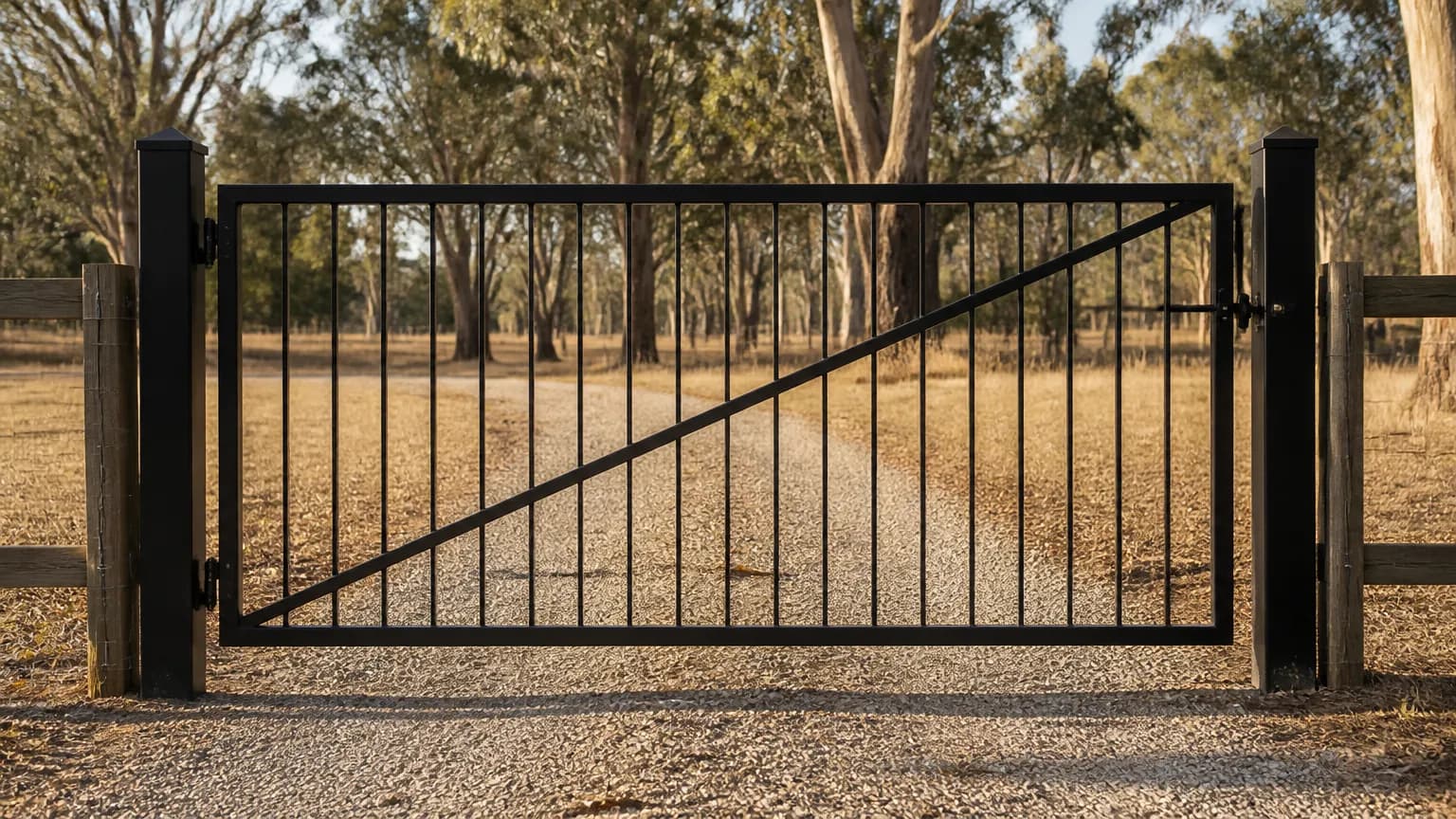
- A compression brace runs from the bottom hinge corner up to the top latch corner.
- Wide or heavy leaves need a bigger post, a deeper footing or a gate wheel from day one.
Why do metal gates sag?
A swing gate is a lever. All of its weight hangs off two hinges on one side, and the further the latch end sits from the post, the harder that weight pulls. Something in that chain gives way over time. It is almost always one of these four:
- The hinge post leans. The footing is too shallow, too small, or the ground has moved. The whole gate tips with it.
- The hinges are worn or too light. Pins wear oval, bolts loosen, or a light hinge was used on a heavy leaf.
- The frame has racked. The leaf is no longer square. The corners have flexed, so the latch end drops even though the post and hinges are fine.
- The gate is too heavy for what holds it. Solid infill, a long leaf, or a frame section that is too shallow for the width.
Aluminium gates are light, so they put less load on the post and hinges. The flip side is a frame that flexes more for the same size of tube. That is why an aluminium leaf usually wants a deeper section on the long members, not just a thicker wall.
How do you tell what is causing the sag?
You need a spirit level, a tape and about ten minutes. Do these checks with the gate closed and then open, because a post that moves under load will only show up when the gate is hanging free.
Put a level on the hinge post
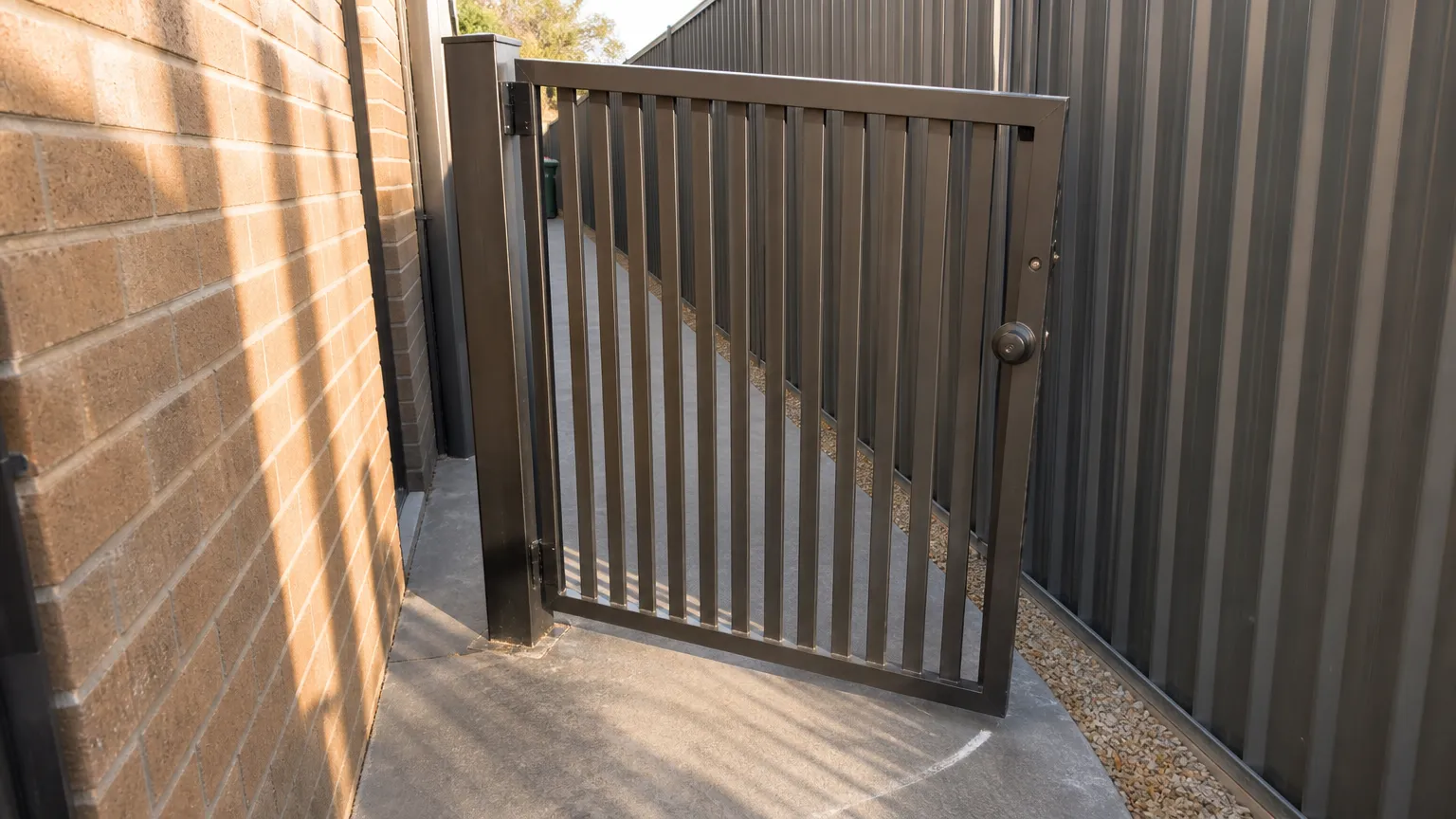
Check two faces. If the post leans toward the latch side, or rocks when you push the open gate up and down, stop here. The post is your problem.
Lift the latch end and watch the hinges
If the leaf moves before the post does, the play is in the hinges. Look for oval pin holes, loose bolts, cracked welds or a hinge knuckle that has spread.
Measure both diagonals of the frame
Corner to corner, both ways. A square frame gives two equal numbers. If one diagonal is longer by more than a few millimetres, the frame has racked.
Check the gap at the latch
Compare the gap at the top and the bottom of the latch side. A gap that is wider at the top than the bottom tells you the leaf is rotating down.
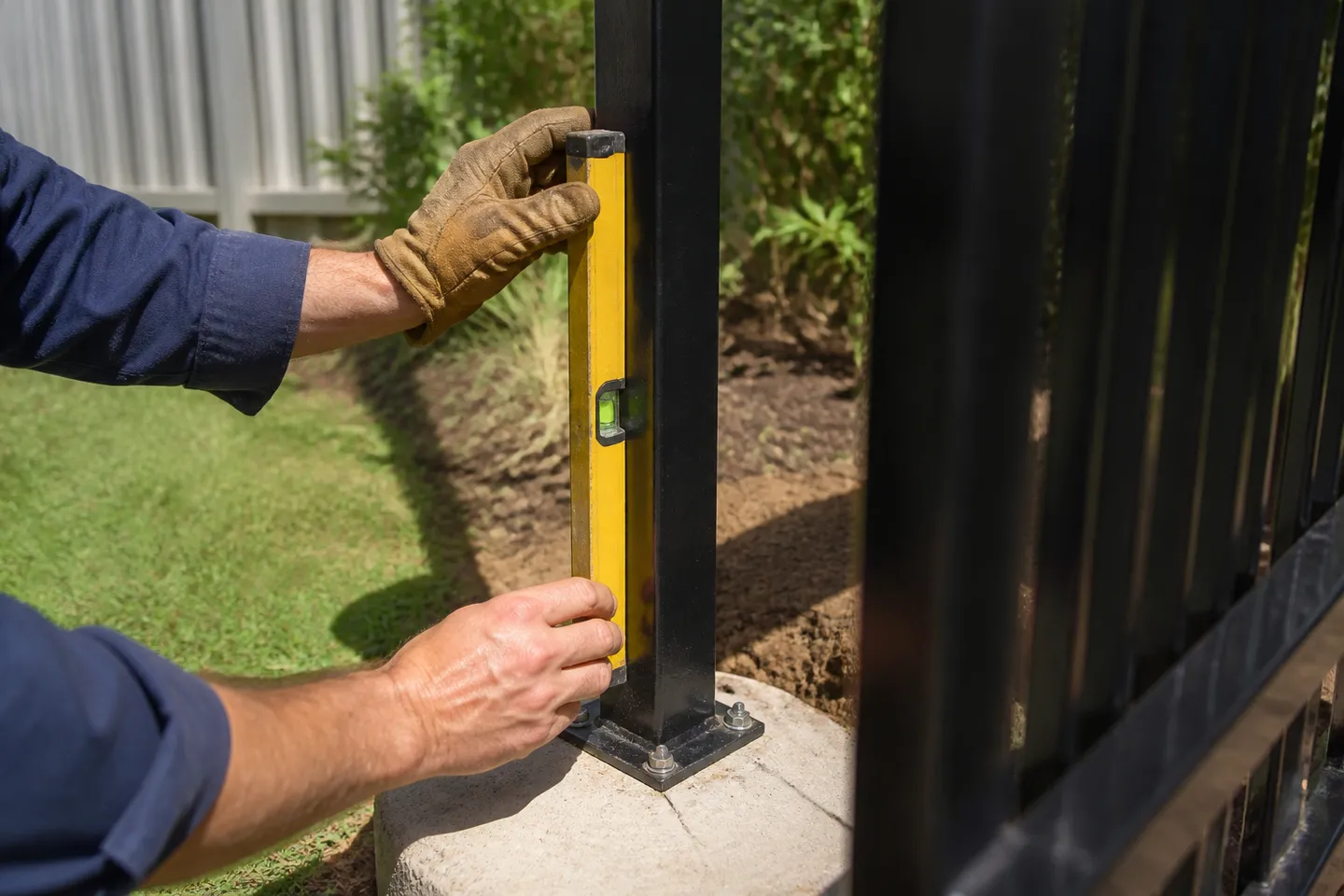
You can have more than one cause. A gate that racked because it was too heavy will often have chewed through its hinges too. Fix them in the same order: post, hinges, frame.
How do you fix a leaning hinge post?
If the post leans, nothing you do to the gate will last. You have three options, from quickest to best:
- Pull it back and pack it. For a small lean in a post that is otherwise solid, dig out around the footing, pull the post plumb, brace it and pour fresh concrete around the old footing. This works when the original hole was just too small.
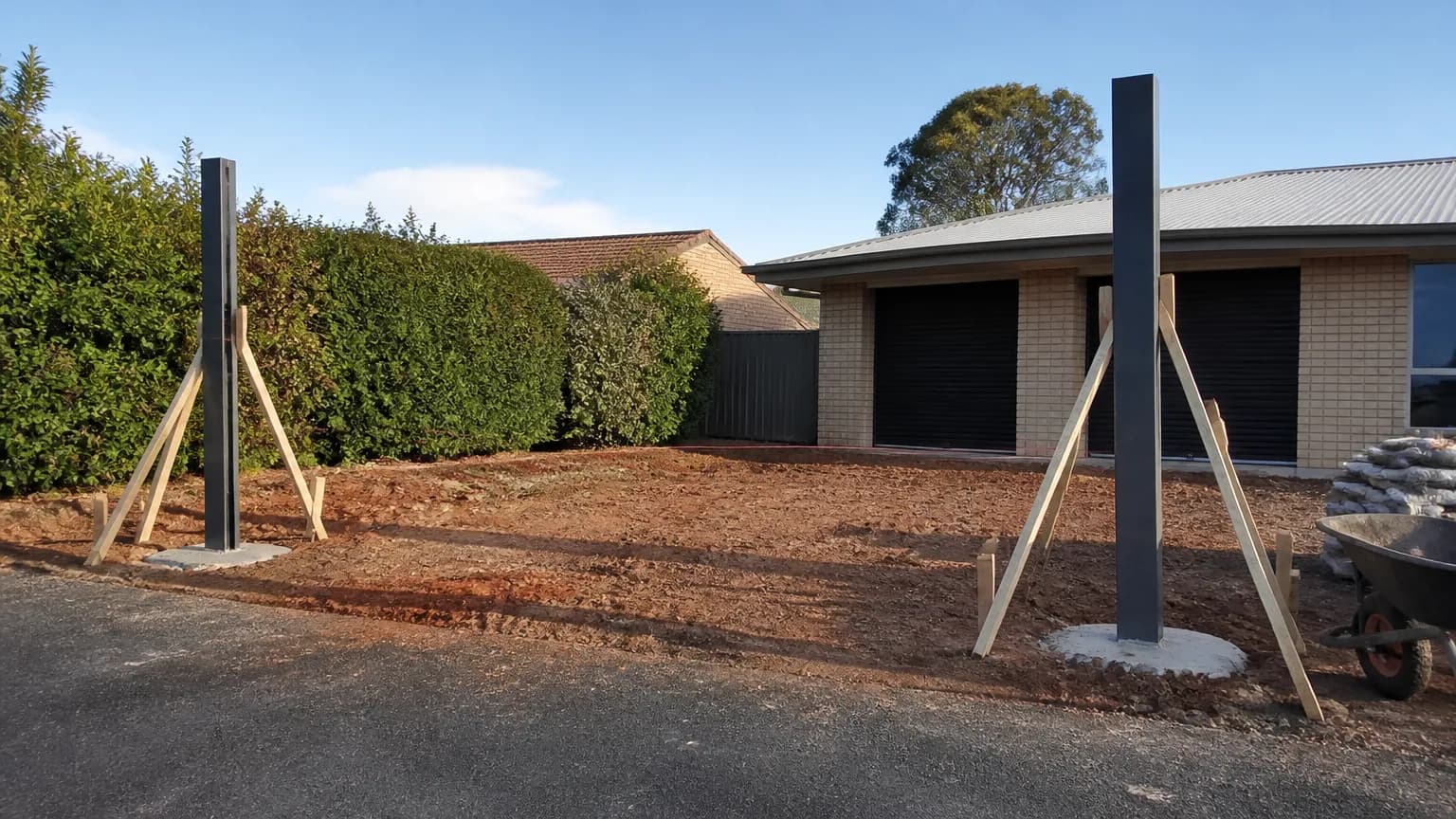
- Re-set the post deeper. Break out the footing and set it again properly. For a typical pedestrian gate post that means about 600 mm deep in a 300 mm diameter hole. A tall or heavy gate wants 750 to 900 mm deep in a 400 mm hole.
- Upsize the post. If the post bent rather than tipped, it was too small. A 50x50 post is fine for a light pedestrian gate. A heavy pedestrian gate or a driveway leaf wants 75x75 to 100x100.
Reactive clay is worth a mention. It swells and shrinks with the seasons and can push a post out of plumb year after year. If you are fighting clay, go deeper and wider, or use a footplate post bolted to a slab.
When should you adjust or replace the hinges?
Replace them if the pins are worn, the knuckles have spread or the welds have cracked. Adjust them if the post is plumb, the frame is square and the gate has just settled a little.
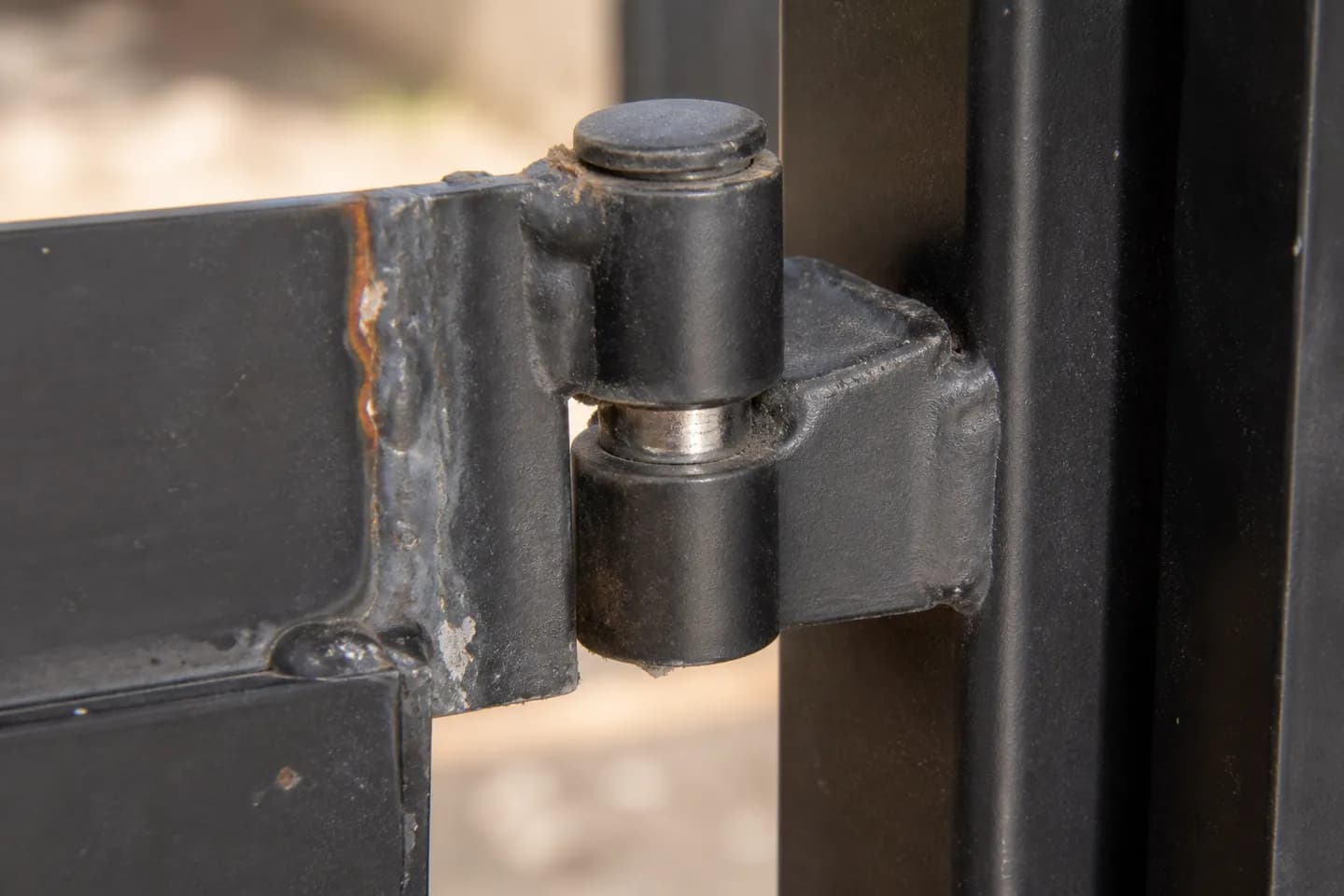
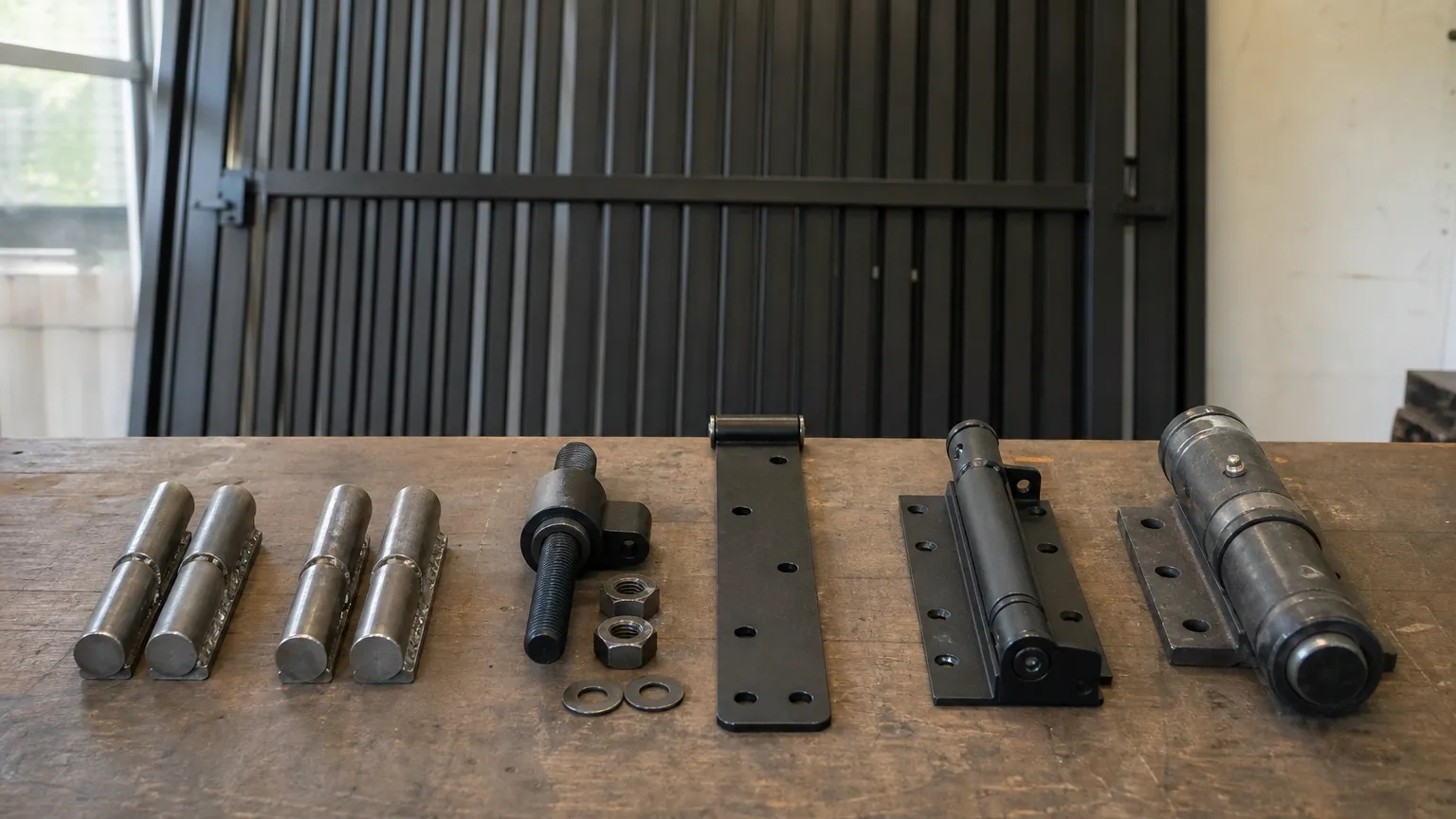
Weld-on barrel hinges are strong and cheap but have no adjustment. Once they wear, the only fix is cutting them off and welding new ones on. Bolt-on adjustable hinges cost more but let you wind the latch end back up in a few minutes with a spanner. On a gate you will not see again for years, that adjustment is worth paying for.
Whatever you fit, check three things:
- The hinge is rated for the weight of the leaf, not just its width.
- The top and bottom pins line up on one vertical axis. If not, the gate binds and wears fast.
- The top hinge sits close to the top of the frame. The further apart the two hinges are, the less force the leaf puts on each one.
For a closer look at hinge choice, see the weld-on hinge and self-closing hinge entries in the glossary.
Which way does a gate brace go?
It depends on the type of brace. A rigid strut (a compression brace) runs from the bottom corner on the hinge side up to the top corner on the latch side. A rod or cable (a tension brace) runs the other way: from the top hinge corner down to the bottom latch corner.
Think about what each one does. The latch end wants to fall. A strut sitting under it and resting on the bottom hinge corner pushes it back up. A rod hanging from the top hinge corner pulls the bottom latch corner up. Both send the load back to the hinge side, where the post can take it.
On a welded frame, a diagonal brace welded in compression is the permanent fix. A turnbuckle kit is the no-welding fix: two brackets, a rod and a turnbuckle you tighten until the diagonals match again. Both only work if the frame corners are sound. If a corner weld has cracked, weld it first.
| Fix | Runs from | Runs to | Needs welding |
|---|---|---|---|
| Compression brace (strut) | Bottom hinge corner | Top latch corner | Yes, on a metal frame |
| Tension rod or cable | Top hinge corner | Bottom latch corner | No, bolt-on brackets |
| Corner gussets | Inside each frame corner | Short plate across the joint | Yes |
Does a gate wheel stop sag?
Yes, if the ground lets it. A spring-loaded gate wheel under the latch end carries part of the weight, so the hinges and post do less work. It is a common fix on wide driveway leaves.
It needs a hard, even surface across the whole swing. On gravel, lawn or a driveway that rises across the arc, the wheel digs in or lifts the gate off its hinges. In that case a bigger post and better hinges are the real fix.
On a pair of gates, the leaves often sag where they meet in the middle. A drop bolt into the ground and a centre stop hold the inactive leaf in place, so the active leaf has something solid to latch against.
How do you build a gate that will not sag?
If you are making the gate, you get to design the sag out before it starts. These are the things we look at on every swing gate drawing:
- Post size and footing to suit the leaf. Size the hinge post for the weight and width, and give it a footing that matches. See standard pedestrian gate sizes for common post and footing specs.
- Frame depth on the long members. A deeper section stands up to bending far better than a thicker wall. The RHS vs SHS guide shows why a 65x35 on its edge beats a 50x50.
- A square frame. Check diagonals before the final weld and tack in a sequence that does not pull the frame out.
- Hinges with adjustment, spaced as far apart as the frame allows.
- A brace or a wheel on wide leaves. Past about 1.5 m wide, plan for one rather than adding it later.
A clear drawing helps more than people think. When the post size, footing, hinge positions and frame sections are written down, the person building the gate and the person installing it are working to the same numbers.
Common questions
Why does my gate drop at the latch end?
The latch end is furthest from the hinges, so it moves the most when anything gives. Check the hinge post for lean first, then the hinges for wear, then the frame diagonals. One of those three has moved.
Can you fix a sagging metal gate without welding?
Often, yes. Adjustable bolt-on hinges let you lift the latch end with a spanner, and a turnbuckle anti-sag kit pulls a racked frame back to square with bolt-on brackets. A leaning post still has to be re-set in concrete.
Do anti-sag gate kits work on metal gates?
They work when the frame itself has racked out of square. Fit the rod from the top hinge corner to the bottom latch corner and tighten until both diagonals match. They do nothing for a leaning post or worn hinges.
How deep should a gate post be?
For a typical pedestrian gate, about 600 mm deep in a 300 mm diameter concrete footing. Tall or heavy gates go to 750 to 900 mm deep in a 400 mm hole. Soft or reactive ground needs more.
Is an aluminium gate more likely to sag?
It is lighter, so it loads the post and hinges less. But aluminium tube flexes more for the same size, so the frame can rack if the sections are too small. Use a deeper section on the long members and brace wide leaves.
Why do double gates sag in the middle?
Each leaf hangs off its own post, and the free ends meet in the middle with nothing under them. A drop bolt on the inactive leaf and a centre stop in the ground give the pair a fixed point to close against.
Written by Harry Tolley
Harry builds CAD60 with his dad, who has run a fabrication business for 20 years. We write these guides from what goes wrong in a real shop.