On this page
Every gate wants to drop at the latch end. A brace stops that, but only if it runs the right way. Put it in backwards and it does next to nothing. On a timber gate it can even pull the joints apart.
The rule depends on one thing: is your brace stiff enough to be squeezed, or thin, so it can only be pulled? Answer that and the direction follows, on timber and metal gates alike.
What you need to know
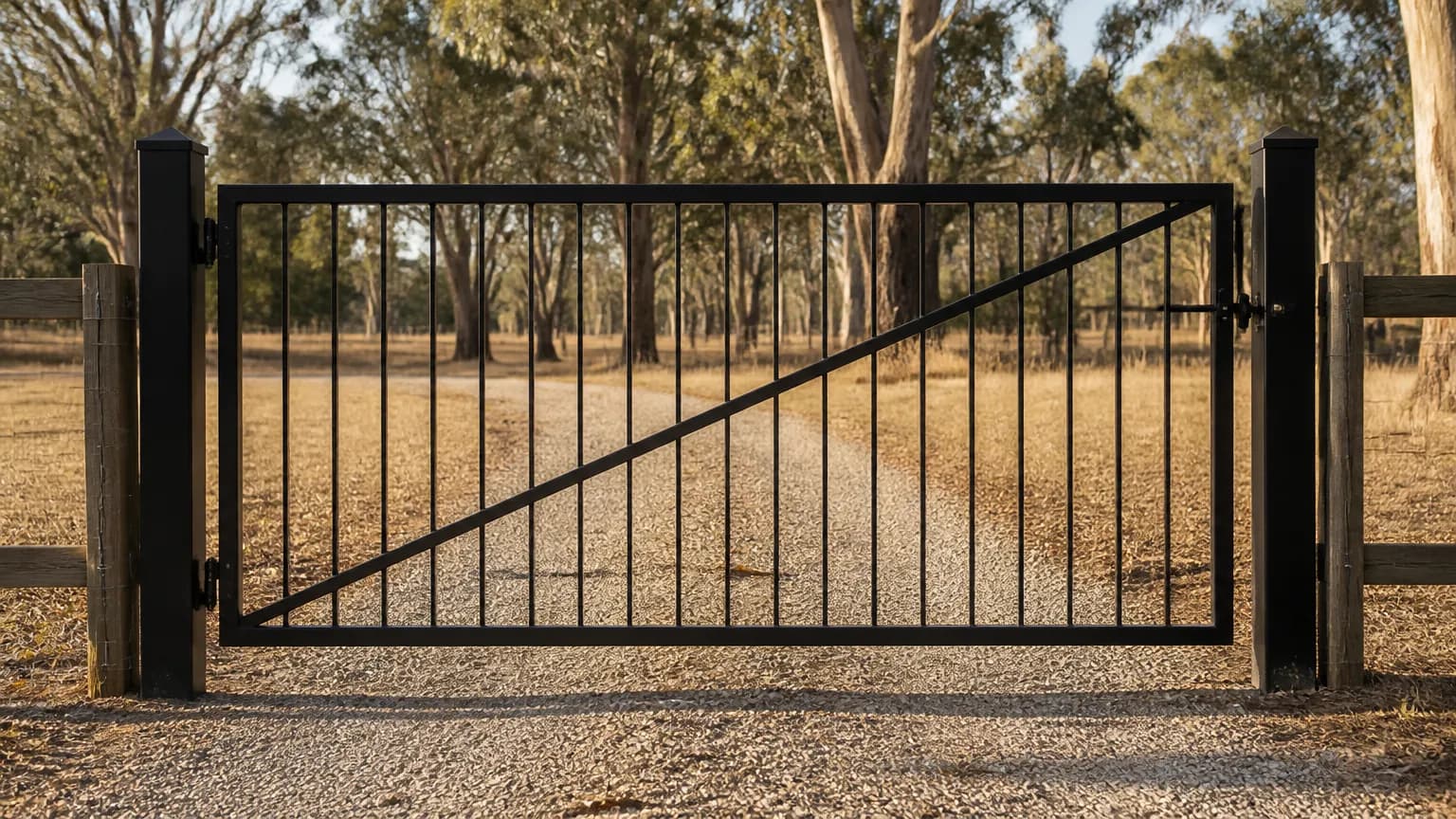
- A rigid strut runs from the bottom hinge corner up to the top latch corner.
- A rod, cable or turnbuckle runs from the top hinge corner down to the bottom latch corner.
- A Z-brace on a timber gate follows the same rule: the low end of the diagonal sits on the hinge side.
- On double gates, brace each leaf on its own. The struts make an upside-down V.
- Square the frame before the brace goes in. A brace locks in whatever shape the frame is in.
Why does the direction of a gate brace matter?
A swing gate hangs off one side. Its weight pulls the latch end down. As it drops, the frame leans out of square and turns into a slight parallelogram. We call that racking.
Measure the two diagonals of a racked frame and you get two different numbers. The diagonal from the bottom hinge corner to the top latch corner gets shorter. The diagonal from the top hinge corner to the bottom latch corner gets longer.
A brace works by stopping one of those diagonals from changing length:
- A stiff member on the shortening diagonal gets squeezed. It pushes the top latch corner back up. That is a compression brace.
- A thin rod or cable on the lengthening diagonal gets pulled. It hangs the bottom latch corner from the top hinge corner. That is a tension brace.
Swap them and they fail. A cable on the shortening diagonal just goes slack. A strut on the lengthening diagonal is being pulled, so it relies on its end joints. On a welded frame that can still hold. On a nailed or screwed timber gate, the fixings pull out.
How do you fit a rigid brace on a metal gate?
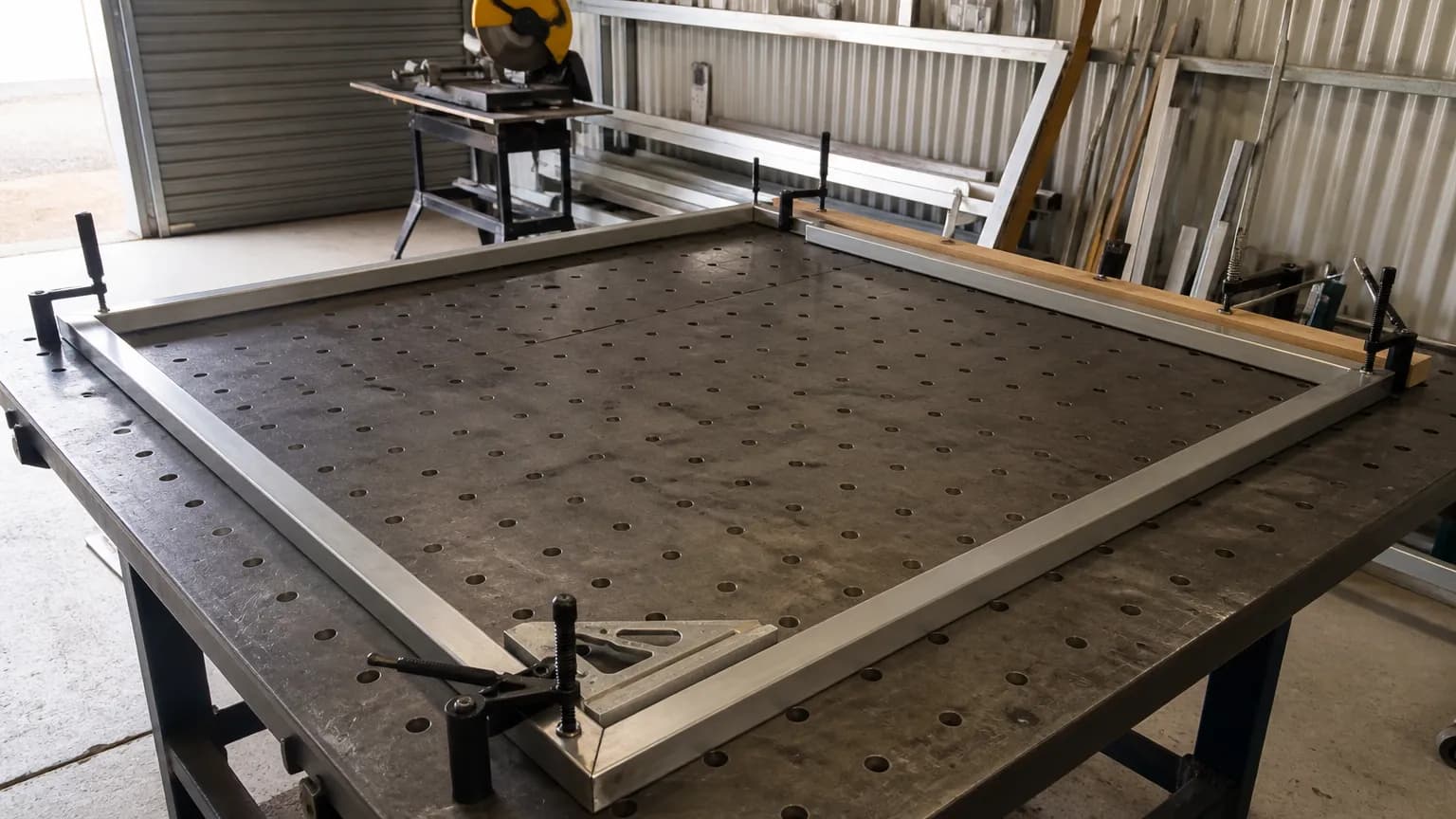
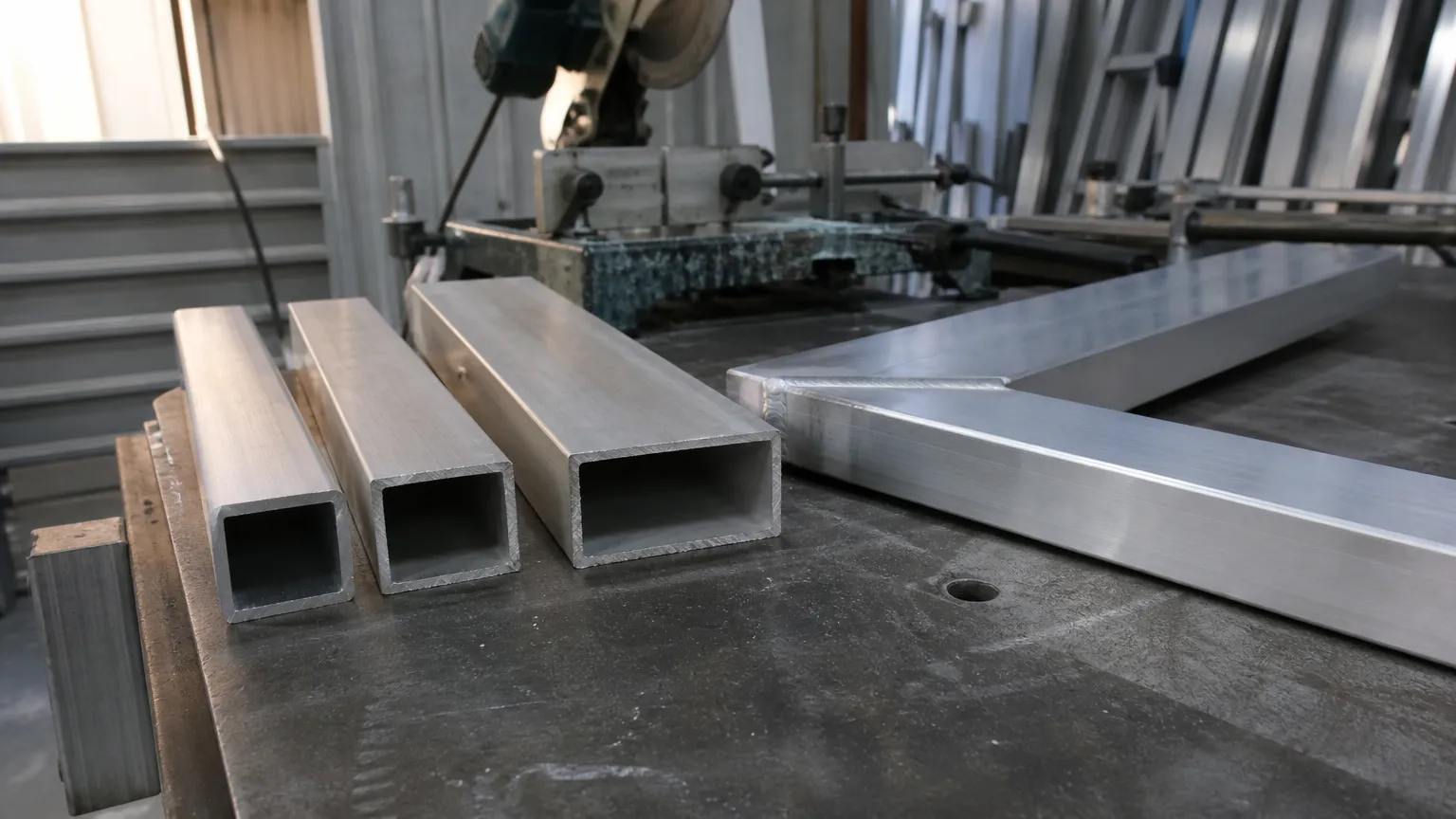
On a welded aluminium frame, the brace is a length of tube welded in from the bottom corner on the hinge stile up to the top corner on the latch stile. A smaller section than the frame is normal, for example a 50x25 RHS inside a 50x50 frame.
Square the frame first
Measure both diagonals. Get them within a couple of millimetres before you measure the brace. The brace will hold the frame in whatever shape it is in.
Mark the brace off the frame
Lay the tube across the inside corners and scribe both ends. Cutting it to the real frame beats cutting it to a number on a sheet, because no frame is perfect.
Cut for a tight fit at both ends
A strut works by pushing. The ends should sit hard against the rail and stile, with no gap for the weld to bridge.
Tack, check, then weld
Tack both ends, check the diagonals again, then weld it out. Balance the welds side to side so the heat does not pull the frame.
On a battened or slatted gate, the brace sits inside the frame, behind the infill. Fit it before the battens go on. Set it back from the front face so the battens still sit flat.
When should you use a rod or cable instead?
Use a tension brace when you cannot weld, or when you are fixing a gate that is already hanging. An anti-sag kit is two brackets, a rod or cable and a turnbuckle. It goes from the top hinge corner down to the bottom latch corner.
Bolt the brackets on, then wind the turnbuckle until the latch end lifts and the two diagonals match. Stop there. Over-tighten it and you bow the stiles. Check it again after a few weeks, because cables stretch a little as they settle.
Is it different on a timber gate?
No. The rule is the same. A timber Z-brace gate has two horizontal ledges and a diagonal between them. The diagonal is a strut. So its low end sits on the hinge side and it climbs to the latch side.
Timber shows the rule more clearly than metal does. Timber takes being squeezed very well. It is much weaker when it is pulled at a nailed joint. Get the Z backwards and the diagonal hangs off its nails, and the gate drops within a season.
A quick check on a timber gate: stand on the side the brace is on. Find the hinges. The brace should start low near them and finish high at the latch. If it starts high at the hinges, it is the wrong way round.
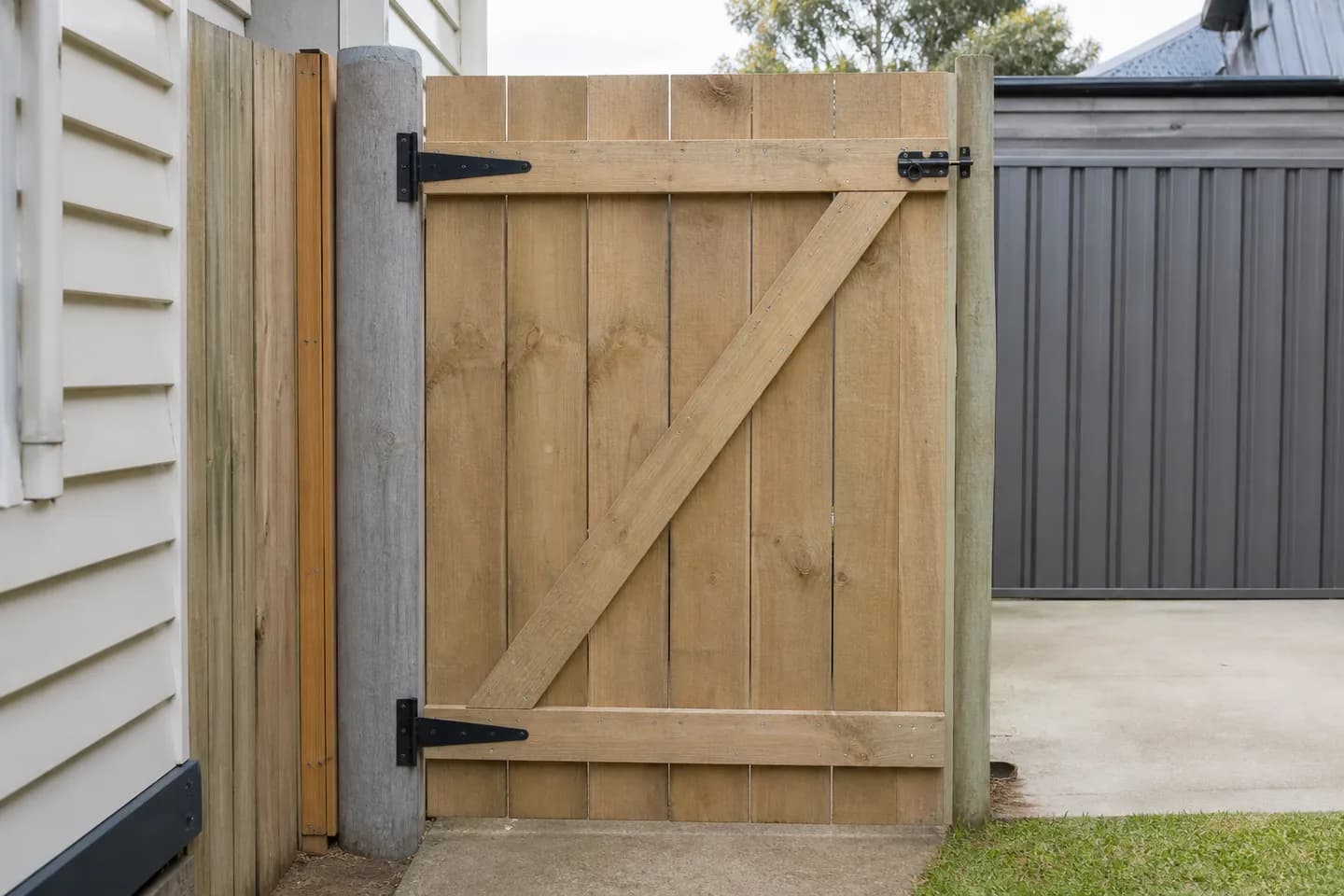
Metal gates differ in one way. The corners are welded, so the frame already resists racking without a brace. That is why many narrow metal gates have no diagonal at all. An aluminium frame flexes more than you might expect for its size, though, so wide aluminium leaves still benefit from one.
How do you brace double gates?
Treat each leaf as its own gate. Each one hangs off its own post, and its free end is in the middle where the two leaves meet. So each strut runs from the bottom corner at its hinge post up to the top corner at the meeting stile.
Seen from the front, the two struts make an upside-down V. If you see a pair where both braces slope the same way, one of them is wrong.
Bracing the leaves does not stop them moving where they meet. Fit a drop bolt on the inactive leaf and a centre stop in the ground, so the active leaf has something fixed to latch against.
Does every gate need a brace?
No. A welded aluminium pedestrian gate around 1 m wide, with sound corners and a mid rail, usually holds square on its own. Bracing starts to pay off as the leaf gets wider and heavier.
| Gate | Brace? | Why |
|---|---|---|
| Welded pedestrian gate, about 1 m wide | Usually not | Welded corners and a mid rail hold it square |
| Single swing leaf over about 1.5 m | Plan for one | The lever arm gets long and the corners start to flex |
| Each leaf of a double gate over about 1.5 m | Plan for one per leaf | Same as a single leaf, mirrored |
| Timber ledged gate | Yes, a Z-brace | Nailed or screwed joints rack easily |
| Gate already hanging and racked | Turnbuckle kit | No welding, adjustable |
Frame depth matters as much as bracing. A deeper section on the long rails stands up to bending far better. The RHS vs SHS guide covers how to pick it.
What are the most common gate brace mistakes?
- Strut the wrong way. Low end at the latch, high end at the hinges. It looks fine on day one and drops later.
- Bracing an out-of-square frame. The brace locks the error in. Check the diagonals before you weld.
- Stopping short of the corners. A brace that lands halfway up a stile bends the stile instead of holding the corner. Run it corner to corner.
- Bracing when the post is the problem. No brace fixes a leaning out of plumb post. Re-set the post.
- Both leaves of a pair the same way. One leaf ends up braced backwards.
- Over-tightening a turnbuckle. Wind it until the diagonals match and stop. Past that, it bends the frame.
If you are building the gate from scratch, the brace is one part of a frame that needs to be right overall. See how to build a metal gate frame for the full sequence.
Common questions
Does a gate brace go up or down from the hinge?
A rigid brace goes up from the hinge: it starts at the bottom hinge corner and finishes at the top latch corner. A rod or cable goes down from the hinge: top hinge corner to bottom latch corner.
What happens if a gate brace is the wrong way round?
A backwards strut is being pulled instead of squeezed, so it relies on its end fixings. On a timber gate they pull out and the latch end drops. A backwards cable just goes slack and does nothing.
Which way does a Z-brace go on a gate?
The diagonal of the Z starts low on the hinge side and climbs to the latch side. It is a strut, so it has to sit under the corner that wants to drop.
Which way does an anti-sag cable go?
From the top corner on the hinge side down to the bottom corner on the latch side. Then tighten the turnbuckle until the two frame diagonals measure the same.
Do metal gates need a diagonal brace?
Narrow welded gates often do not, because the welded corners hold the frame square. Wide leaves, roughly over 1.5 m, should have one, and aluminium frames benefit from it more because the tube flexes more for its size.
Can you put two braces in one gate leaf?
Yes. On a welded frame an X works, because the welds can take a pull on the second diagonal. On a nailed timber gate the second diagonal hangs off its nails, so a strut plus a tension rod is the better pair.
Written by Harry Tolley
Harry builds CAD60 with his dad, who has run a fabrication business for 20 years. We write these guides from what goes wrong in a real shop.