On this page
- What are the main types of gate hinges?
- When should you use weld-on barrel or bullet hinges?
- Are adjustable bolt-on hinges worth the extra cost?
- What are strap and tee hinges used for?
- When do you need pivot hinges?
- How do self-closing hinges work?
- What about heavy-duty ball-bearing and 180 degree hinges?
- How do you size a gate hinge for the weight of the gate?
- Common questions
A gate hangs its whole weight on two small pins. If the hinge is too light or the wrong type, the gate drops or starts to bind, and you are back on site fixing it.
This guide goes through the hinge types you will see on gate jobs, what each one is good at, and how to size them for the weight of the leaf. There is a comparison table first if you just want the short version.
What you need to know
- Weld-on barrel (bullet) hinges are strong, cheap and neat, but have no adjustment.
- Adjustable bolt-on hinges cost more but let you fix sag and gaps with a spanner.
- Pivot hinges carry the weight on a bottom pin or bearing. They suit heavy and wide gates.
- Self-closing hinges have a spring or a hydraulic closer built in. Check the weight and width rating.
- Size hinges for the weight and the width of the leaf. Check if the rating is per hinge or per pair.
What are the main types of gate hinges?
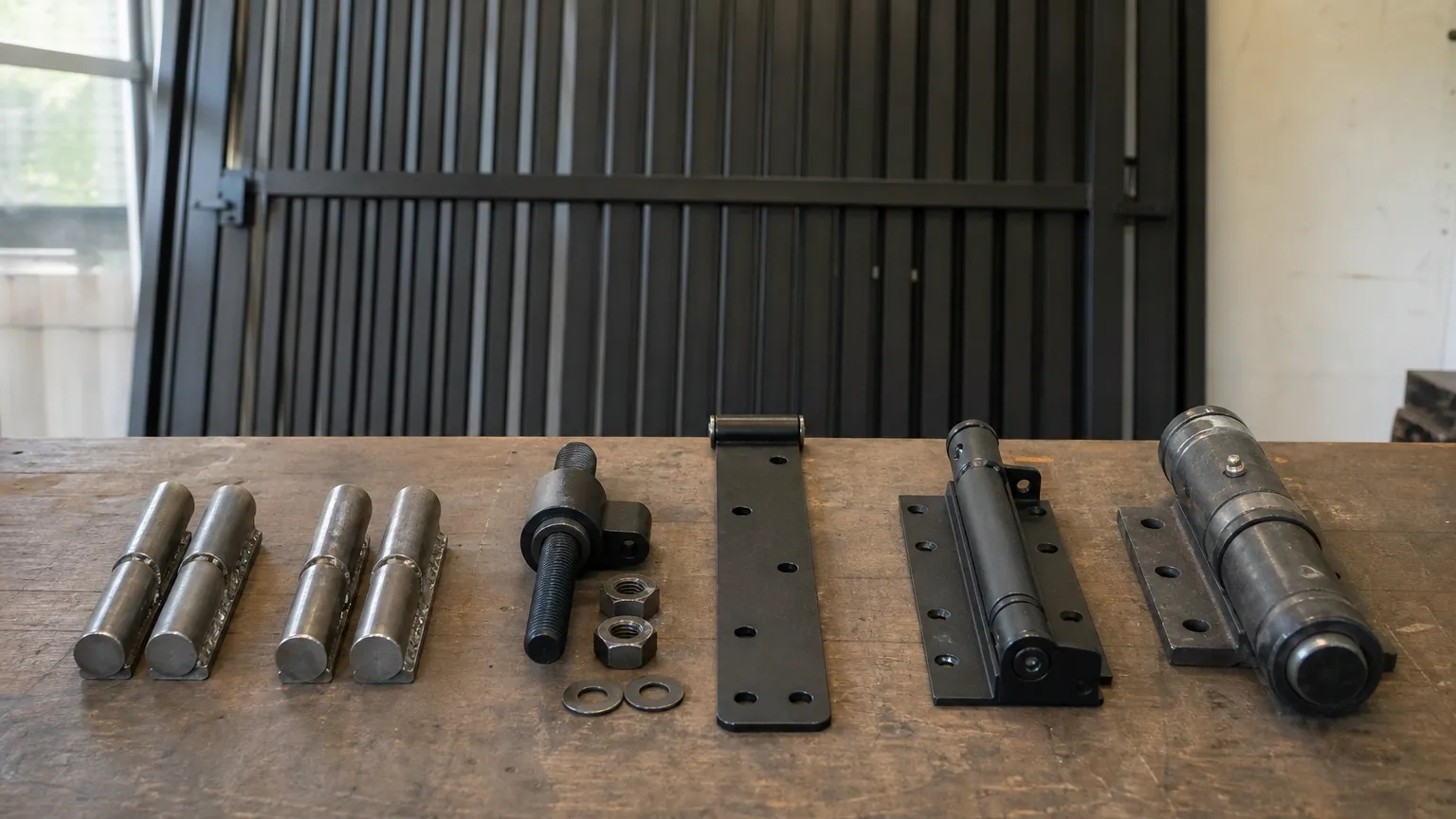
Most swing gates use one of seven hinge types. Here they are side by side.
| Hinge type | How it fixes | Adjustable? | Best for | Watch out for |
|---|---|---|---|---|
| Weld-on barrel or bullet | Welded to post and stile | No | Metal pedestrian and driveway gates | Pins must line up. Weld like metal to like metal. |
| Adjustable bolt-on | Bolted through post and stile | Yes, in and out, often up and down | Gates you want to tune after install | Costs more. Bolt holes go through the tube. |
| Strap or tee | Screwed to the gate face and post | No | Timber gates | Light duty. Poor fit on narrow tube frames. |
| Pivot | Pin top and bottom, often a bearing | Some | Heavy and wide gates | Needs a solid base for the bottom pivot. |
| Self-closing | Bolt-on or weld-on | Closing speed and force | Gates that must shut by themselves | Weight and width limits are strict. |
| Heavy-duty ball-bearing | Weld-on or bolt-on | Usually no | Heavy driveway leaves | Keep the bearing greased and sealed. |
| 180 degree | Weld-on or bolt-on | Some | Gates that fold back flat | Needs room on the post face to swing round. |
Your choice usually comes down to three questions. How heavy is the leaf? Do you want to adjust it later? Does it need to close itself?
When should you use weld-on barrel or bullet hinges?
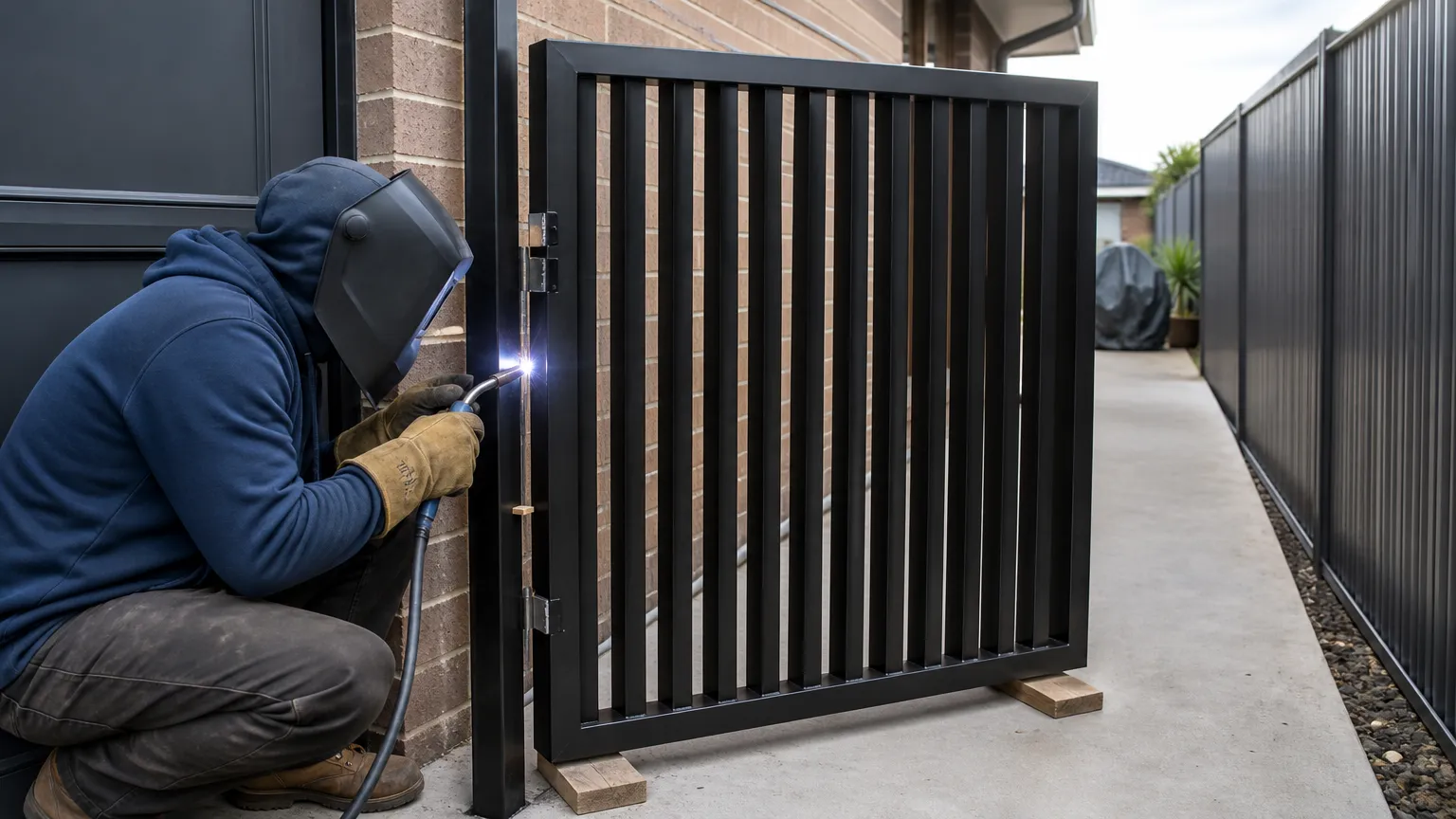
A weld-on hinge is two halves and a pin. One half welds to the post and one to the hinge stile. A bullet hinge is the round, tidy version: a short barrel, often about 100 mm long and 20 mm across, with a pin inside.
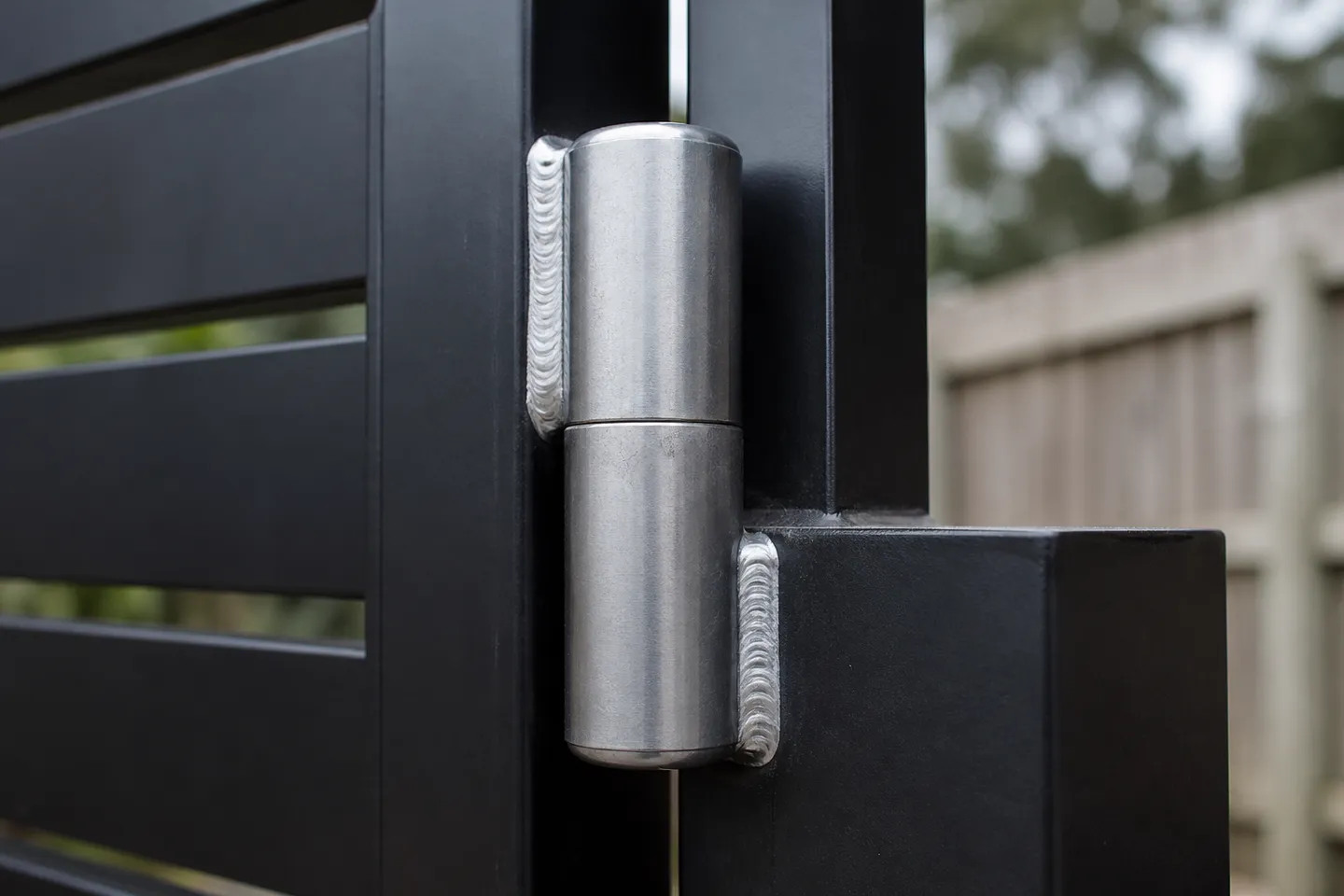
They are the default on a lot of metal gates. They are cheap and strong for their size, and with nothing bolted through the tube there is nothing to work loose.
The downside is no adjustment. If the gate settles, you cut them off and weld new ones. Getting the top and bottom pins on one vertical line matters a lot. If they are out, the gate binds and the pins wear oval.
Weld like metal to like metal. An aluminium gate needs aluminium weld-on hinges, or a bolt-on hinge. Our guide on how to weld hinges on a metal gate covers lining them up.
Are adjustable bolt-on hinges worth the extra cost?
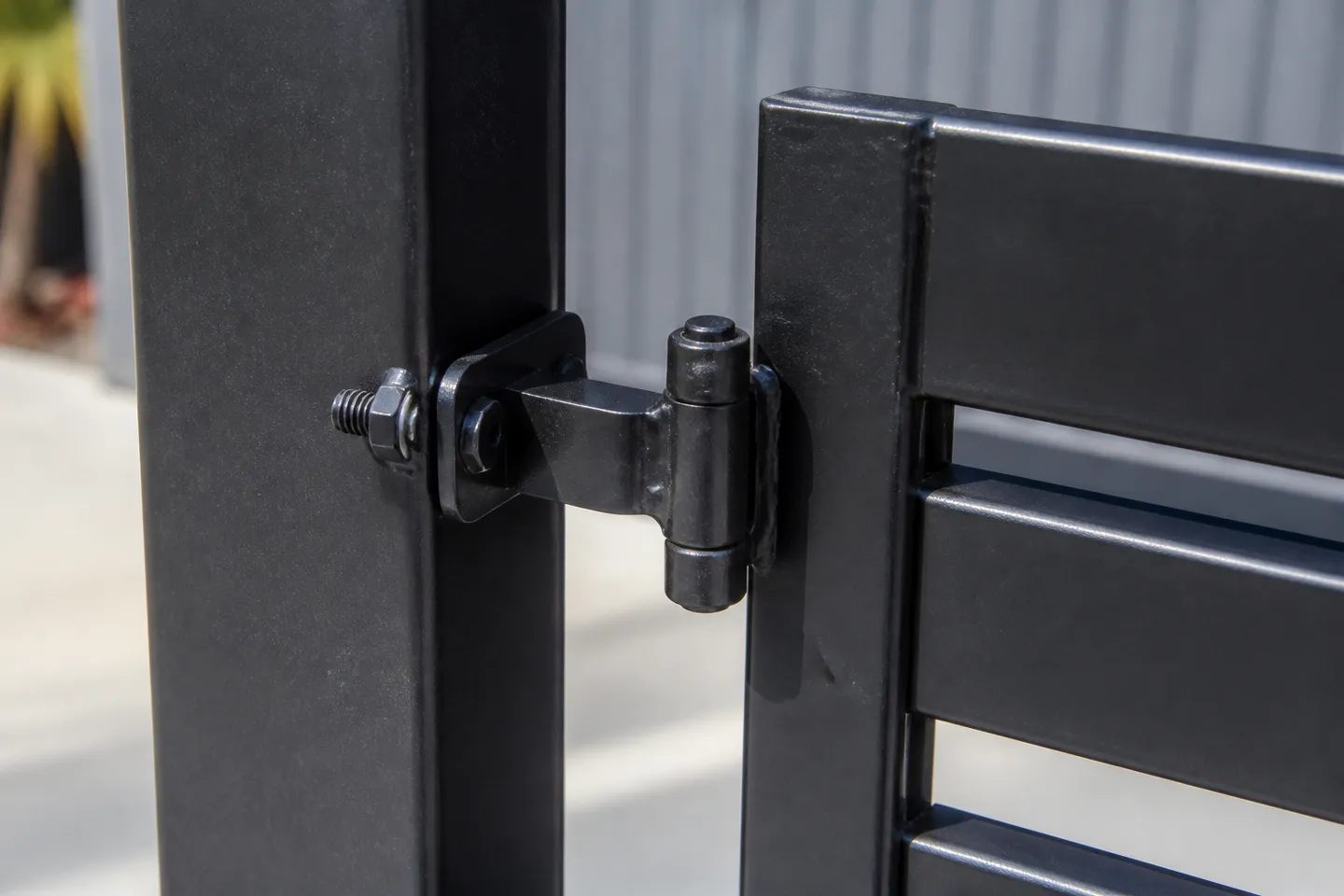
On most jobs, yes. An adjustable hinge bolts through the post and the stile on a threaded shank. Wind the nuts and the gate moves in or out. Many also let you move it up and down. Locinox is the brand most people picture here.
Where they pay off:
- You can lift a dropped latch end in a few minutes, with no welding.
- You can set the gap at the hinge and at the latch exactly on the day.
- They bolt to an aluminium frame without welding a different metal to it.
An eye-bolt hinge is the simplest kind. It is a threaded bolt with an eye on the end, in sizes like M12, M16 and M20. The thread length sets how far you can adjust it. The bigger the thread, the heavier the gate it suits.
What are strap and tee hinges used for?
A strap hinge has a long flat leaf that screws across the face of the gate. A tee hinge has that long strap on the gate and a short plate on the post, so it looks like a T on its side.
The long strap spreads the load across several palings or boards. That is why they suit timber gates. On a metal tube frame there is often too little face for the strap to sit on, so a weld-on or bolt-on hinge is a better fit. A butt hinge is the other light option: two small flat leaves, more common on doors and small gates.
When do you need pivot hinges?
A pivot hinge has a pin at the top and a pin at the bottom of the hinge stile. The bottom pivot carries the weight of the leaf straight down. The top one only keeps it upright. On heavy gates the pivots are often bearing units, such as UCP207 pillow blocks or UCF207 flange bearings.
Use pivots when a leaf is too heavy or too wide for side hinges. Because the weight goes down into the bottom pivot, the post takes less of the pull that makes ordinary gates sag. The bottom pivot needs a solid base, either a ground pivot set in concrete or a plate on a strong post.
How do self-closing hinges work?
A self-closing hinge has a spring or a small hydraulic damper inside. Open the gate and it winds up. Let go and it swings the gate shut. A hydraulic one also controls the speed, so it does not slam.
Read the limits before you pick one. The Locinox Tiger, a popular hydraulic hinge closer, is listed by Australian sellers for gates up to 75 kg and 1.1 m wide. Go past the rating and it will not close the gate reliably, or it wears out fast.
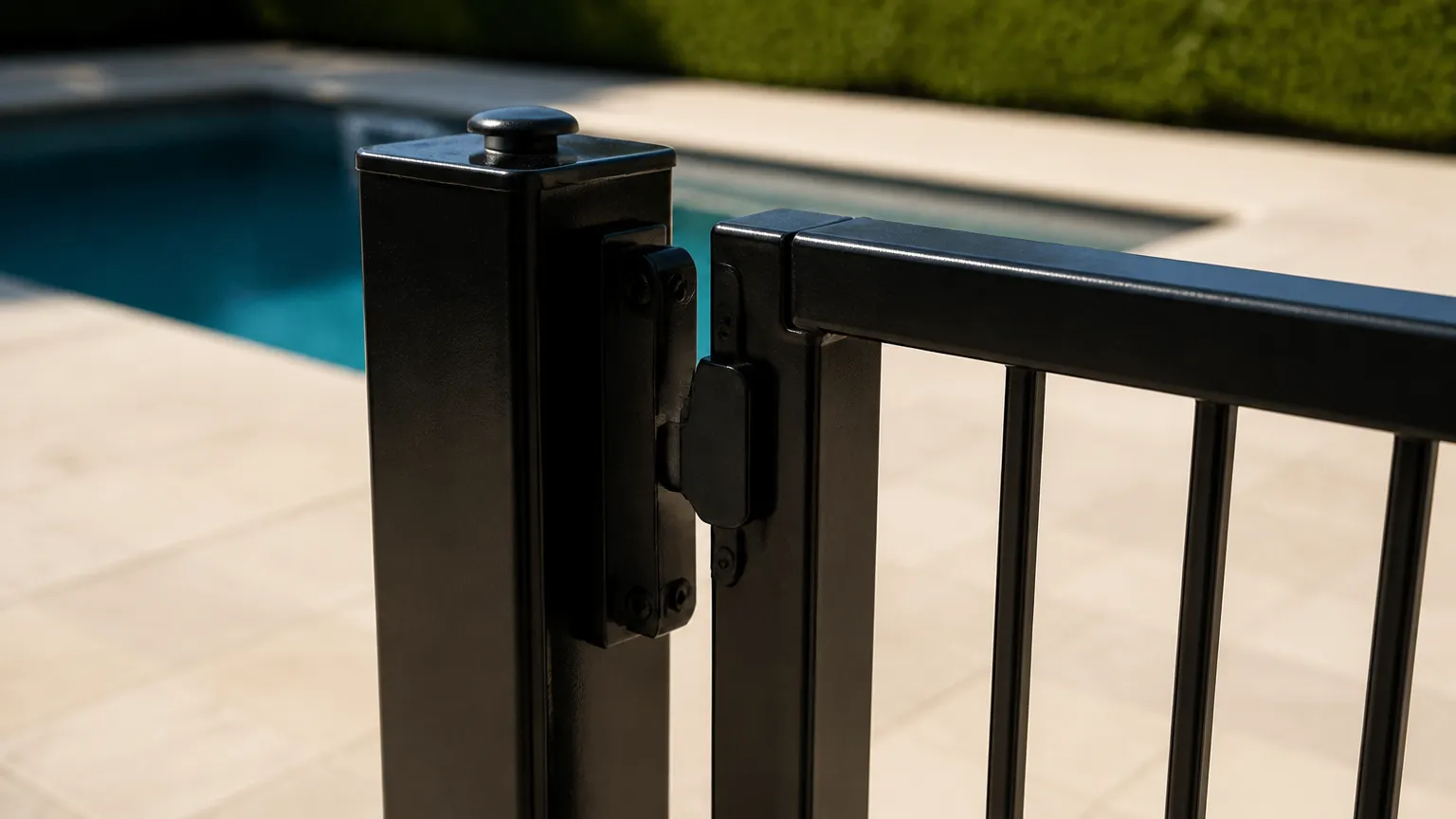
For a heavier or wider gate, use ordinary hinges plus a separate hydraulic gate closer. Pair a self-closing gate with a latch that catches on its own, like a magna latch. For pool gates, see pool gate hinges and latches.
What about heavy-duty ball-bearing and 180 degree hinges?
A ball-bearing hinge is a barrel hinge with a bearing between the two halves. The leaf turns on the bearing, not on metal rubbing on metal. That makes a heavy driveway leaf swing easily and wear slowly. Keep the bearing greased. Some have a grease nipple for that.
A 180 degree hinge lets the gate swing right round and sit flat against the fence or wall. The pin sits out past the face of the post, so the leaf can clear it. Use one when the gate has to fold all the way back, such as across a driveway. Check the hinge offset on the drawing so the gap at the hinge side is right.
How do you size a gate hinge for the weight of the gate?
Start with the leaf weight. Weigh one if you can. If not, work it out from the cutting list: the length of each member times its weight per metre, which your supplier lists. Add the infill and hardware. Solid infill and wide leaves add up fast.
Then read the hinge rating carefully:
- Per hinge or per pair? Makers print both. One maker rates a 100 mm bullet hinge at about 200 kg per pair. That is 100 kg on each hinge, not 200.
- Width matters too. A wide leaf pulls harder on the top hinge than a narrow one of the same weight. Makers say to allow for long gates, shock loads and slamming. Leave plenty of margin.
- Hinge spacing. Put the hinges as far apart as the stile allows. The further apart they are, the less force each one takes.
- Add a third hinge on a tall or heavy leaf. It keeps the stile straight.
Remember the post carries everything the hinges carry. A big hinge on a small post just moves the problem. See what size gate post you need and, if the gate has already dropped, how to fix a sagging metal gate.
Common questions
What is the strongest type of gate hinge?
For very heavy gates, a pivot hinge on a bearing is usually the strongest setup, because the bottom pivot carries the weight straight down. For everyday side hinges, heavy-duty weld-on barrel or ball-bearing hinges carry the most.
Can I weld a hinge onto an aluminium gate?
Yes, if the hinge is aluminium too. You cannot weld a hinge made of a different metal to an aluminium frame. If you cannot get an aluminium weld-on hinge, use a bolt-on hinge.
How many hinges does a gate need?
Two suits most leaves. Add a third on a tall or heavy leaf so the hinge stile stays straight. Pivot hinges are always one at the top and one at the bottom.
What is the difference between a barrel hinge and a bullet hinge?
Both are weld-on hinges with a pin inside a barrel. A bullet hinge is the short, rounded type, shaped like a bullet. People often use the two names for the same thing.
Why use adjustable gate hinges?
They let you set the gaps on the day and lift a dropped gate later with a spanner. On a gate you will not see again for years, that is worth the extra cost.
Do self-closing hinges work on heavy gates?
Only up to their rating. The Locinox Tiger, for example, is listed for gates up to 75 kg and 1.1 m wide. For heavier gates, use normal hinges with a separate hydraulic gate closer.
Written by Harry Tolley
Harry builds CAD60 with his dad, who has run a fabrication business for 20 years. We write these guides from what goes wrong in a real shop.