On this page
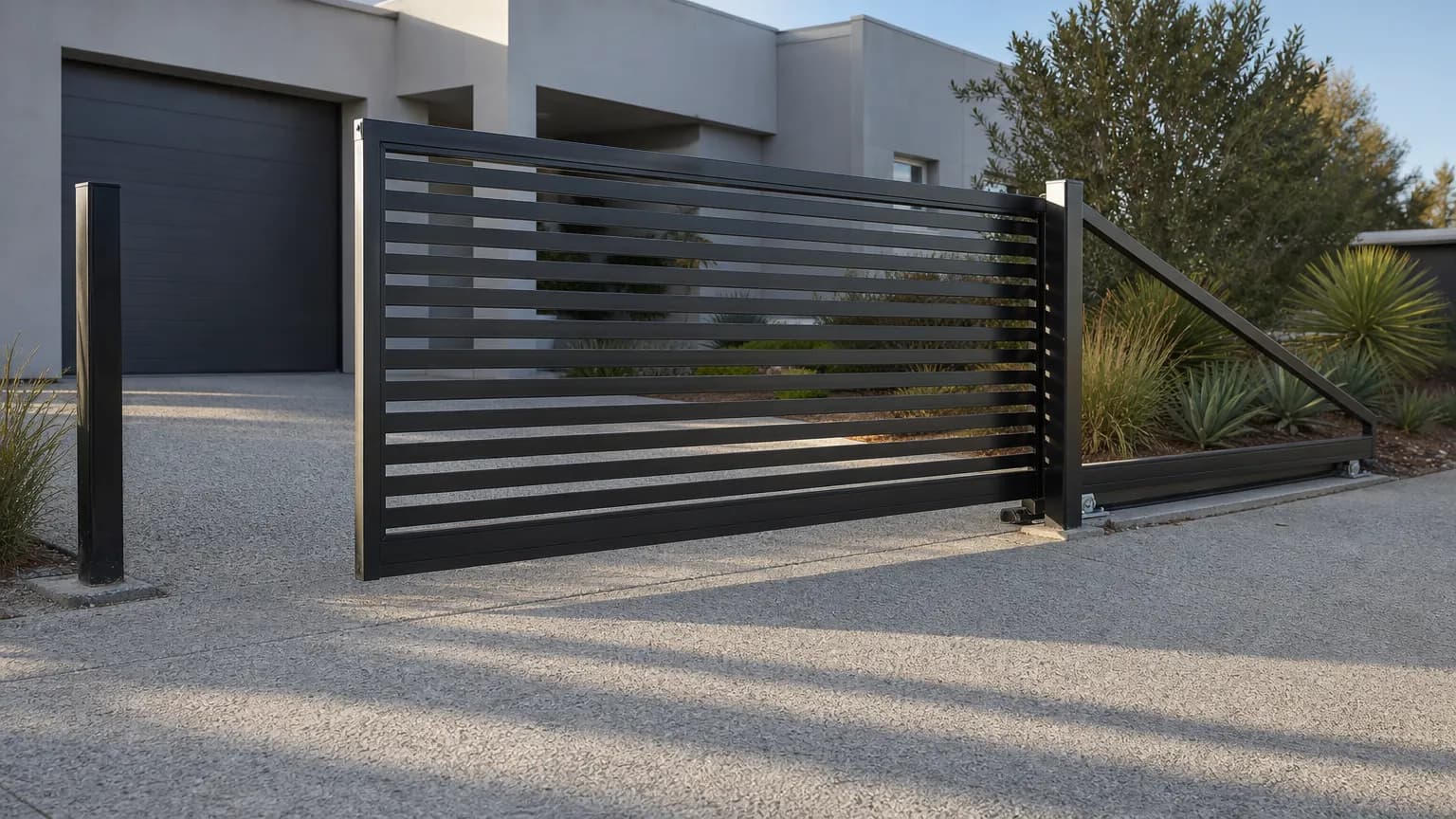
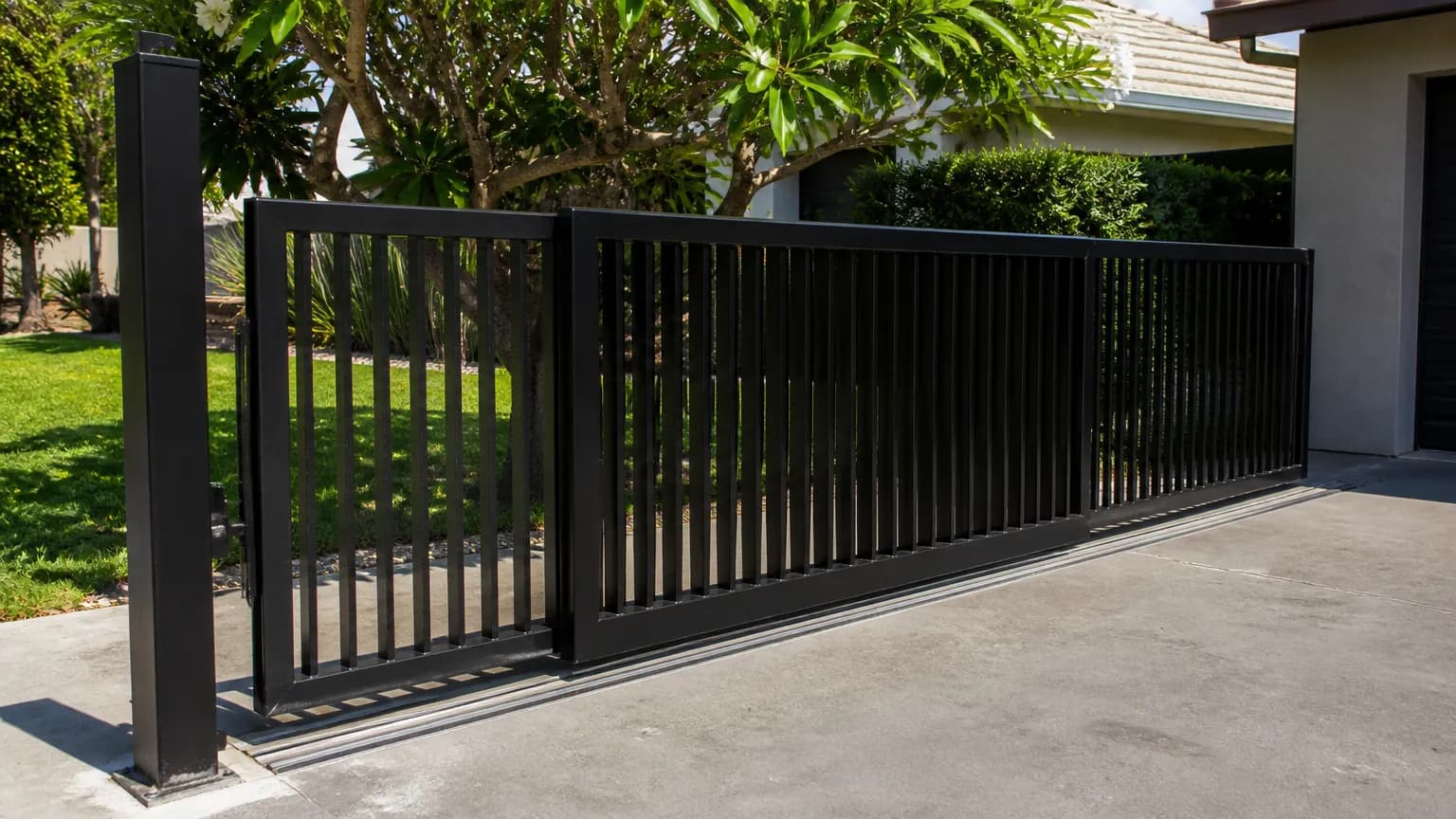
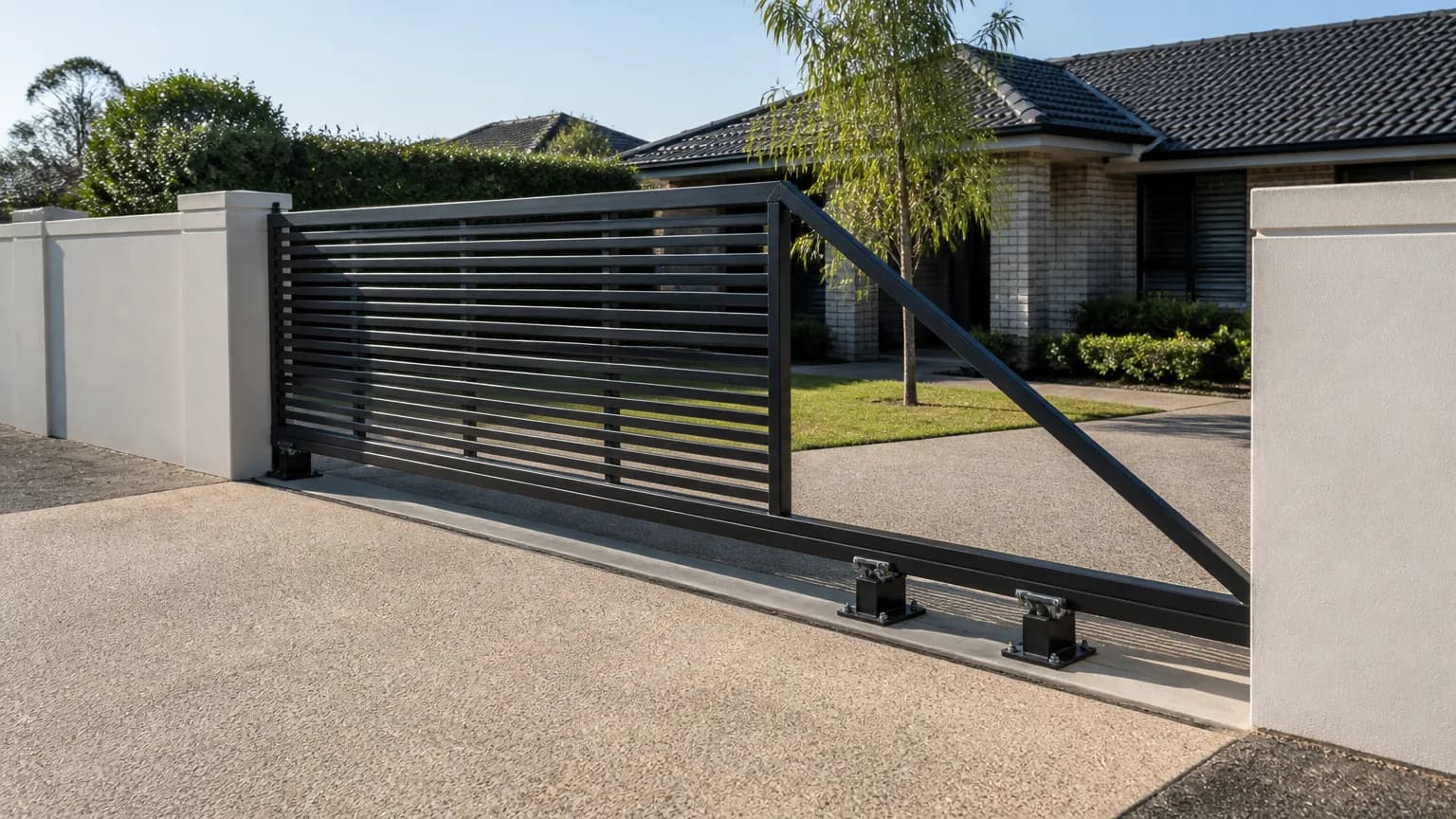
A cantilever gate has no track across the driveway. It hangs off rollers beside the opening. To do that, the gate has to be longer than the gap it closes. The extra length behind the opening is the tail.
Get the tail too short and the nose of the gate drops and drags on the ground. Make it too long and it will not fit the site. The usual number is simple, and the calculator further down does the sums for your own opening.
What you need to know
- The tail is usually 40 to 50% of the clear opening. Start at 50%.
- Total leaf length is the opening plus the tail. A 4 m opening at 50% makes a 6 m gate.
- When the gate is open, the whole leaf sits beside the opening, so you need that much clear room.
- A motor can need a longer tail. Pick the motor and hardware before you cut anything.
- The roller carriages sit inside the tail. Their spacing comes from your hardware table.
Why does a cantilever gate need a tail?
A cantilever gate works like a see-saw. The rollers are the pivot. The gate body sticks out over the opening on one side. The tail sits on the other side, behind the rollers.
When the gate is shut, the body is unsupported at its far end. Its weight wants to tip the nose down. The tail and the two sets of rollers stop that. The longer the tail, the further apart the rollers can sit, and the less load each roller takes.
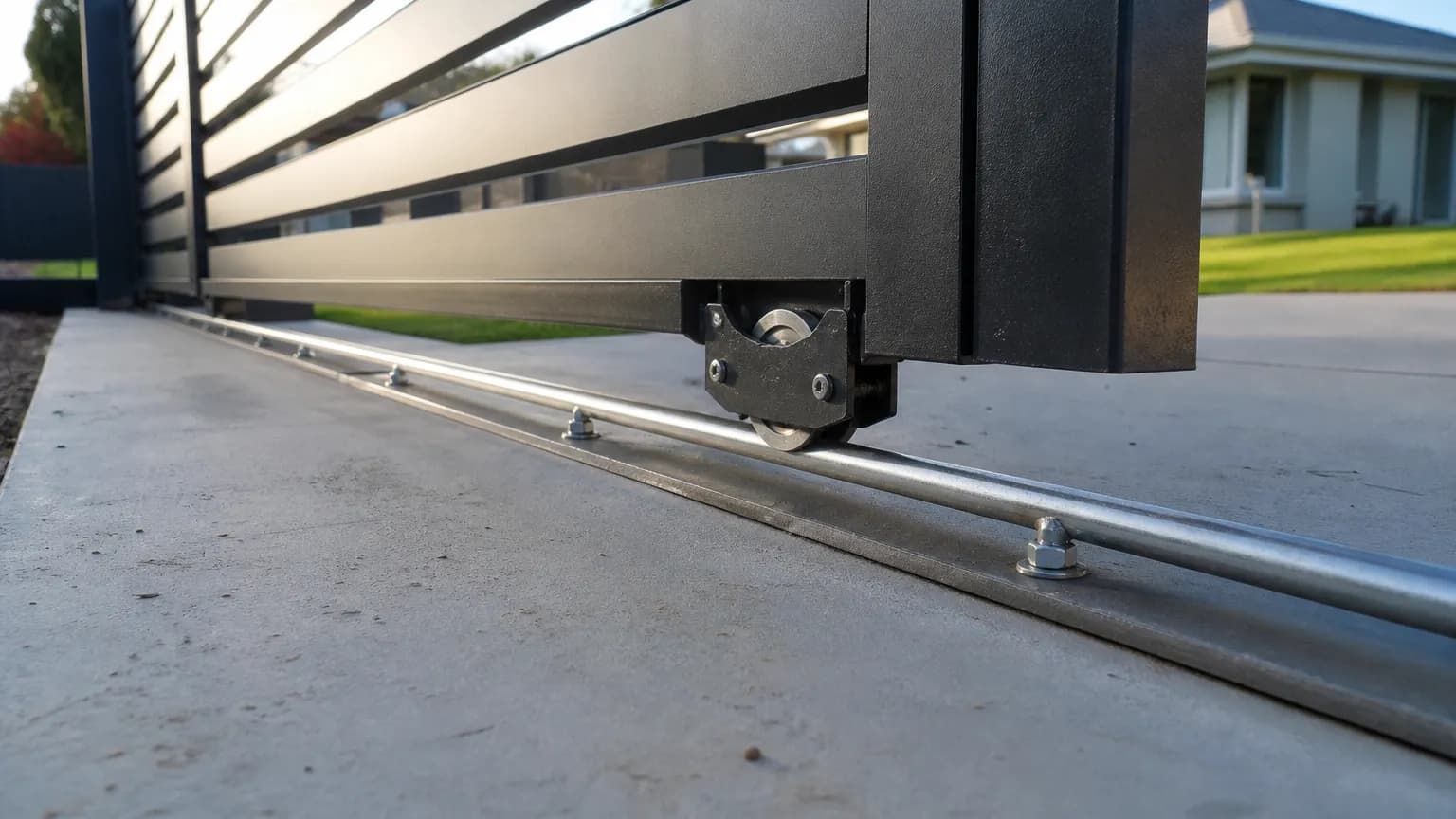
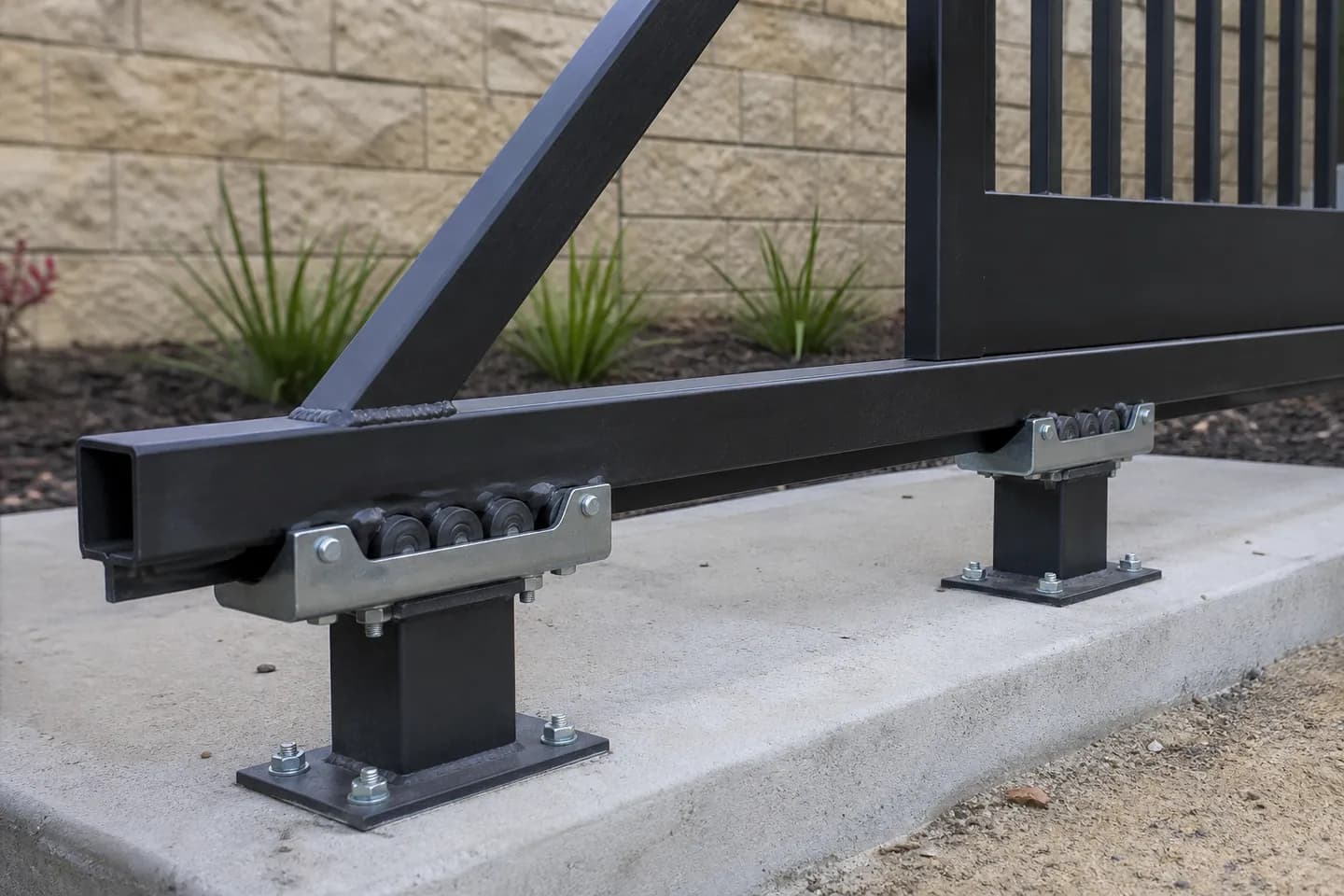
That is why the tail is also called the counterweight section or the counterbalance. It is part of the frame, not a block of weight bolted on. The bottom of the whole leaf carries a cantilever rail, a channel the rollers run inside.
How long should the tail be?
The rule of thumb is 40 to 50% of the clear opening. Hoover Fence, a US gate kit maker, says the counterbalance should be half the opening in its cantilever install manual, with a minimum of 4 ft (about 1.2 m). Other build guides give the same 40 to 50% range.
I'd start at 50%. It gives the rollers the most room and leaves a margin if the gate ends up heavier than planned. Drop toward 40% only when the site is tight and your hardware supplier says it is fine.
| Clear opening | Tail at 40% | Tail at 50% | Total leaf at 50% |
|---|---|---|---|
| 3,000 mm | 1,200 mm | 1,500 mm | 4,500 mm |
| 4,000 mm | 1,600 mm | 2,000 mm | 6,000 mm |
| 5,000 mm | 2,000 mm | 2,500 mm | 7,500 mm |
| 6,000 mm | 2,400 mm | 3,000 mm | 9,000 mm |
The rule works off the opening, not the height. A 1.2 m high gate and a 2.1 m high gate on the same opening start from the same tail. The height and the infill change the weight, and the weight decides which roller kit you need.
What tail does my opening need?
Type your clear opening in millimetres and pick a ratio. The calculator gives you the tail and the full length of the leaf.
Cantilever tail calculator
Type your clear opening and pick a tail ratio.
Post face to post face, where the car drives through.
50% is the usual start. Your kit's table wins.
- Tail length
- 2,000 mm
- 2.00 m
- Total leaf length
- 6,000 mm
- 6.00 m
- When the gate is open, the whole leaf sits beside the opening. Keep about 6,000 mm clear there.
- Add any overlap past the catch post your hardware asks for. About 150 mm is common.
Measure the opening from post face to post face, where the gate actually closes the gap. Do not measure from the fence line or the edge of the driveway. Those are often different numbers.
How much room do you need beside the opening?
More than the tail. When the gate is shut, only the tail sits beside the opening. When it is open, the whole leaf has slid across, so the full length sits there. A 4 m opening with a 2 m tail needs about 6 m of clear, fairly level space beside it.
Walk that space before you quote. Look for:
- Letterboxes, meter boxes and taps in the run-back.
- A fence or wall that turns a corner before the gate is fully open.
- Ground that rises, so the low point of the gate hits it as it slides.
- Trees, garden beds and side paths people still need to use.
Add a little for overlap too. Hoover Fence makes the infilled part of the gate about 6 in (150 mm) longer than the opening, so it covers the gap past the rollers and the catch post.
No room at all? A cantilever is the wrong gate. Look at a telescopic sliding gate, where two shorter leaves stack up and the run-back is closer to half the opening. The cantilever vs tracked sliding gate guide compares them.
When should the tail be longer than 50%?
Two common reasons:
- A motor that drives from the back. Hoover Fence notes that an automatic opener may need a longer counterbalance so it can pull the gate shut from the rear. The drive rack has to reach the motor's pinion with the gate closed.
- Your roller kit says so. Cantilever hardware is sold with a table of opening, weight and tail. If the table asks for more than your rule of thumb, the table wins.
This is why you choose the gate motor and roller kit before you cut a single length. Changing the tail after the frame is welded is a big job.
Where do the roller carriages go?
Inside the tail zone, on two posts beside the opening. The first post stands near the edge of the opening. The second stands further back, still under the tail when the gate is shut. The rail under the gate runs through both carriages.
Wider spacing between the carriages means less load on each one. But both carriages must stay inside the rail at every point of travel, so the spacing has to be less than the tail. The exact centres come from your hardware supplier. Each kit is different.
Many installers pour one long concrete pad for both roller posts, so they cannot move apart. Pour it to the carriage centres from your hardware table, and get it level along its length.
How do you frame the tail?
Most tails are left open, with no infill. A single brace from the top of the gate down to the end of the bottom rail is enough on a short tail. On a long tail, one brace gets too long to hold the tail straight. Split it into a truss: verticals with a brace in each panel.
Add a top member over the tail when it has to carry cladding or a top guide. That turns the triangle into a rectangle.
All of this has to be on the drawing. The tail length, the brace, the carriage centres and the pad set-out are what the installer needs on site. The sliding gate shop drawing guide covers what else goes on the sheet.
Common questions
Can a cantilever gate tail be shorter than 40%?
Only if your roller hardware table allows it. Below about 40% the gate may not balance, the nose drops and the front carriage takes too much load. If the site is too short, change the gate type.
Does the tail of a cantilever gate need infill?
No. The tail usually stays open, with just the bottom rail and a brace or truss. It sits behind the fence line when the gate is shut. Clad it only if you want it to look like part of the fence.
How much longer is a cantilever gate than a tracked sliding gate?
About 40 to 50% longer. A tracked gate is roughly the opening plus a small overlap each end. A cantilever gate is the opening plus the whole tail, so a 4 m opening takes a gate near 6 m long.
Does a gate motor change the tail length?
It can. The rack has to reach the motor's pinion with the gate shut. If the motor sits back from the opening, the tail may need to run further. Check with the motor supplier before you set the tail.
Where is the tail measured from?
From the edge of the clear opening on the roller side, back to the end of the bottom rail. The gate body covers the opening, and everything past that edge is tail.
Is a 50% tail too long for a light aluminium gate?
Not usually. A lighter gate puts less load on the rollers, but the tail ratio is about balance and roller spacing, not just weight. Start at 50% and shorten only if your hardware table says it is fine.
Written by Harry Tolley
Harry builds CAD60 with his dad, who has run a fabrication business for 20 years. We write these guides from what goes wrong in a real shop.