On this page
- What types of sliding gate track are there?
- What is a V track?
- Is round bar track better than V track?
- When should you use a U channel track?
- Can a sliding gate run on flat bar?
- Should the track be recessed or surface mounted?
- Can you have a sliding gate with no track?
- How do you pick wheels to match the track?
- Common questions
A tracked sliding gate is only as smooth as the track it runs on. Pick the wrong track, or the wrong wheel for it, and the gate grinds or jumps off.
Most jobs use one of four track shapes, either bolted on top of the slab or cast into it. A cantilever gate skips the track altogether. Below is each one and the wheel it needs.
What you need to know
- V track (an inverted angle) is the common choice. It is low and easy to fix down, but it holds small stones.
- Round bar on a flat base sheds dirt better. Use a wheel made for round bar.
- A U channel holds the wheel in, but it collects leaves and water.
- The wheel groove must match the track shape, every time.
- A cantilever gate has no track across the opening at all.
What types of sliding gate track are there?
Most tracked gates run on one of four shapes. Here they are side by side, with the wheel each one wants.
| Track | Wheel | Good for | Watch out for |
|---|---|---|---|
| V track (inverted angle) | V groove | Clean, paved driveways | Stones and grit sit in the wheel path |
| Round bar on a flat | Round groove | Most homes, dusty sites | A V wheel on round bar wears fast |
| U channel | Flat or U groove, inside | Holding the wheel in line | Fills with leaves, dirt and water |
| Flat bar | Flat tread | Light gates, simple builds | No side grip; the posts do the guiding |
| No track (cantilever) | Roller carriages beside the opening | Slopes, gravel, rough ground | Needs a long tail and run-back |
What is a V track?
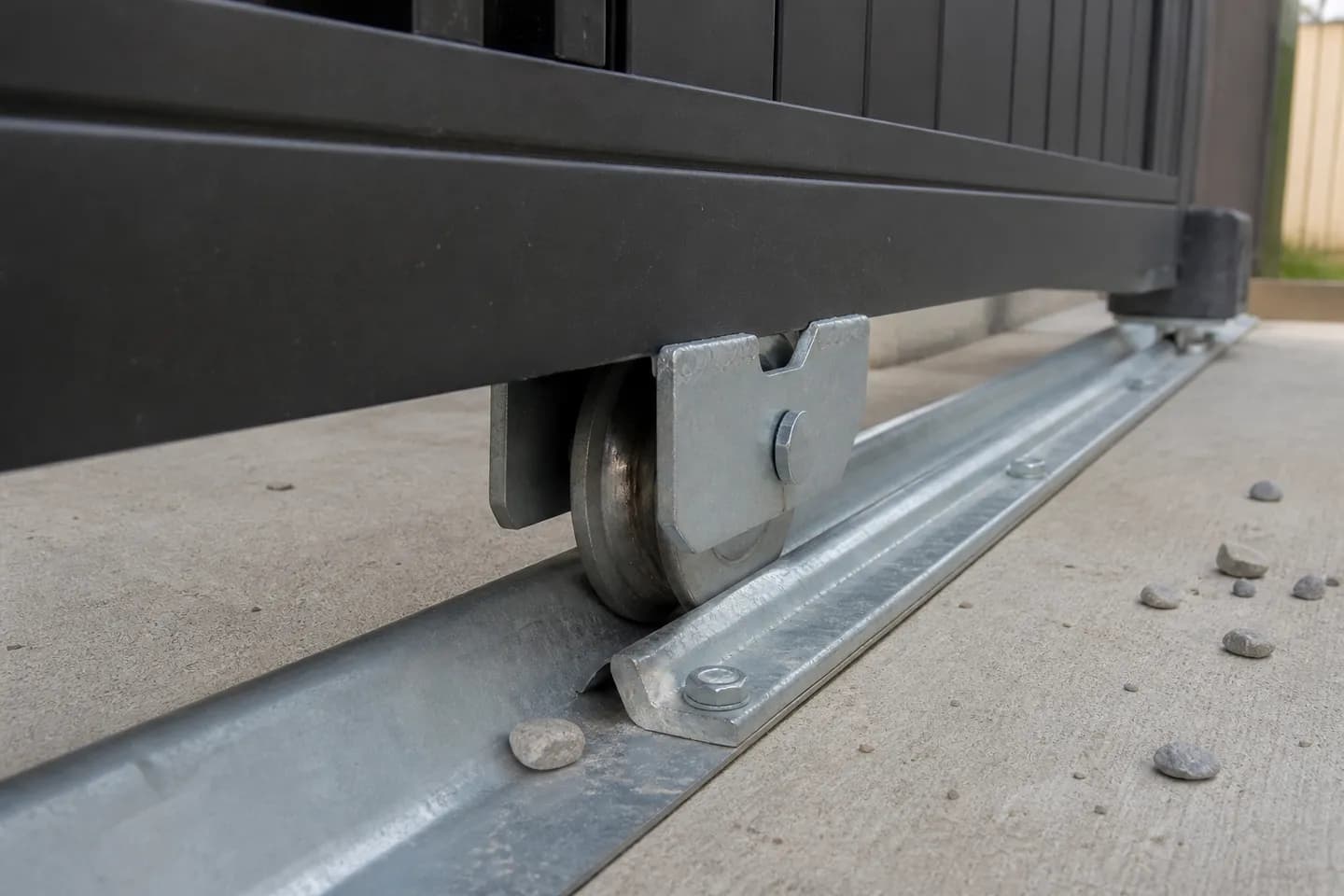
A V track is an angle laid point up. The wheel has a V groove that sits over the point. You can buy it ready made, usually galvanised and pressed with flanges to fix it down. Or you can make it from equal angle welded point up onto a flat bar. That is the inverted angle track you see on a lot of older gates.
It is low, cheap and easy to fix to a slab. That is why it is so common. The catch is the V shape. Small stones and grit land in the wheel path, and the wheel climbs over them. On a clean, swept driveway that is fine. On a gravel drive it is a daily annoyance.
Is round bar track better than V track?
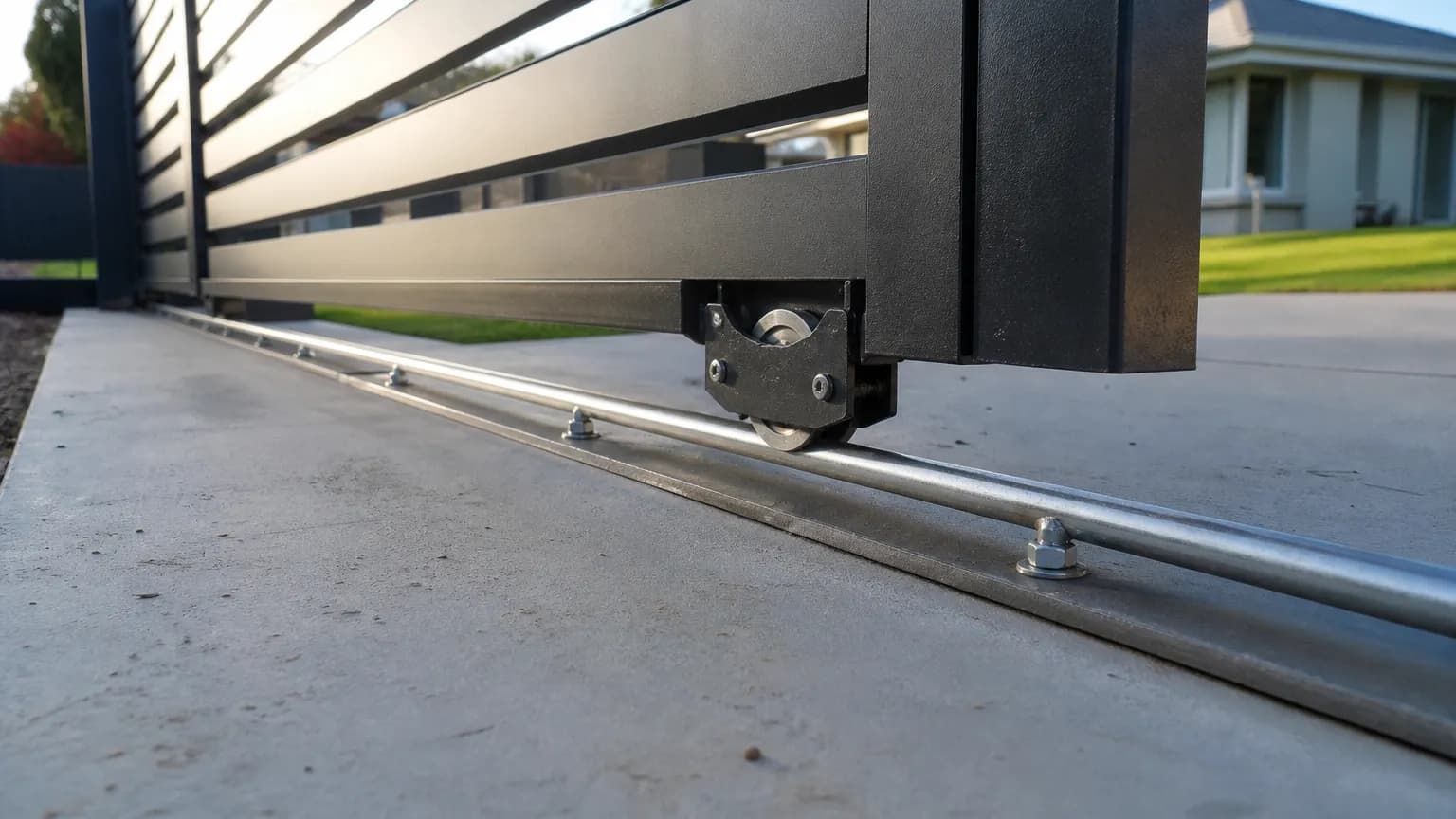
For most homes, I'd say yes. A round bar track is a solid round bar welded along a flat base, then fixed to the slab. The rounded top lets dirt fall away instead of sitting in the wheel path. CAD60's tracked gates start with a 16 mm bar on a 50x6 flat, and you can change both.
The wheel matters here. Use a wheel with a round groove made for your bar size. A V groove wheel on a round bar is a poor fit. It touches the bar at two small points instead of wrapping around it, so the load sits on a tiny area and wears faster. Suppliers sell round groove wheels by bar size, so check the bar diameter before you order.
When should you use a U channel track?
A U channel is laid open side up, and the wheel runs inside it. The channel walls hold the wheel in line, so the gate cannot wander sideways off the track.
The trade-off is what lands in the channel. Leaves, dirt and water all end up in the wheel path. A surface channel also stands taller than a V or round bar track. Use a flat or U groove wheel that fits the inside width, with a few millimetres spare each side.
U channel suits a site where the wheel must stay in line and someone will keep it clean. On a site full of leaves, it will need regular sweeping.
Can a sliding gate run on flat bar?
Yes, on a light gate. The wheel has a flat tread and rolls on a flat bar fixed to the slab. It is the simplest track to make.
But a flat bar gives the wheel nothing to grip sideways. The guide rollers on the post have to keep the gate in line on their own. For anything bigger than a light pedestrian slider, I'd use round bar or V track instead.
Should the track be recessed or surface mounted?
Surface mounted means the track is bolted on top of the slab with dynabolts or chemical anchors. It is quick, easy to level with packers and easy to replace. The downside is a small bump across the driveway.
Recessed means the track is cast into the concrete, so its top sits flush or just under the surface. One gate maker's spec sets its cast-in track about 5 mm below the finished road level, poured in two stages. You get a smooth driveway with nothing to trip on.
A recessed track asks more of you:
- The pour has to be dead level, because you cannot pack it later.
- Water and grit need a way out, or the track sits in a puddle.
- Replacing a worn track means cutting concrete.
Can you have a sliding gate with no track?
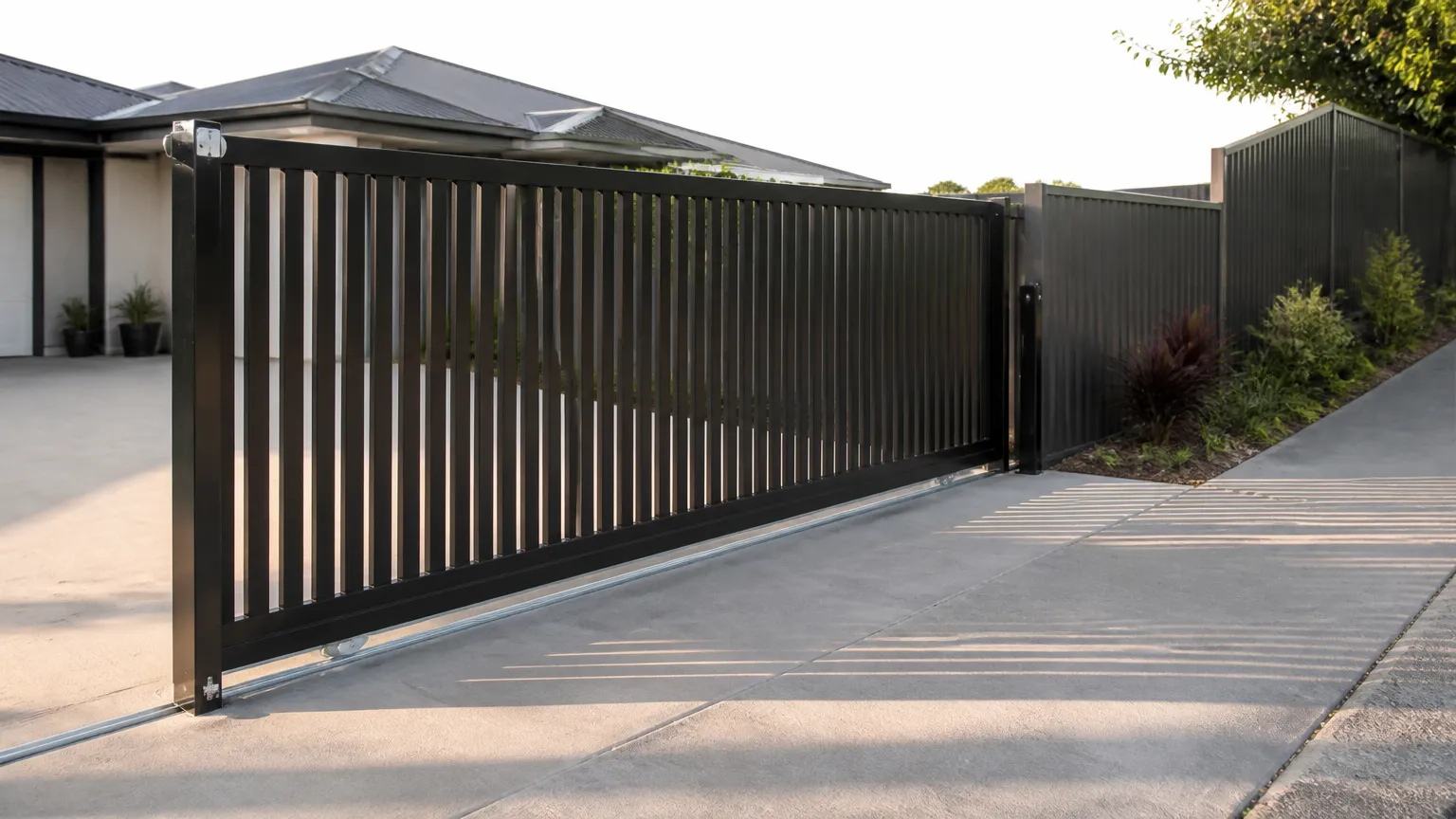
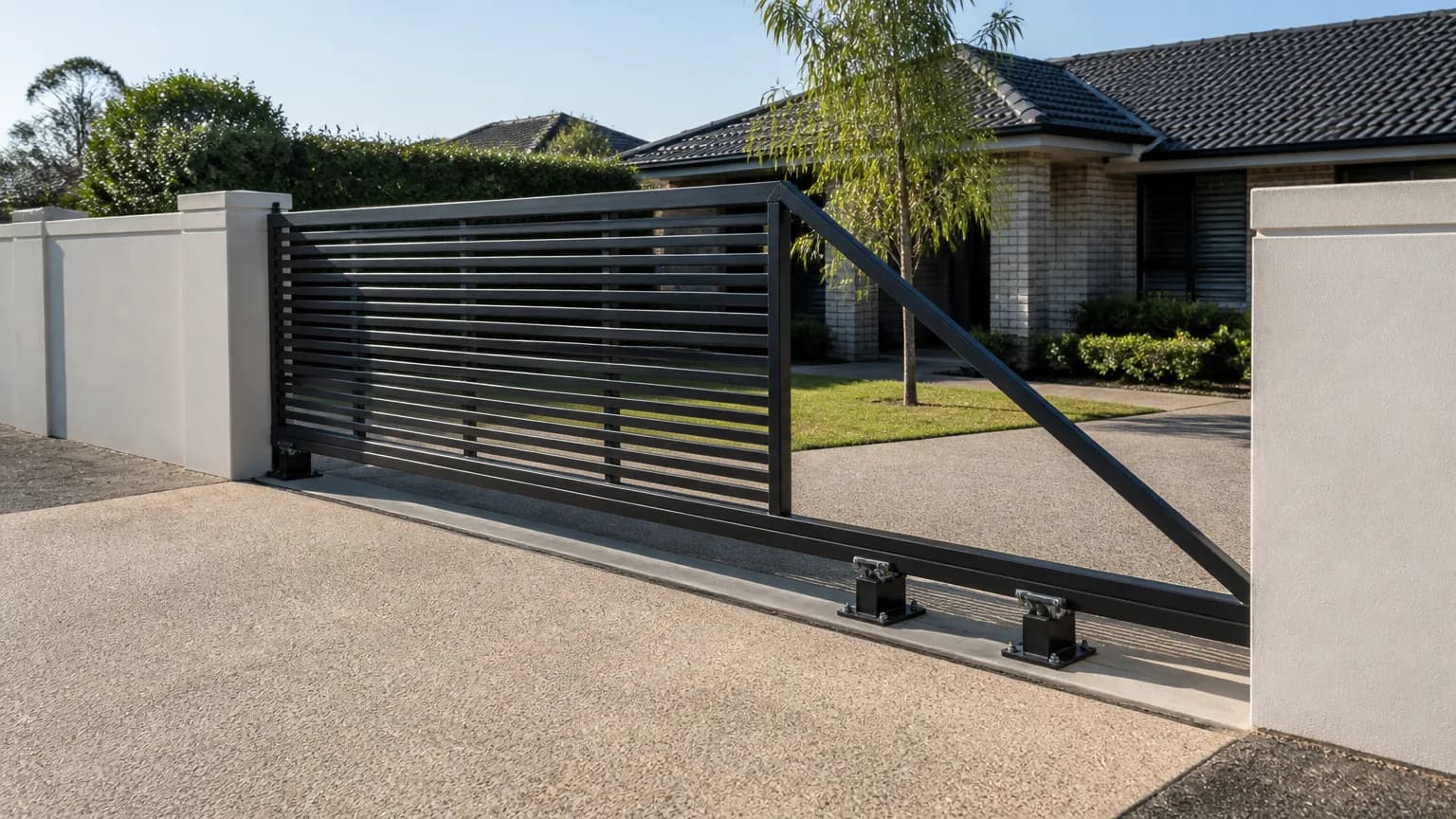
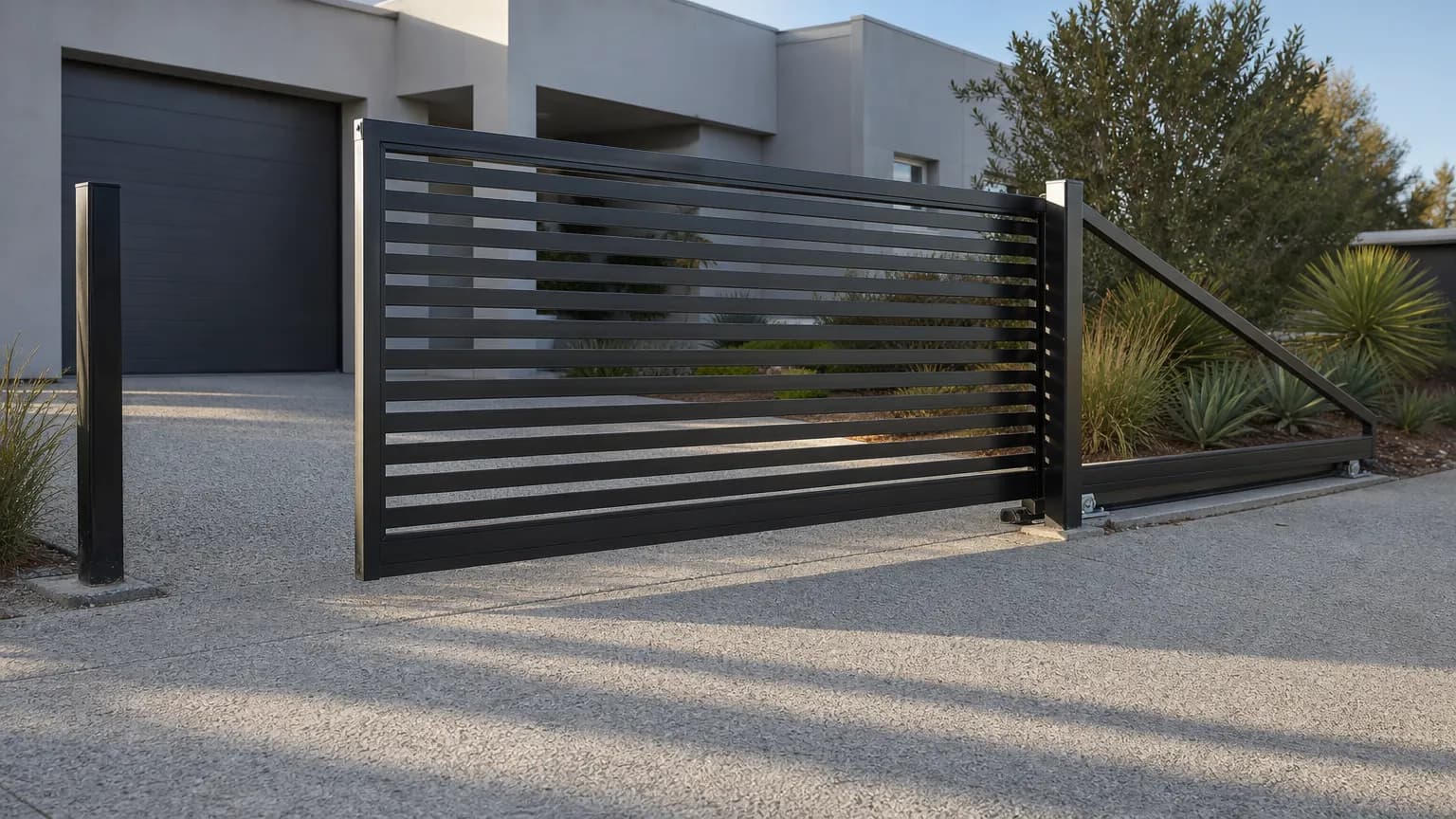
Yes. A cantilever gate has no track across the opening. It hangs off roller carriages on posts beside the opening, with a tail behind them to balance it. Nothing on the ground can block it, so it suits gravel, slopes and rough ground.
The cost is length. The tail is usually 40 to 50% of the opening, and you need room for the whole gate beside the opening when it is open. The cantilever gate tail guide has a calculator, and cantilever gate vs sliding gate compares the two in full.
How do you pick wheels to match the track?
Three checks, in this order:
- Groove shape. V groove on V track, round groove on round bar, flat tread on flat bar or inside a channel. Never mix them.
- Groove size. A round groove is made for one bar size. A V groove is made for one angle. Match the numbers on the supplier's sheet.
- Wheel diameter. The wheel and the track both sit in the gap under the gate. Wheel diameter plus track height has to fit in your ground clearance.
Then check the load rating. Two wheels carry the whole gate, so each one needs to take at least half its weight, with some margin. The how to build a sliding gate guide covers wheel positions, guide posts and stops.
Common questions
What is the best track for a sliding gate?
For most homes, a round bar or V track on a level concrete strip. Round bar sheds dirt better. V track is lower and very common. On gravel or a slope, a cantilever gate with no track is often the better answer.
Can you use a V groove wheel on a round bar track?
It is a poor match. The V touches the bar at two small points instead of wrapping around it, so the wheel and bar wear faster. Use a round groove wheel made for your bar size.
How do you stop stones getting stuck in a sliding gate track?
Keep the track swept, and choose a round bar track over a V or U channel on dusty sites. On a gravel driveway, pave a strip either side of the track or choose a cantilever gate.
How long should a sliding gate track be?
The full travel of the gate: across the opening and along the run-back, plus a little past each end for the end stops. CAD60 adds 100 mm past each end of travel by default.
What is an inverted angle track?
It is a V track made from equal angle. The angle is laid point up and welded to a flat bar, then fixed to the slab. A V groove wheel runs on the point.
Can you put a sliding gate track on pavers?
Not on its own. Pavers move and settle, and the track moves with them. Lift a strip of pavers and pour a level concrete base for the track, then pave back up to it.
Written by Harry Tolley
Harry builds CAD60 with his dad, who has run a fabrication business for 20 years. We write these guides from what goes wrong in a real shop.