On this page
A quote is a promise. Get it too high and you lose the job. Get it too low and you build it for nothing. Most bad quotes come from one of two places: a line that got left out, or labour guessed as one big number.
The fix is a fixed order. Material first, then labour by task, then the extras, then your margin. Do it the same way every time and the numbers start to make sense. You also get a quote you can explain line by line when a customer pushes back.
What you need to know
- Price material off a cut list, rounded up to the stock lengths you will actually buy.
- Estimate labour task by task, not as one guess, and multiply by a real shop rate.
- Consumables, powder coat and install are separate lines. They are easy to forget.
- A 25% markup is only a 20% margin. Know which one you are using.
- Put a valid-until date on every quote, because metal prices move.
What goes into a fabrication quote?
Every fabrication quote is built from the same handful of lines. The job changes. The lines do not. Here they are in the order I would work them out:
| Line | Where the number comes from |
|---|---|
| Material | Cut list, rounded up to stock lengths, at supplier price plus handling |
| Labour | Hours for each task, times your shop rate |
| Consumables | Wire, gas, discs, fixings and concrete for this job |
| Finishing | The powder coater's quote, plus your time to get it there and back |
| Install | Site hours, travel, hire gear and anything you dig, drill or pour |
| Drawings | Time to draw it, get it signed off and change it |
| Contingency | A small line for the unknowns on this site |
| Margin | Applied last, on top of the lot |
You do not have to show every line to the customer. But you should have every line in your own sheet. If a number is missing there, you are paying for it.
How do you work out the material?
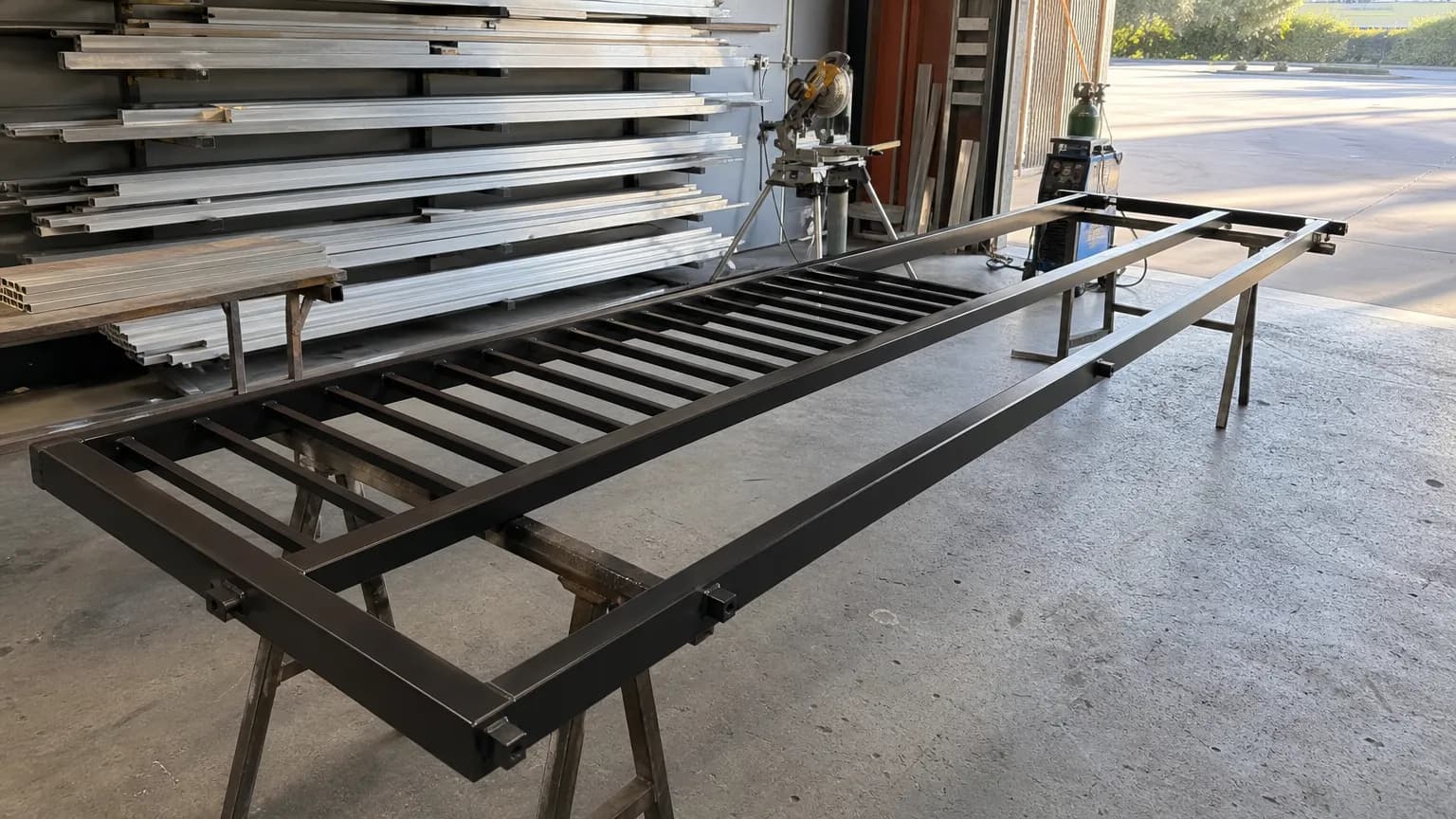
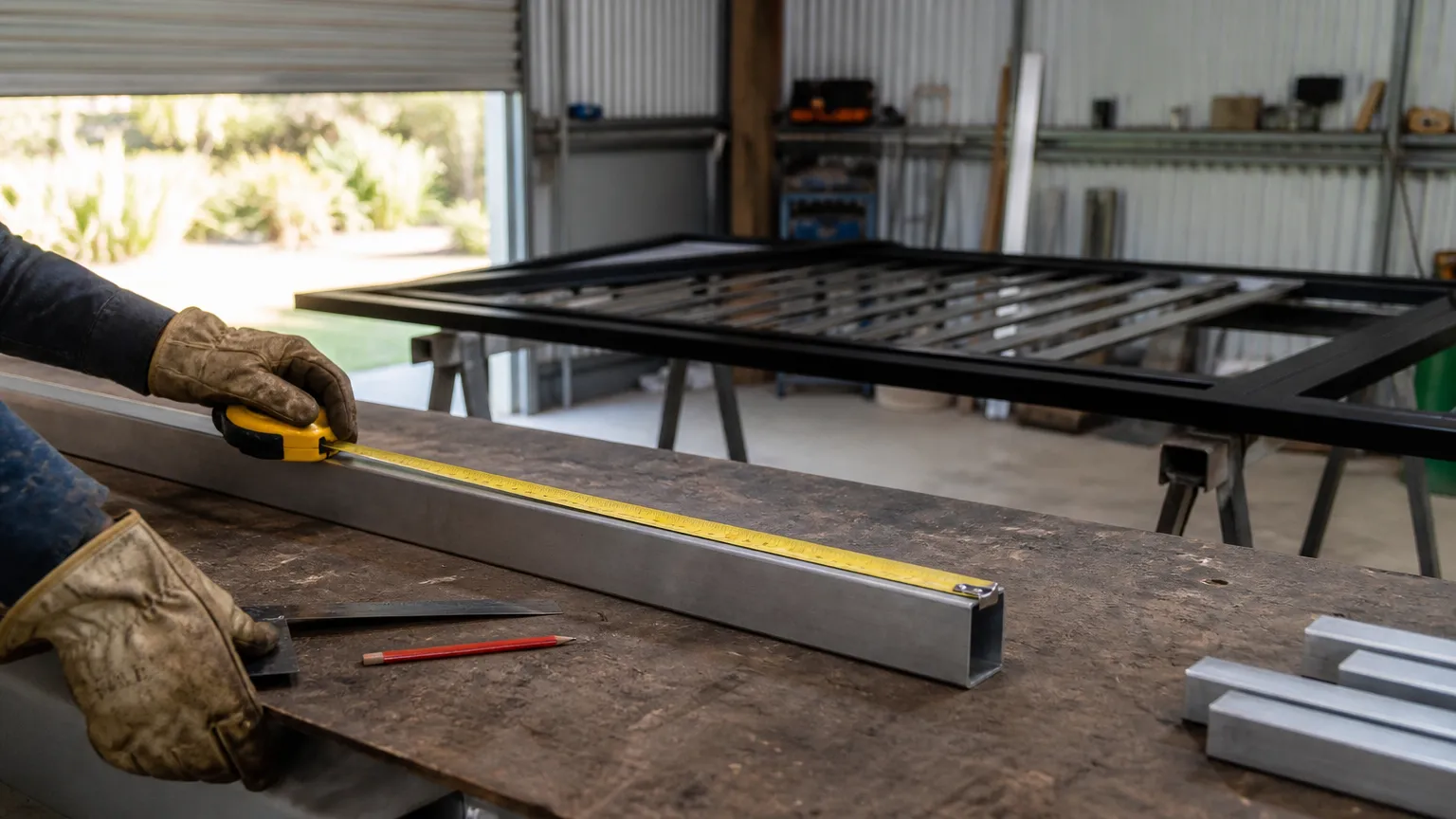
Start from a cutting list. Every member, its profile and its length. A gate is posts, stiles, rails, infill and hardware. If you do not have a drawing yet, sketch one. You cannot price what you have not drawn.
Then turn the cut list into a buying list:
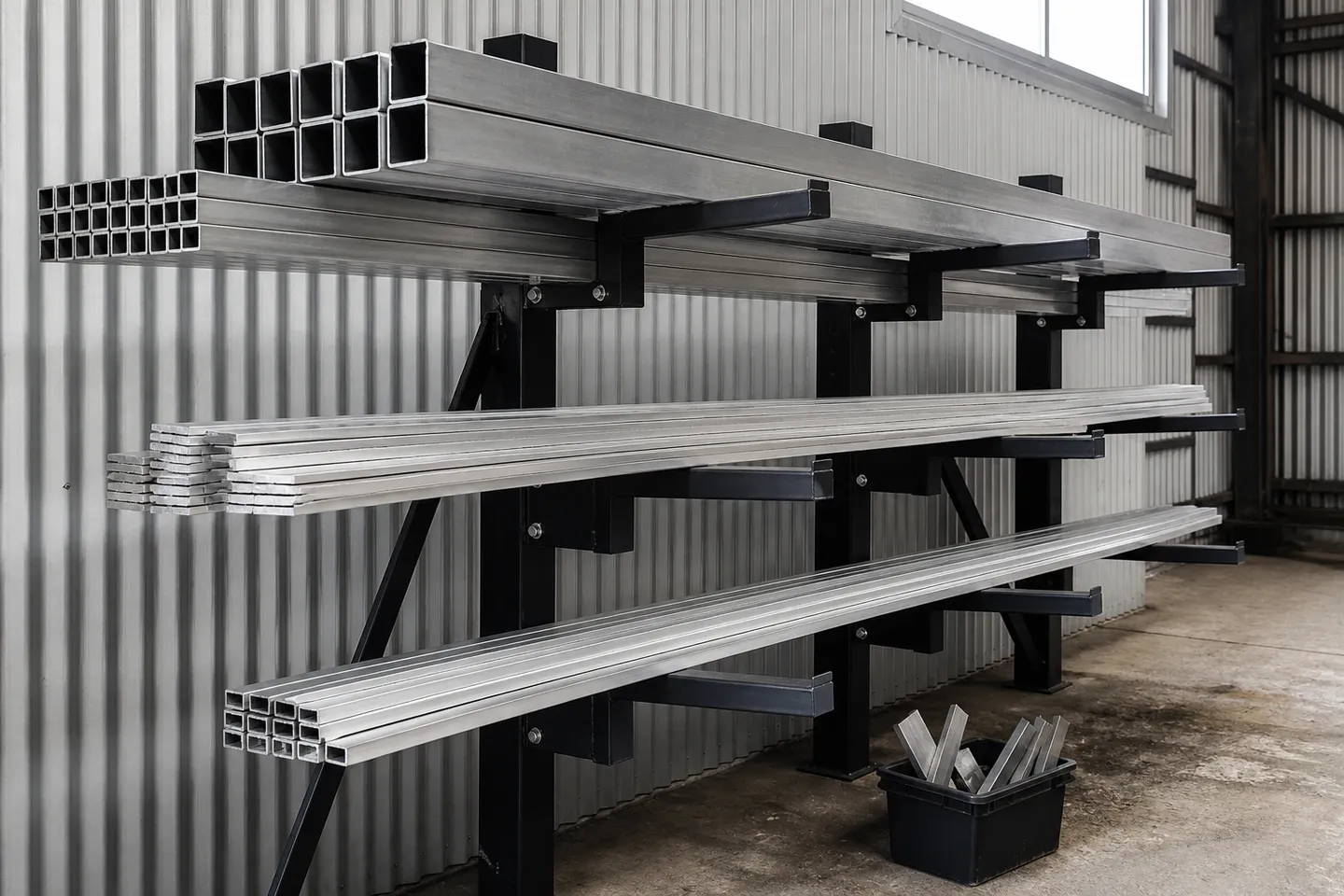
- Round up to stock lengths. If you need 4.2 m of a 50x50 SHS and your supplier sells 6.5 m lengths, you are buying 6.5 m. The off-cut is part of this job unless you know you will use it soon.
- Group by profile. Add up all the 65x16 battens, all the 50x50 rails, and so on. Then work out how many lengths of each you need.
- Price the hardware. Hinges, latches, drop bolts, rollers, caps and fixings. On a gate, hardware can cost more than the tube.
- Add freight and handling. Delivery, your time picking it up, and the cost of carrying stock. A material markup covers this.
For a gate, the gate cut list guide shows how to list every member before you price it.
How do you estimate labour hours?
Never guess labour as one number. Break the job into tasks and put hours against each one. It is much easier to picture "how long to weld the frame" than "how long is the whole job".
| Task | What eats the time |
|---|---|
| Set out and cut | Marking, mitres, notching, deburring |
| Weld the frame | Tacking, squaring, checking diagonals, full welds |
| Fit the infill | Spacing battens or slats, drilling, fixing |
| Clean up | Grinding welds flush, linishing, prep for coating |
| Hardware | Hinges, latch, lock box, drop bolt, test fit |
| Load and deliver | Wrapping, loading, the drive |
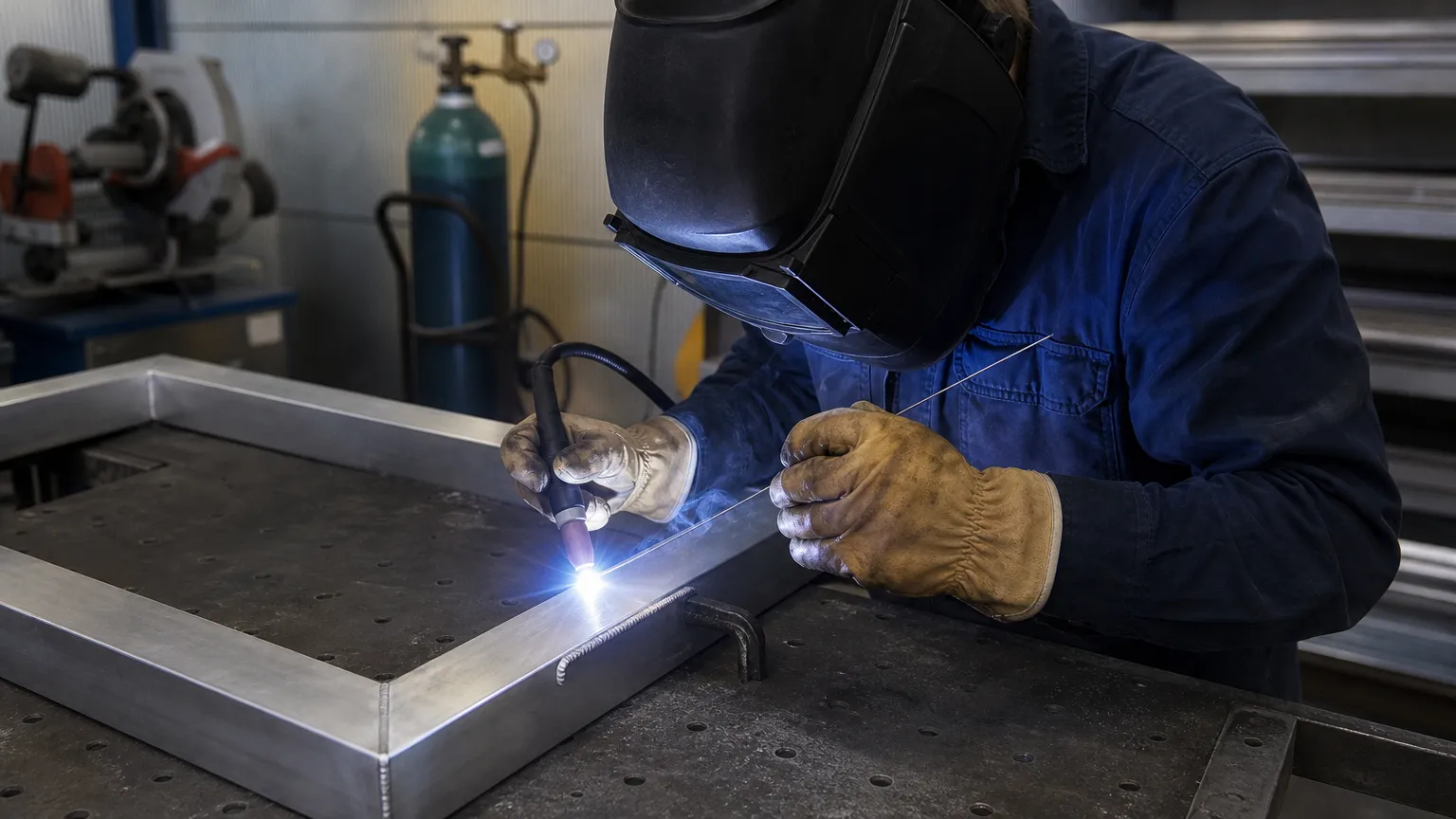
Aluminium needs TIG or a spool gun on a MIG, and clean metal, so allow for the prep. Multiply the total hours by your shop rate. Not by the wage you pay. The shop rate carries the shed, the machines and your own time. If you have not worked yours out, the shop hourly rate guide has a calculator.
How do you price consumables and powder coat?
Consumables are the small stuff that adds up. Welding wire or rod, argon, grinding and flap discs, cutting blades, tek screws, rivets, dynabolts and bags of concrete. You can price them per job, or roll a fixed amount per shop hour into your rate. Pick one and stick to it so you do not charge twice.
Powder coat is usually a subcontract. Treat it like any other bought-in item:
- Get a price from your coater for this job, by size and colour.
- Add your handling markup. You carry the risk if it comes back damaged.
- Add the hours to drop it off and pick it up.
- Check the lead time. It sets your earliest install date.
Special colours and textures can cost more and take longer than a standard colour. Ask before you quote, not after the customer has picked one.
What is the difference between margin and markup?
Markup is what you add on top of cost. Margin is the share of the price that is profit. They are not the same number, and mixing them up costs you money.
Say a job costs you $1,000. Add a 25% markup and you charge $1,250. Your profit is $250. But $250 out of $1,250 is only a 20% margin.
| Markup on cost | Margin on price | $1,000 cost sells for |
|---|---|---|
| 10% | 9.1% | $1,100 |
| 20% | 16.7% | $1,200 |
| 25% | 20% | $1,250 |
| 33.3% | 25% | $1,333 |
| 50% | 33.3% | $1,500 |
To hit a target margin, divide cost by one minus the margin. For a 20% margin: $1,000 divided by 0.8 is $1,250. Use whichever you like, but say which one it is on your quote sheet.
What else belongs on the quote?
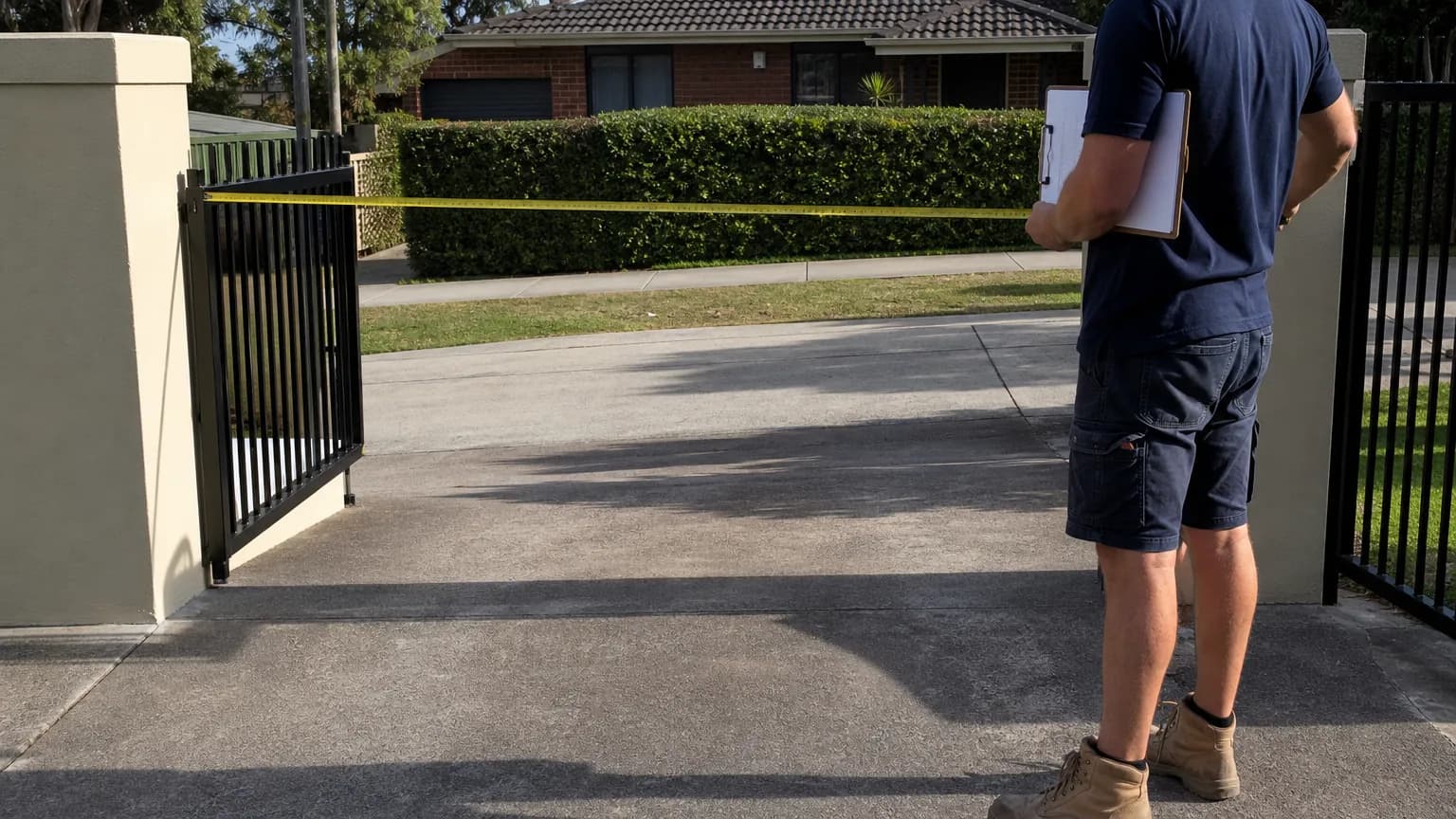
Install. Site hours for two people if it takes two. Travel both ways. Post holes, core drilling, concrete, a hired auger or a trailer. Measure the site first so there are no surprises. The measure-up guide has a checklist.
Contingency. A small line for what you cannot see. Rock in the post holes, a slab that is not where the plans say, a wall that is out of plumb. Size it to the site. A flat new slab needs less than an old yard on a slope.
Drawings and approvals. Drawing the job takes time, and changes take more. Put drawing time on the quote, and say how many revisions are included. Get the customer to sign off the drawing before you order material. That signature is what stops a size change from coming out of your pocket.
Quoting a sliding gate has its own extras: the track or cantilever kit, the motor and the safety gear. The sliding gate quote guide walks through those.
How long should a quote be valid for?
Short. Metal prices move, and so does your coater's price. For a simple job, 14 to 30 days is common. A big job with long lead times can run longer, but price in the risk.
Two habits make validity easy to enforce:
Write a date, not a number of days
"Valid until 30 November" leaves no room for argument. "Valid for 30 days" does, because nobody agrees when the 30 days started.
Say what the price assumes
List the sizes, the finish, the hardware and the site access you priced. If any of them change, the price changes too.
Common questions
Should I quote a fixed price or charge by the hour?
Customers want a fixed price for a gate or a fence. Build it from hours and material anyway, then quote the total. Keep hourly rates for repairs and jobs you cannot see until you start.
Do I charge for drawings on a fabrication quote?
Yes, if the drawing takes real time. Put it on the quote as its own line and say how many revisions are included. Extra changes after sign-off are charged on top.
Should I mark up powder coating?
Yes. You organise it, transport it and carry the risk if it comes back damaged or late. Add a handling markup to the coater's price, plus your hours for drop-off and pick-up.
How do I stop under-quoting jobs?
Quote labour by task, then record the real hours on every job and compare. Most under-quoting is the same task again and again, often clean-up, hardware fitting or install.
What if the customer changes the size after I quote?
Re-quote it. A new size changes the material, the hours and often the hardware. This is why the quote should list the sizes it was priced on and why sign-off comes before you order.
Is a 20% margin the same as a 20% markup?
No. A 20% markup on $1,000 is $1,200, which is a 16.7% margin. To get a true 20% margin you need a 25% markup, so $1,250.
Written by Harry Tolley
Harry builds CAD60 with his dad, who has run a fabrication business for 20 years. We write these guides from what goes wrong in a real shop.