On this page
- How much lighter is an aluminium gate?
- Is an aluminium gate as strong as a galvanised one?
- Which lasts longer near the coast?
- What finishes can you use on each?
- Is aluminium or galvanised metal cheaper?
- Which is harder to weld?
- Which is better for an automatic gate?
- How do aluminium and galvanised metal gates compare side by side?
- Common questions
Ask ten gate shops which metal is better and you will get ten strong opinions. Most of them are right for the gates that shop builds. The honest answer is that each metal wins at different things, and the job decides which of those things matter.
This guide puts the two side by side: weight, strength, rust, finish, cost, welding and motors. It is written for people who make gates, so it sticks to what changes on the bench and on site.
What you need to know
- Aluminium weighs about a third of what galvanised metal weighs for the same size tube.
- Galvanised metal is about three times stiffer, so an aluminium frame needs a deeper section to match it.
- Aluminium does not rust. Galvanised metal only lasts as long as its galvanising or paint does.
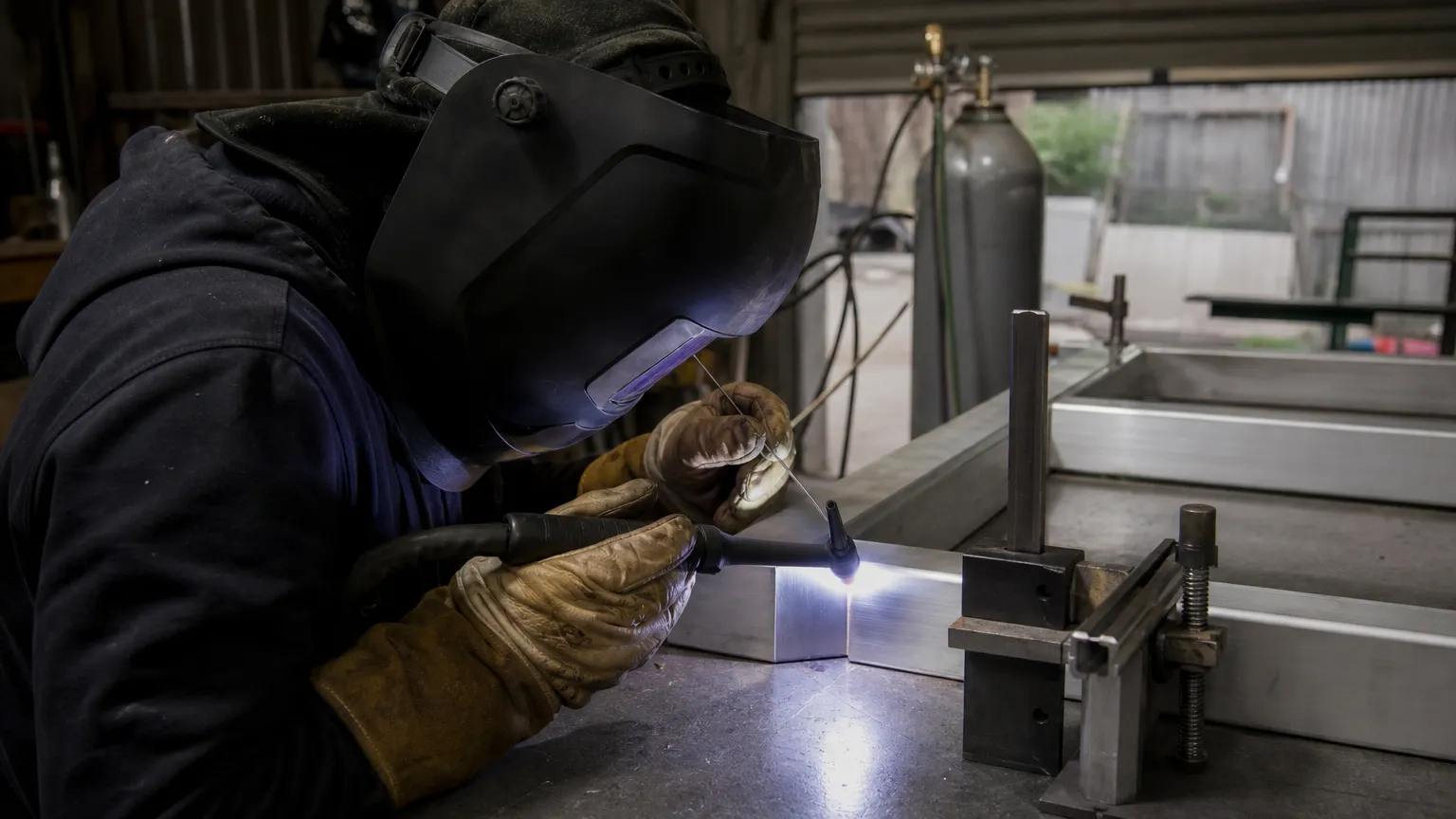
- Galvanised metal is easier and faster to weld. Aluminium welding takes more skill and the right machine.
- A lighter leaf is easier on hinges, rollers and gate motors.
How much lighter is an aluminium gate?
A lot lighter. Aluminium is about 2.7 tonnes per cubic metre. Galvanised metal is about 7.85. So for the exact same tube, the aluminium one weighs roughly a third as much.
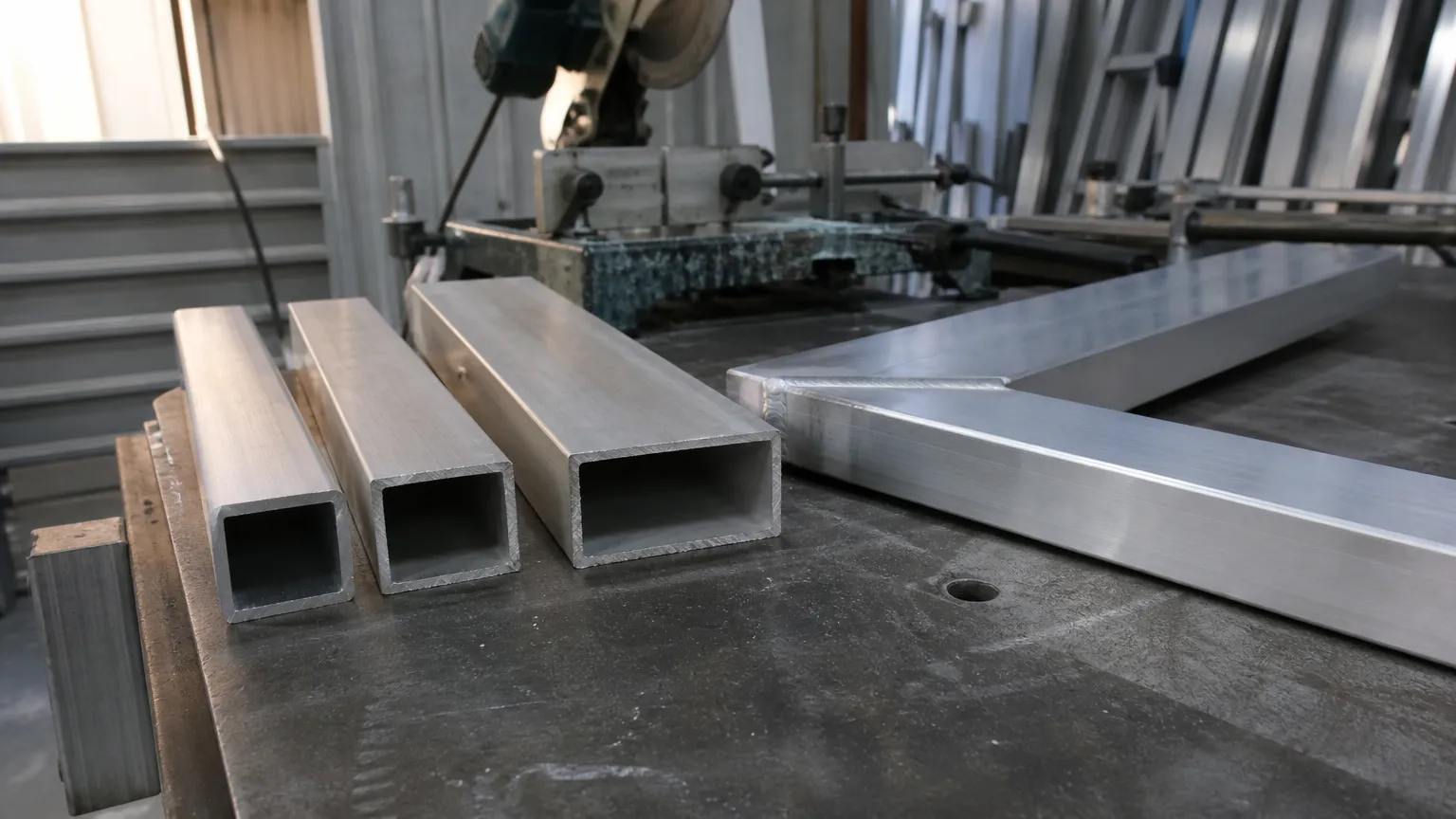
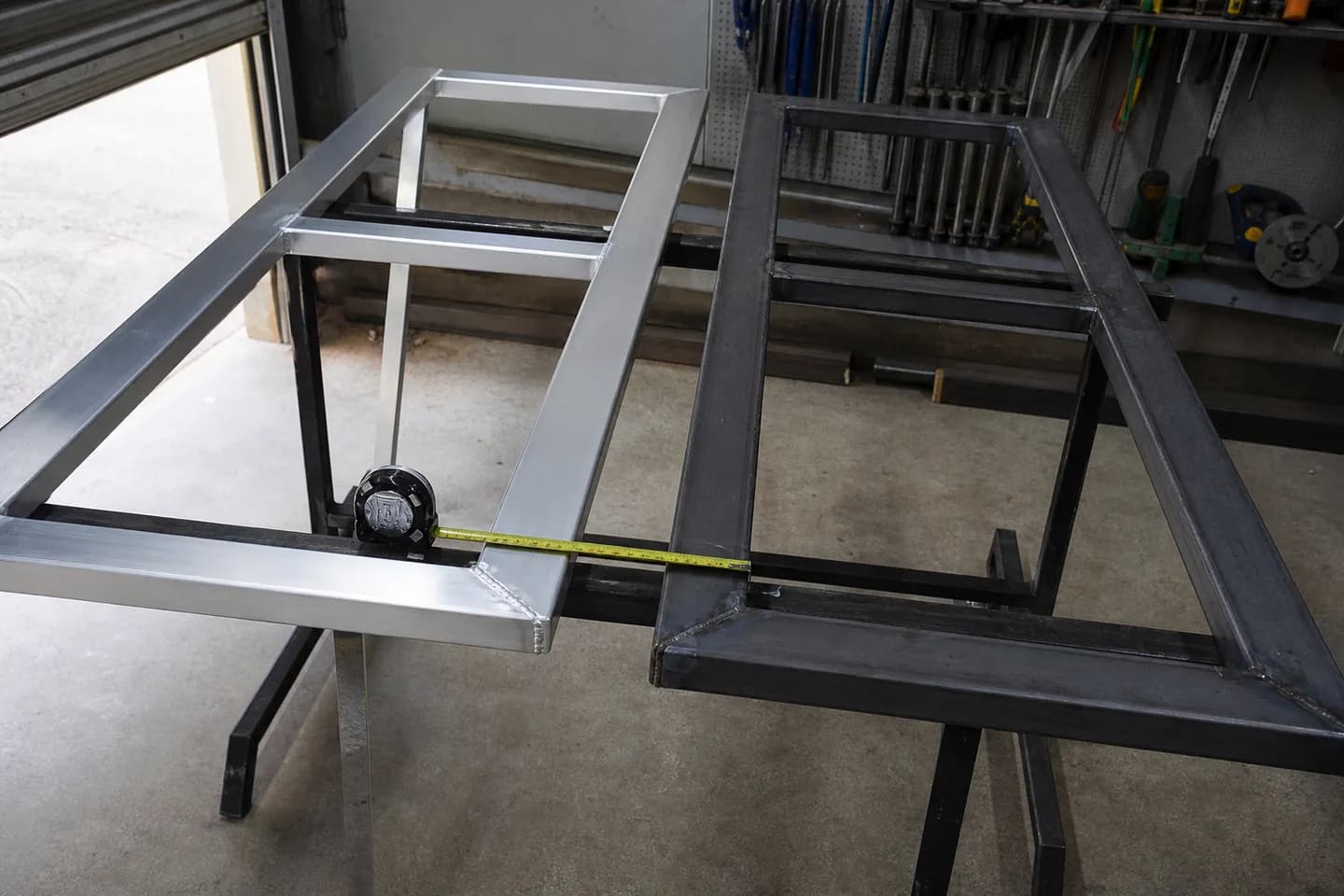
Take a 50x50x3 square hollow section (SHS). In galvanised metal it weighs about 4.4 kg per metre. In aluminium it is about 1.5 kg per metre. On a frame with 10 metres of tube, that is 44 kg against 15 kg before you add any infill.
You feel the weight in the workshop, when one person has to lift and flip the frame, and again on the truck. It also counts for the whole life of the gate, because every kilo hangs off the hinges or rolls on the wheels.
Is an aluminium gate as strong as a galvanised one?
Not for the same size tube. Galvanised metal is stronger, and it is about three times stiffer. Stiffness is the one that matters most on a gate. It is what stops a long leaf from bending, twisting and sagging.
Aluminium makes up for it with shape. A deeper section stiffens a frame much faster than a thicker wall does. That is why aluminium gates often use a 3 mm wall and go up a size, or use a deeper RHS on the long rails. The frame ends up a bit bigger but still far lighter than the galvanised metal one.
Welding is the other catch. Heat softens common aluminium alloys next to the weld. For 6061-T6, published figures put the loss in this heat-affected zone at roughly 30 to 50%. Galvanised metal loses very little. So on aluminium, keep welds away from the spots that bend the most where you can, and size the section with that in mind.
For a normal pedestrian or driveway gate, both metals are plenty strong if the frame is sized right. Strength becomes the deciding factor on security gates, very wide leaves and gates that cop a beating, like on farms and work sites.
Which lasts longer near the coast?
Aluminium, in most cases. It grows a thin oxide skin that protects it, so it does not rust. Salt air can still pit bare aluminium and lift a poor powder coat, so coastal gates want a good coating and a hose down now and then.
Galvanised metal rusts as soon as its coating fails. A gate that is hot-dip galvanised after it is welded is well protected, because the zinc covers every face, inside and out. The zinc still wears away, and it wears faster close to the surf. Scratches, drill holes and cut ends are where rust starts first.
One thing catches people out on both metals: mixing metals. Aluminium in contact with plain or zinc-plated fixings in salty, wet air can corrode at the joint. Use stainless fixings or isolating washers, and keep wet dirt and mulch off the bottom rail.
What finishes can you use on each?
Powder coat works on both and is the most common finish for gates. After that, the options split:
- Aluminium: powder coat, anodising, or left mill finish. Anodising is aluminium only. It gives a hard metallic finish that will not peel.
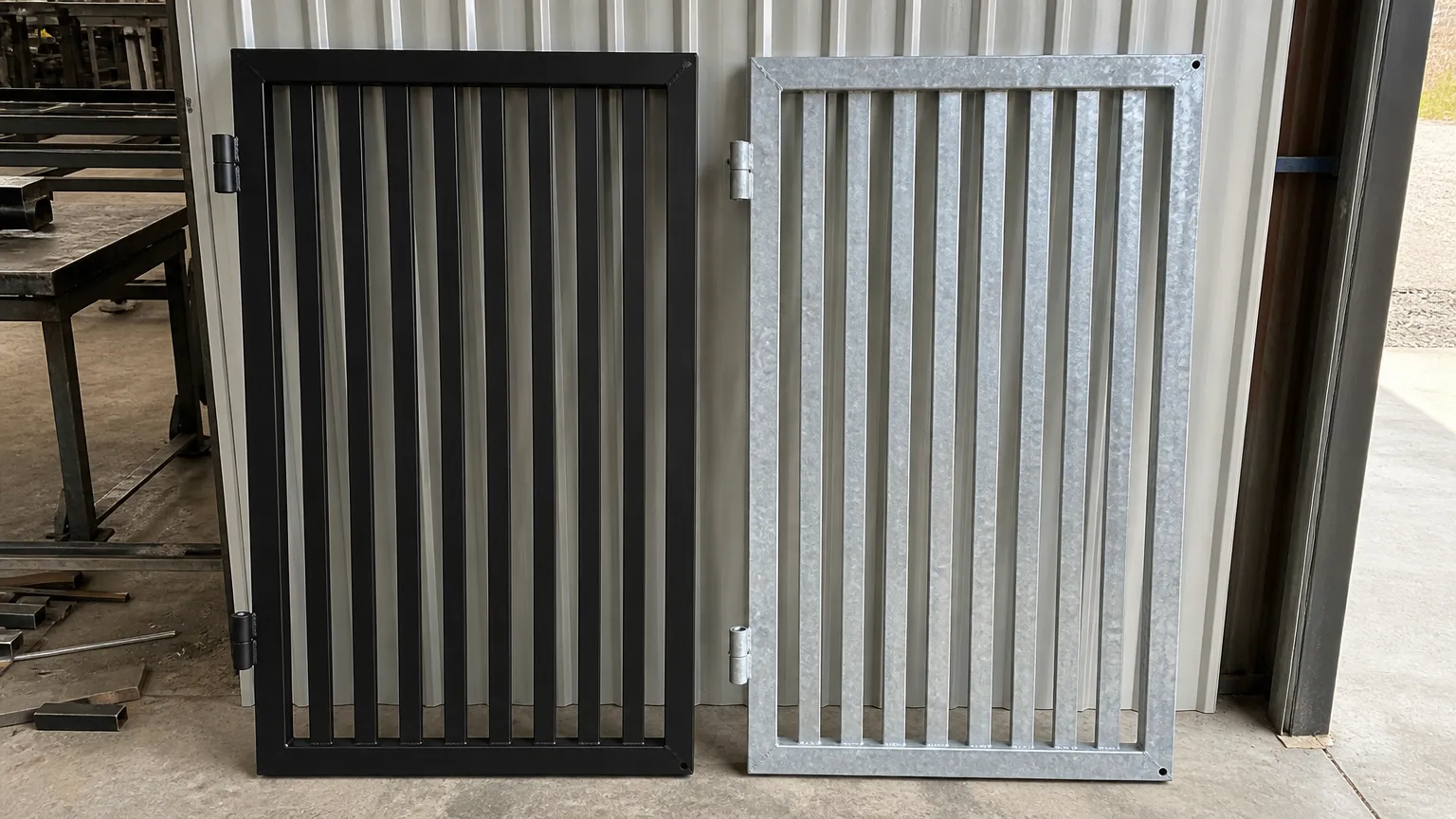
- Galvanised metal: hot-dip galvanising, pre-galvanised tube, paint, or galvanising with powder coat on top. That last one (often called a duplex coating) gives you the zinc's protection with a colour you can choose.
With pre-galvanised tube, welding burns the zinc off around each joint. Those spots need a cold galvanising paint touch-up or they rust first. A frame that is galvanised after welding does not have that problem, but the gate has to go to the galvaniser and back, which adds time.
Is aluminium or galvanised metal cheaper?
It depends what you count. Aluminium costs more per kilo. But you buy far fewer kilos, so the gap per metre of tube is smaller than people expect. Prices move with the market, so check your supplier on the day rather than going on what you paid last year.
Material is only part of it. These change the final number too:
- Welding time. Aluminium is slower to weld and needs more prep.
- Finishing. A metal gate that is galvanised and then powder coated goes through two outside trades. An aluminium gate usually goes through one.
- Handling and install. A light gate is often a one-person carry and hang.
- Hardware. A heavy leaf needs bigger hinges, rollers or a bigger motor.
For a full breakdown of what goes into a price, see how to quote a fabrication job.
Which is harder to weld?
Aluminium, by a long way. Plain metal tube welds happily with a basic MIG set and a bit of practice. Galvanised tube needs the zinc ground off at the joint first.
Aluminium needs more care:
- An AC TIG machine, or MIG with a spool gun or push-pull torch.
- Clean metal. Brush off the oxide with a stainless brush that is only used on aluminium.
- Fast hands. Aluminium pulls heat away quickly and then moves a lot as it cools, so frames twist more easily.
If you are new to it, read how to weld an aluminium gate and how to stop a gate frame warping before you start.
Which is better for an automatic gate?
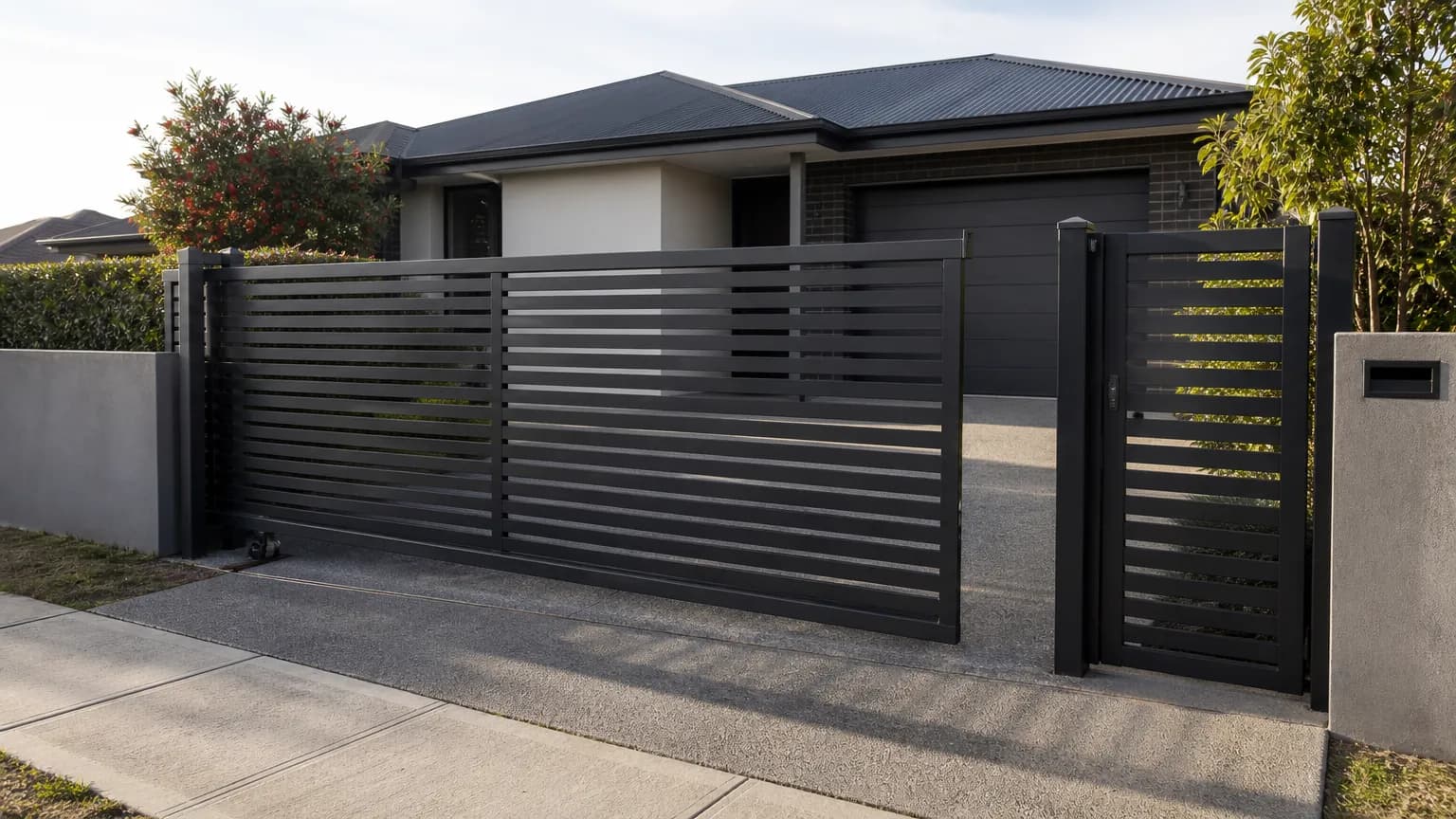
A lighter gate is easier on everything that moves it. Gate motors are rated by leaf weight and leaf length. A lighter aluminium leaf sits well inside those ratings, and the motor, hinges and rollers do less work every cycle.
Weight is not the whole load, though. Wind pushes on the infill, not the frame, so a solid slatted gate catches the same wind in either metal. On a big solid leaf, the motor still has to fight that.
A heavy galvanised metal gate also carries more momentum. It takes more force to start and stop, which is harder on the drive and the end stops. That said, galvanised metal's weight can help a sliding gate sit firmly on its track. Neither metal is wrong for automation. Pick the motor for the real leaf weight, with a margin.
How do aluminium and galvanised metal gates compare side by side?
Here is the short version. The section sizes are common starting points for a pedestrian gate, not rules. Size every frame for its own width and infill.
| What you care about | Aluminium | Galvanised metal |
|---|---|---|
| Weight (same tube) | About one third | About three times heavier |
| Stiffness (same tube) | About one third | About three times stiffer |
| Strength near welds | Drops noticeably | Barely changes |
| Rust | Does not rust | Rusts when the coating fails |
| Finishes | Powder coat, anodising | Galvanising, powder coat, paint |
| Welding | AC TIG or spool gun MIG, more skill | Basic MIG, easier |
| Cost per kilo | Higher | Lower |
| Load on hinges and motors | Light | Heavy |
| Common pedestrian frame | 40x40x3 or 50x50x3 SHS | Similar sizes in a thinner wall |
For most home gates, I'd build in aluminium: it is light, it does not rust and it powder coats well. Galvanised metal earns its place on security gates, rural and commercial gates, and any leaf that needs to be stiff and tough above all else. For more on frame sections, see RHS vs SHS for gate frames.
Common questions
Do aluminium gates rust?
No. Aluminium forms a thin oxide layer instead of rust. Salt air can still pit bare aluminium and lift a cheap coating, so a good powder coat and an occasional wash keep a coastal gate looking right.
Is a galvanised metal gate more secure than an aluminium gate?
For the same sizes, yes. Galvanised metal is harder to bend, cut or force. A well-built aluminium gate with a solid frame and a good lock is still fine for most homes. High-security sites usually go galvanised metal.
Can you weld aluminium to galvanised metal?
Not with normal workshop welding. The two metals do not fuse together. Bolt them instead, with stainless fixings and isolating washers so the joint does not corrode.
Do aluminium gates need a brace?
Wide ones often do. Aluminium flexes more than galvanised metal for the same tube, so a long leaf can rack out of square over time. A deeper frame section or a diagonal brace keeps it straight.
Can you powder coat galvanised metal?
Yes. It is called a duplex coating. The galvanising stops rust and the powder coat gives colour. The zinc needs the right prep first, or the powder coat can blister and peel.
Which metal is better for a sliding gate?
Both work. Aluminium is lighter on the track, wheels and motor. Galvanised metal suits very long or heavy-duty sliding gates where stiffness matters most. Size the bottom rail and motor for the real weight either way.
Written by Harry Tolley
Harry builds CAD60 with his dad, who has run a fabrication business for 20 years. We write these guides from what goes wrong in a real shop.