On this page
Aluminium is light, does not rust and powder coats well. It is also less forgiving to weld than the black tube most people learned on. It pulls heat away from the weld fast and grows a tough oxide skin. It also gives you no glow to warn you before it melts through.
None of that is hard once you know it. This guide covers the process, the filler, the cleaning, starting settings and the weld order for a gate frame. The numbers are starting points from the welder makers' own guides. Run a test piece on scrap of the same tube before you touch the job.
What you need to know
- TIG on AC gives the neatest welds. MIG with a spool gun or push-pull gun is much faster.
- Both use pure argon. Never the argon mix you run on black tube.
- Degrease with acetone first, then brush with a stainless brush kept only for aluminium.
- 5356 is stronger and feeds better. 4043 flows nicer and leaves less soot.
- Tack every corner, then weld in short runs on opposite corners so the frame stays flat.
Should you TIG or MIG weld an aluminium gate?
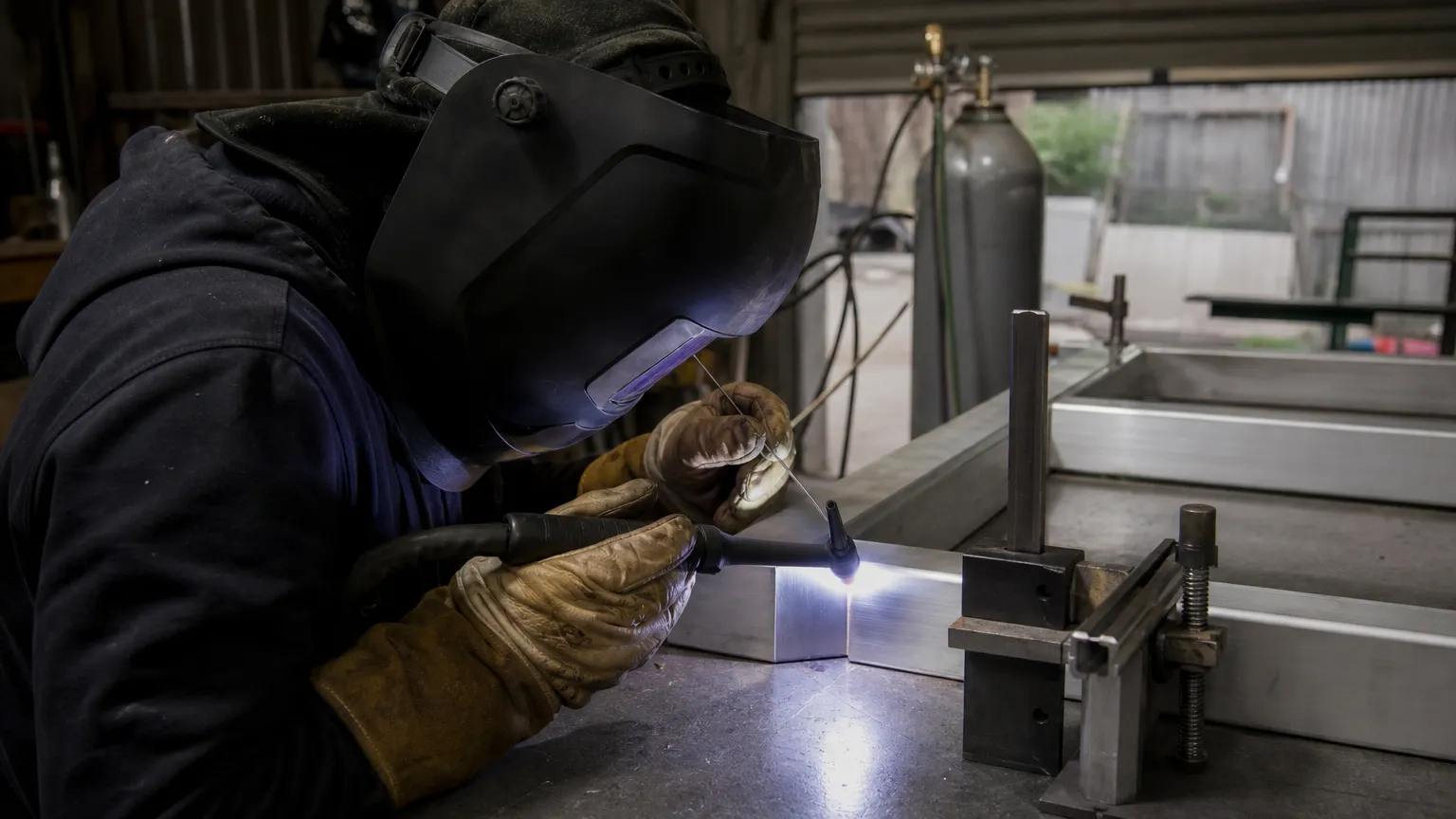
TIG welding gives the neatest bead and the most control on thin wall. You need a machine with AC output, and it is slow. On a gate with lots of short welds, like a battened leaf, the hours add up.
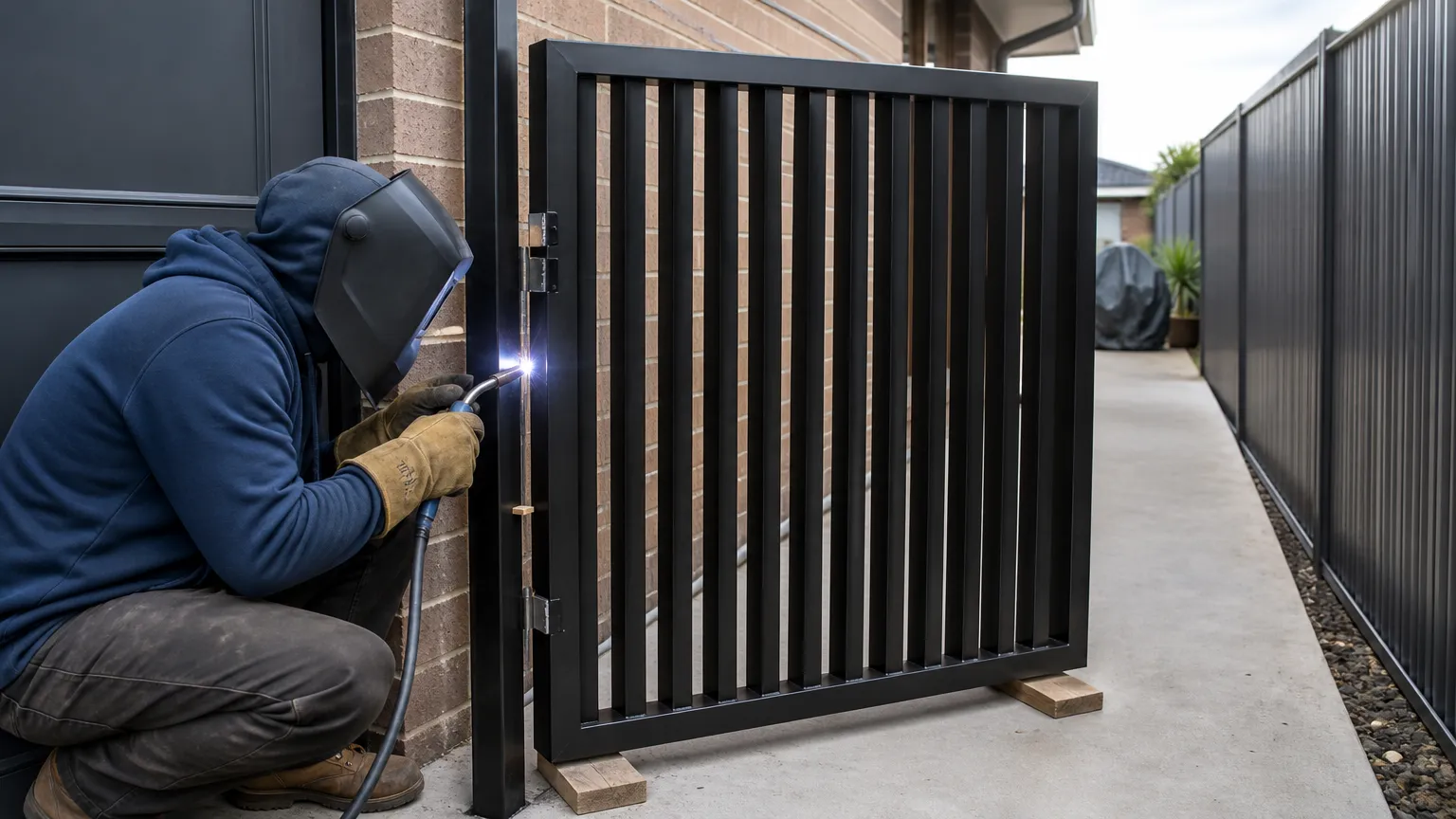
MIG welding is much faster. The problem is the wire. Aluminium wire is soft, and pushing it through a normal 3 m gun lead makes it kink and bird-nest at the rollers. There are two fixes:
- Spool gun. A small spool sits on the gun itself, so the wire only travels a few centimetres. Cheap and simple. Check what wire it takes: some smaller spool guns are only rated for 4000 series wire.
- Push-pull gun. A motor in the gun pulls while the feeder pushes. It runs a longer lead and bigger spools. It costs more and suits a shop that welds aluminium every day.
For a shop doing a few gates a week, a spool gun on a decent MIG is a fair place to start. TIG is worth it for gates where the welds stay on show.
Which filler should you use, 4043 or 5356?
Both work on the 6000 series tube most gates are made from. They behave differently.
| Filler | Good at | Watch out for |
|---|---|---|
| 4043 (silicon) | Flows and wets in easily, brighter weld, less soot, less prone to cracking | Lower shear strength, soft wire to feed, goes dark grey if the gate is anodised |
| 5356 (magnesium) | Higher shear strength, more ductile, stiffer wire that feeds better, closer colour match when anodised | More black soot to clean off, not for parts that run hot for long periods |
Hobart, a filler maker, puts the strength gap plainly: it takes about three fillet passes of 4043 to match the shear strength of one pass of 5356. They also rate 5356 as about twice as stiff, which is why it feeds better through a spool gun.
For a gate that gets a powder coat finish, the colour of the weld does not matter. It all gets covered. So the choice comes down to strength and feeding, and that is why a lot of gate shops run 5356. Clean the soot off well before it goes to the coater.
How do you clean aluminium before welding?
Aluminium is covered in a thin oxide skin that melts at a much higher heat than the metal under it. Oil and dirt cause porosity. Clean both off, in this order:
Degrease first
Wipe the joint with acetone on a clean, lint-free rag. Do the inside of the tube ends too. Brushing before you degrease just pushes the oil into the metal.
Brush the oxide off
Use a stainless wire brush kept only for aluminium. Brush the weld area and about 25 mm either side. A brush that has touched black tube will drag contamination into the weld.
Wipe off the dust
Give it one more wipe to take off the brushing dust.
Weld the same day
The oxide starts growing back straight away. Clean what you will weld today, not the whole job on Monday.
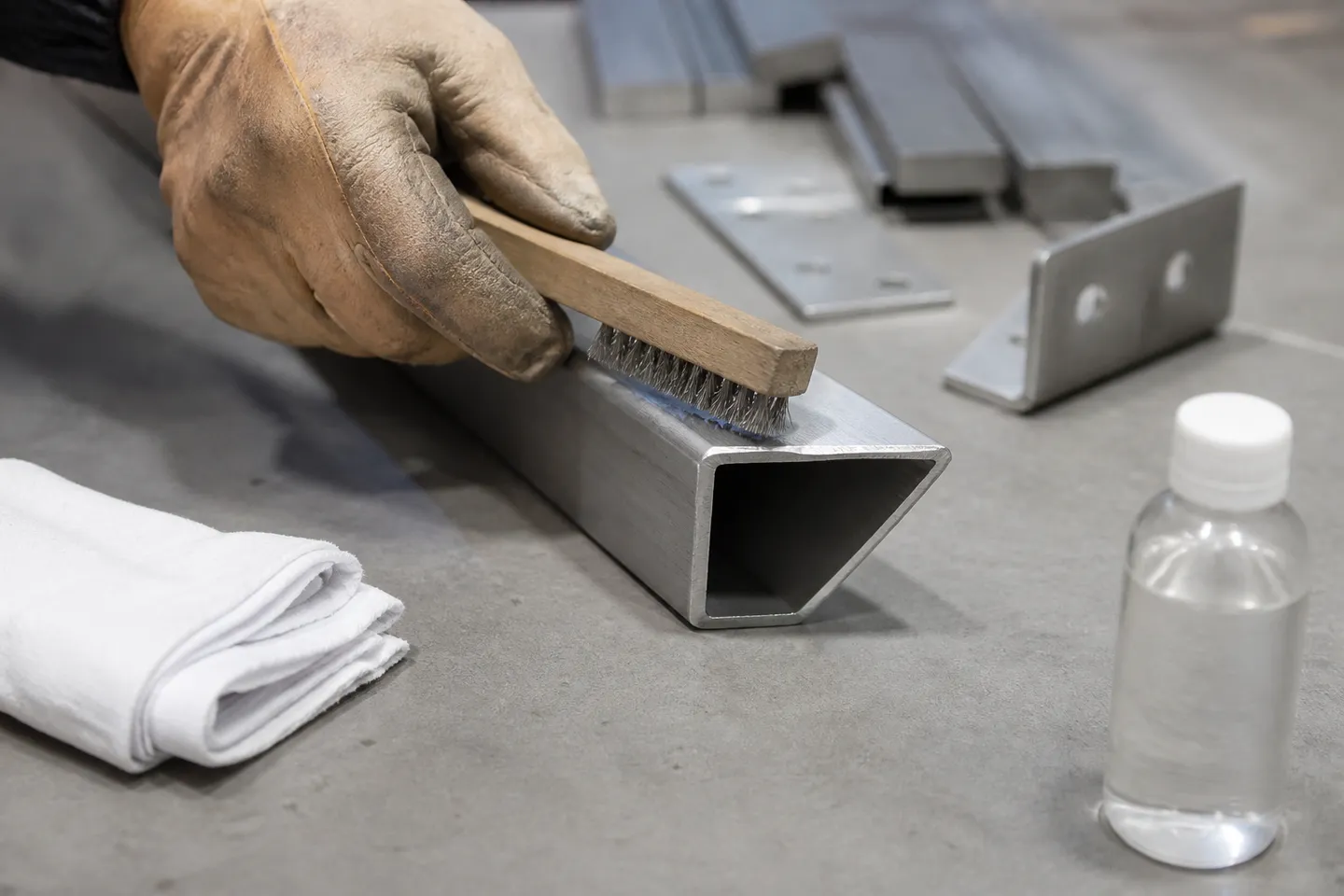
Do not use a standard grinding wheel on aluminium. Miller warns it leaves abrasive grit in the metal, which ends up in the weld. Use a flap disc made for aluminium, or a carbide burr.
What settings should you start with?
These come from Miller's published guides and a common rule of thumb for TIG amps. Machines differ, so treat them as a place to start and tune on scrap.
| Setting | TIG (AC) | MIG (spool or push-pull gun) |
|---|---|---|
| Gas | Pure argon, about 7 to 10 L/min (15 to 20 cfh). A bit more in a draught | Pure argon, start near 16 L/min (35 cfh) |
| Current | About 1 amp per 0.001 inch of wall (roughly 40 A per mm) as a start. Aluminium often wants a little more | Use the machine's chart for wire size and thickness, then tune |
| Electrode or wire | 2% ceriated tungsten, 2.4 mm (3/32 inch) for most gate work | 0.8 or 0.9 mm (0.030 or 0.035 inch) wire |
| Balance | About 70 to 80% electrode negative | Not used |
| Technique | Short arc, about the tungsten diameter | Always push, about 20 degrees. Stick-out about 12 to 20 mm |
On 3 mm wall tube that rule of thumb puts a TIG machine somewhere near 120 A to start. MIG on aluminium runs in spray transfer, so move faster than you would on black tube. Too little gas shows up as heavy black soot.
Do you need to preheat aluminium?
Not for normal gate tube. A 2 to 3 mm wall welds fine at room temperature once you have enough current.
Thick parts are different. A 10 mm hinge plate or footplate soaks up heat so fast that the start of the weld can sit on top without fusing. A gentle warm-up with a gas torch helps there and also drives off moisture.
Keep it gentle. Hobart's guidance for heat-treated alloys is no more than about 120°C for no longer than 15 minutes. Go hotter and you start undoing the heat treatment that gives the tube its strength. Use a temperature crayon to check. Your hand cannot tell 120°C from 200°C on aluminium.
How do you keep heat and distortion down?
Aluminium grows about 2.3 mm per metre for every 100°C, and it spreads heat fast along the tube. A long, hot weld on one side of a frame will pull it out of shape.
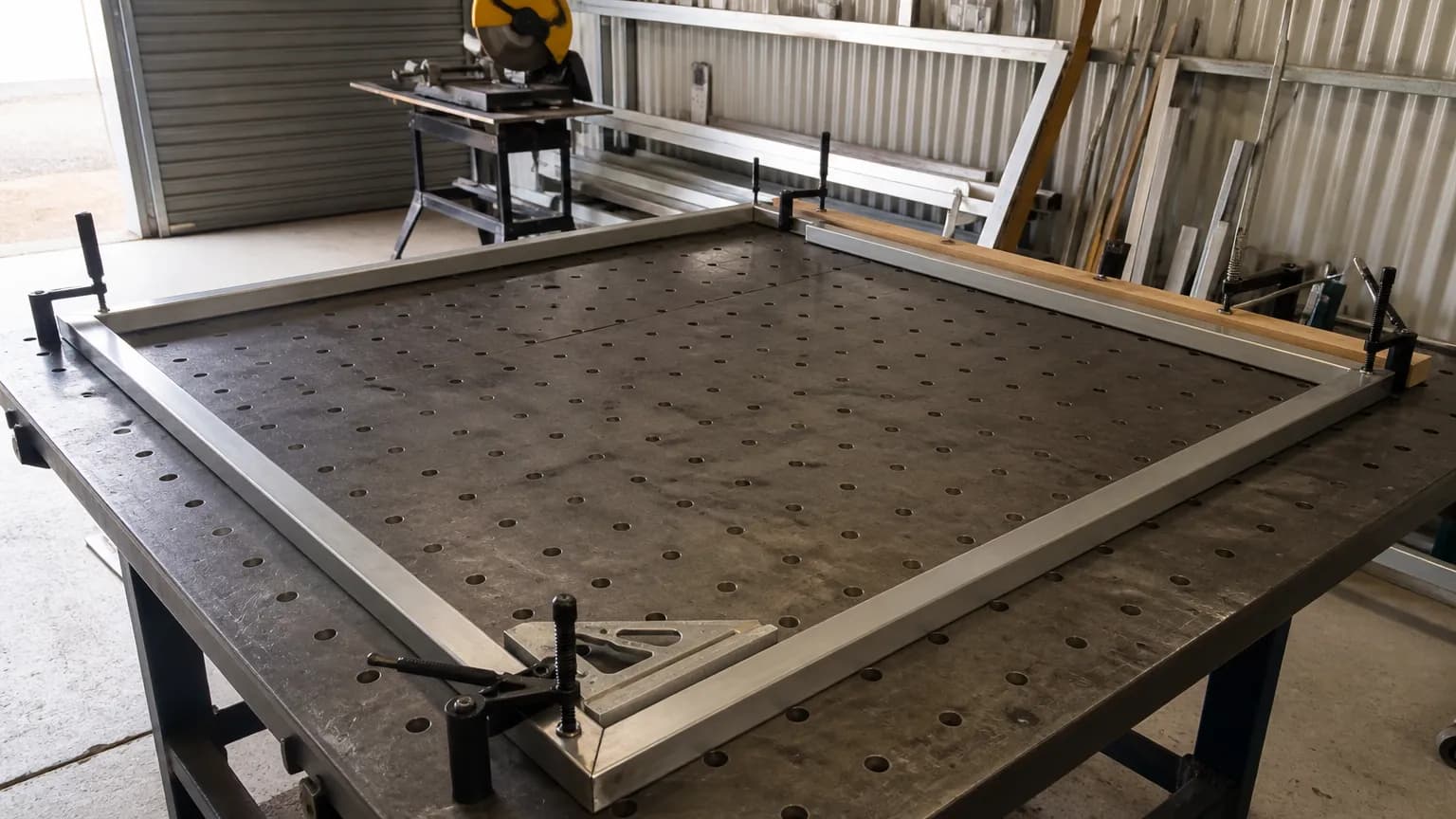
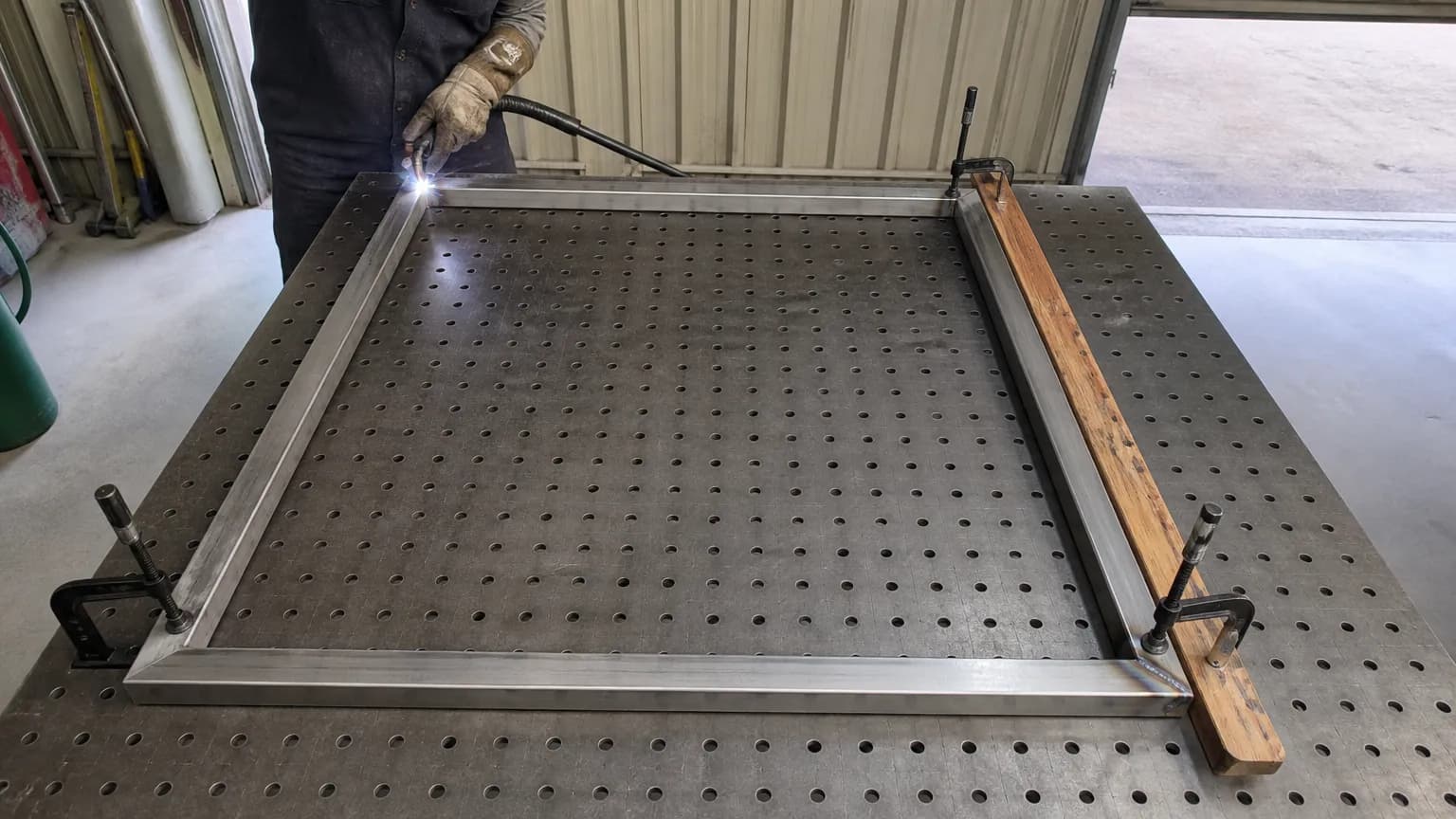
- Clamp the frame flat to a table and leave it clamped until it cools.
- Put a tack weld on every corner before you run a full weld anywhere. Check the diagonals after tacking.
- Weld in short runs. Do one face of a corner, then the same face of the opposite corner, then flip.
- On long joints like infill or a mid rail, a stitch weld puts in less heat than one long run.
- Do not make the weld bigger than the job needs. More weld means more pull.
There is a full walk-through, with a weld order diagram, in how to stop a gate frame warping when welding. For the frame as a whole, from measuring to powder coat, see how to build a metal gate frame.
What should you do after welding?
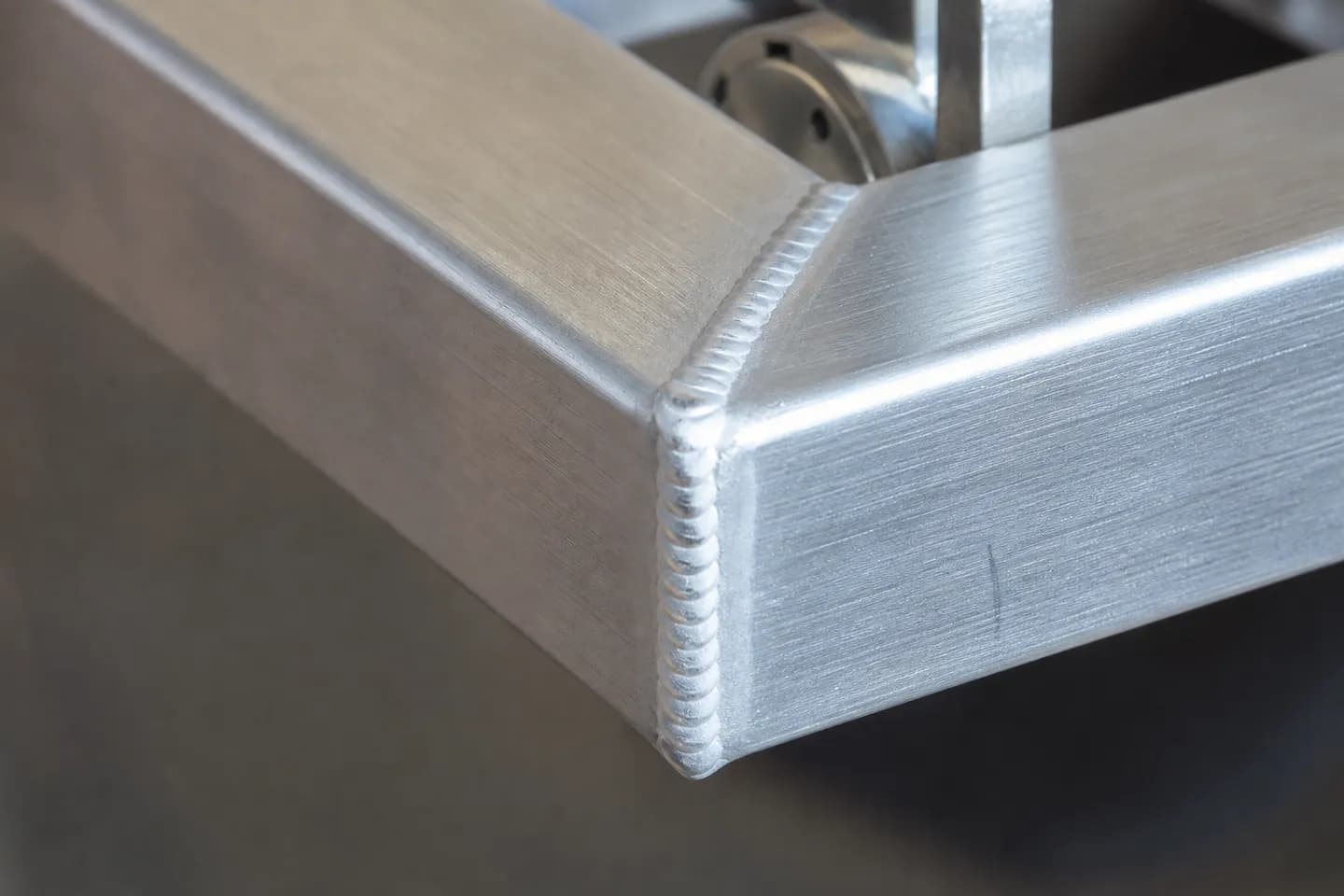
Brush the soot off while it is fresh. Check each corner for cracks at the start and end of the weld, where aluminium likes to crack if the crater was left unfilled.
Know that the metal right next to the weld is now softer than the rest of the tube. That is the heat-affected zone, and on 6000 series tube it is normal. It is one more reason to keep hinges and braces away from long runs of extra weld you do not need.
A frame that went together square stays square on site. If yours is already dropping, start with how to fix a sagging metal gate.
Common questions
Can you MIG weld aluminium without a spool gun?
Sometimes, on a machine set up for it with a short lead, a Teflon liner and U-groove rollers. Soft aluminium wire still tends to kink in a normal gun, which is why most shops use a spool gun or push-pull gun.
What gas do you use to weld aluminium?
Pure argon, for both TIG and MIG. The argon and CO2 mix used on black tube does not work on aluminium. Some shops add helium for thick plate, but gate tube does not need it.
Is 4043 or 5356 better for a powder-coated gate?
The weld colour is hidden under powder coat, so pick on strength and feeding. 5356 is stronger in shear and feeds better through a spool gun. 4043 flows easier and leaves less soot. Many gate shops run 5356.
Why are my aluminium welds black and sooty?
Usually too little gas, a dirty joint or the gun laid down too flat. Check your argon flow, degrease and brush the joint, and push the gun at about 20 degrees. 5356 also makes more soot than 4043.
Do you need to preheat aluminium gate tube?
No, not 2 to 3 mm wall tube. Only thick parts like 10 mm hinge plates need a gentle warm-up. Keep heat-treated alloys under about 120°C for no more than 15 minutes.
Can you weld a stainless hinge onto an aluminium gate?
No. Stainless and zinc-plated hinges will not fuse with aluminium using normal welding. Use an aluminium weld-on hinge or bolt a hinge on instead.
Written by Harry Tolley
Harry builds CAD60 with his dad, who has run a fabrication business for 20 years. We write these guides from what goes wrong in a real shop.