On this page
- What is a balustrade?
- What is a handrail?
- What are the parts of a balustrade?
- Can the top rail also be the handrail?
- What types of balustrade are there?
- Where do you use a balustrade and where a handrail?
- How are balustrades and handrails fixed?
- Baluster, banister, balustrade: which word is which?
- Common questions
People use the two words as if they mean the same thing. Builders, architects and clients all do it. Then the quote goes out for one and the client wanted the other.
The short version: a balustrade is a barrier along an edge. A handrail is something you hold. This guide covers what each one is made of, the main types and where you find them, so the drawing and the quote match what the client has in mind.
What you need to know
- A balustrade is the whole barrier: posts, rails and infill along an open edge.
- A handrail is a rail you grip, often on brackets off a wall, with nothing below it.
- The top rail of a balustrade can double as the handrail on some jobs.
- Common balustrade types are glass, aluminium picket, wire and slat.
- Stairs often have both: a balustrade on the open side and a handrail on the wall side.
What is a balustrade?
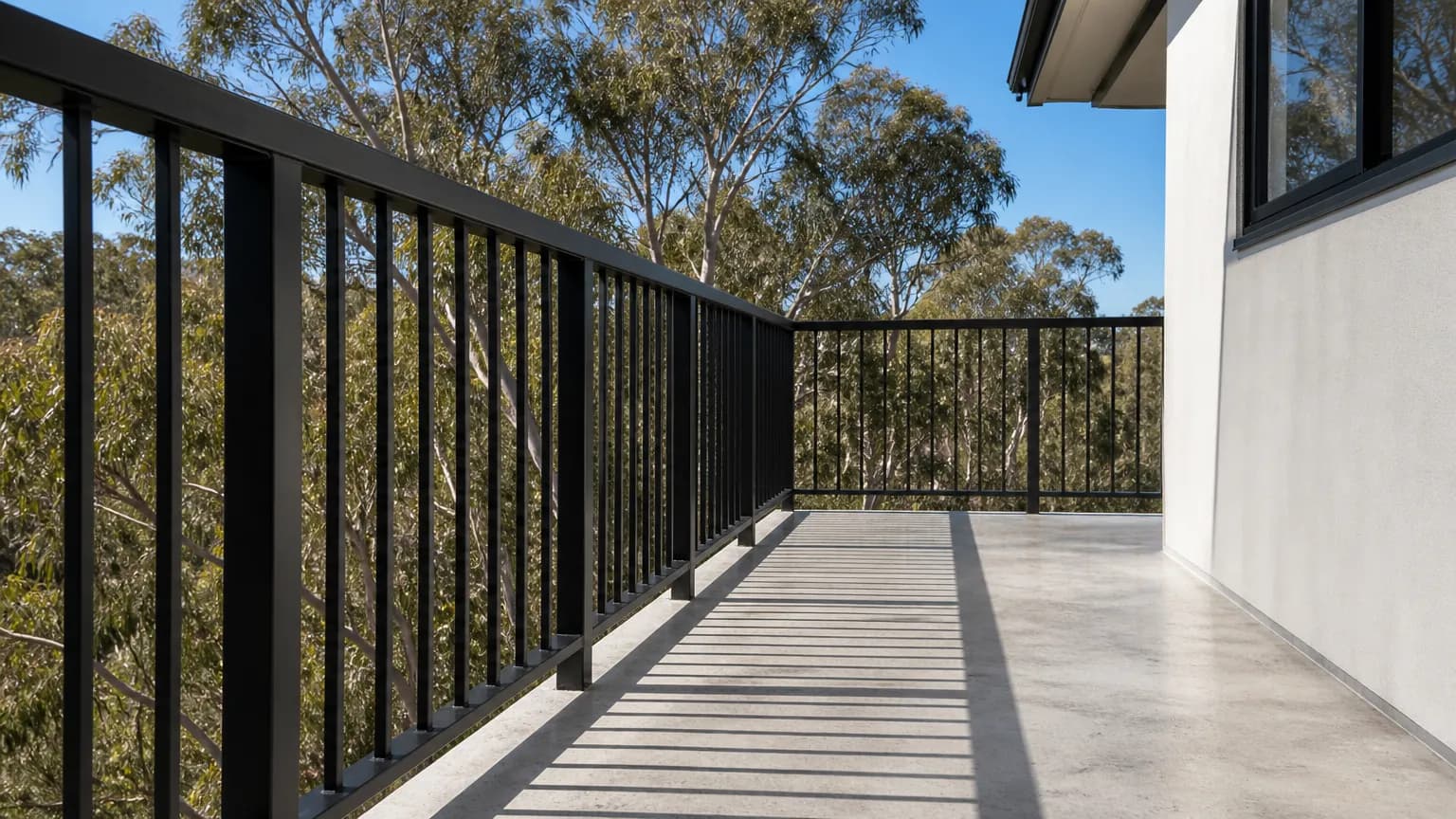
A balustrade is a barrier that runs along an open edge. Think of the edge of a deck, a balcony, a mezzanine or the open side of a stair. Its job is to stop people walking or falling off that edge.
It is a full assembly. It has posts fixed to the floor or the edge of the slab, a rail along the top, and infill that fills the space between the posts. The infill can be bars, glass, wire or slats.
The name comes from balusters: the short vertical bars or turned posts in older balustrades. A row of balusters with a rail on top is a balustrade. Modern ones often have no balusters at all, just glass or wire, but the name stuck.
What is a handrail?
A handrail is a rail you hold for support while you walk. You find them on stairs, ramps and along walkways. It is usually a round or oval tube, sized so a hand can wrap around it.
A handrail does not fill the space below it. It can be fixed to a wall with brackets, or held up on short posts (stanchions) from the floor. Either way, it is a single rail, not a barrier.
What are the parts of a balustrade?
Every balustrade is built from the same handful of parts. The names change a bit from shop to shop, but these are the common ones:
| Part | What it does |
|---|---|
| Posts | Hold the whole run up. Fixed to the floor, the slab edge or the stringer. |
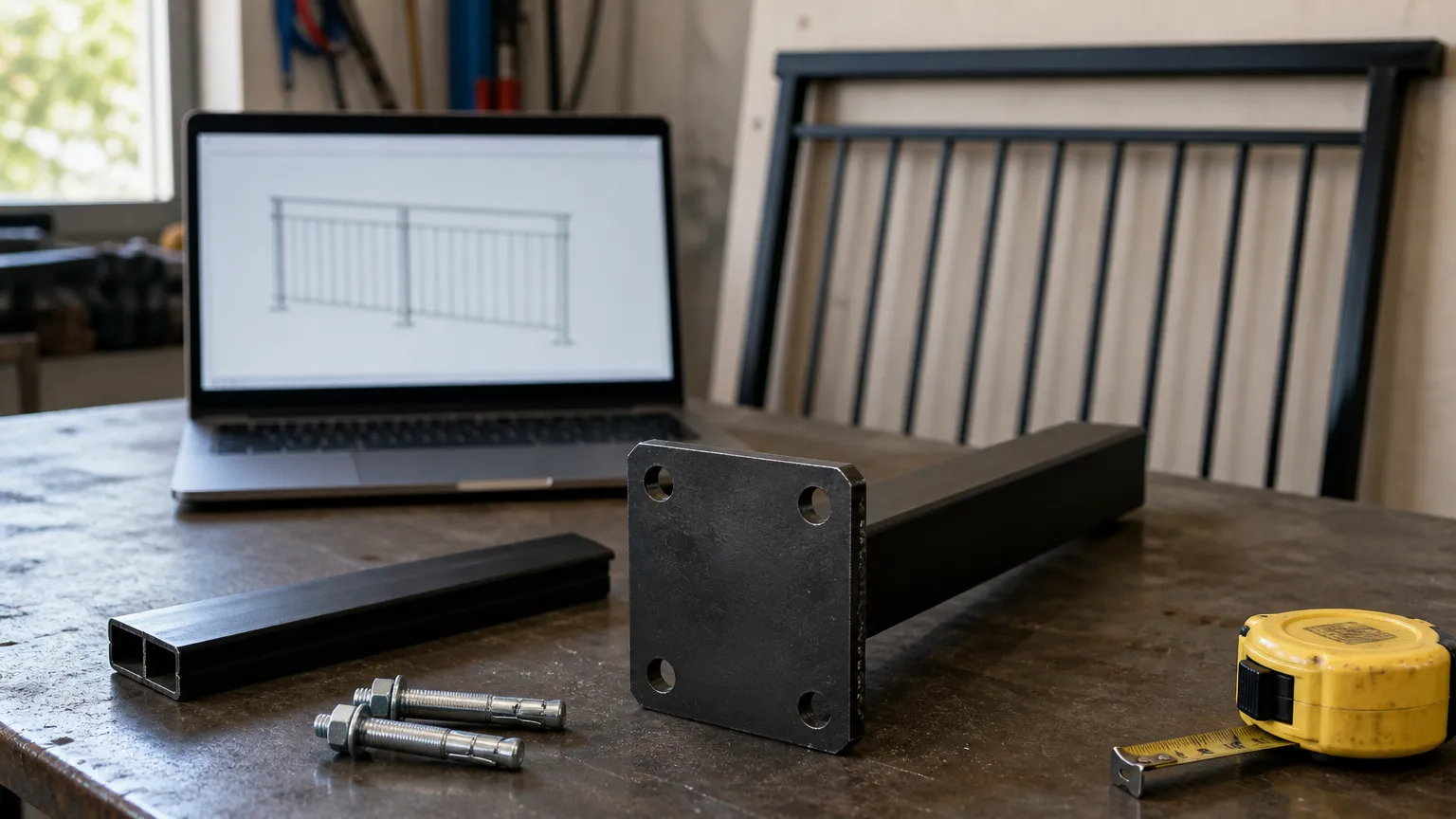
| Base plates or spigots | Fix the posts or glass panels down. Bolted, cast in or core drilled. |
| Top rail | Ties the posts together along the top. Flat, square or round. |
| Bottom rail | Holds the bottom of the infill. Not every balustrade has one. |
| Mid rail | An extra rail partway up on tall or long runs. |
| Infill | Fills the space: bars, glass, wire, slats or a laser-cut sheet. |
| Handrail and brackets | An optional round rail you grip, mounted on or beside the balustrade. |
See the glossary for top rail, bottom rail and mid rail.
Can the top rail also be the handrail?
Often, yes. On a simple deck or balcony, the top rail of the balustrade is the only thing to hold. If it is a shape a hand can grip, it does both jobs.
A flat or wide top rail is easy to lean on but hard to grip. So on stairs and some balconies you see a separate round handrail as well. It sits on brackets fixed to the posts, or through the glass on a glass balustrade, just below or in front of the top rail.
On a frameless glass balustrade there may be no top rail at all. The glass stands on its own, and a handrail can be added on top or on the side if the job needs one.
What types of balustrade are there?
Balustrades are mostly named after their infill. These are the four you will be asked for most:
| Type | Infill | Look and feel |
|---|---|---|
| Glass | Toughened glass panels on spigots, a base channel or between posts | Clear view, modern, more cleaning |
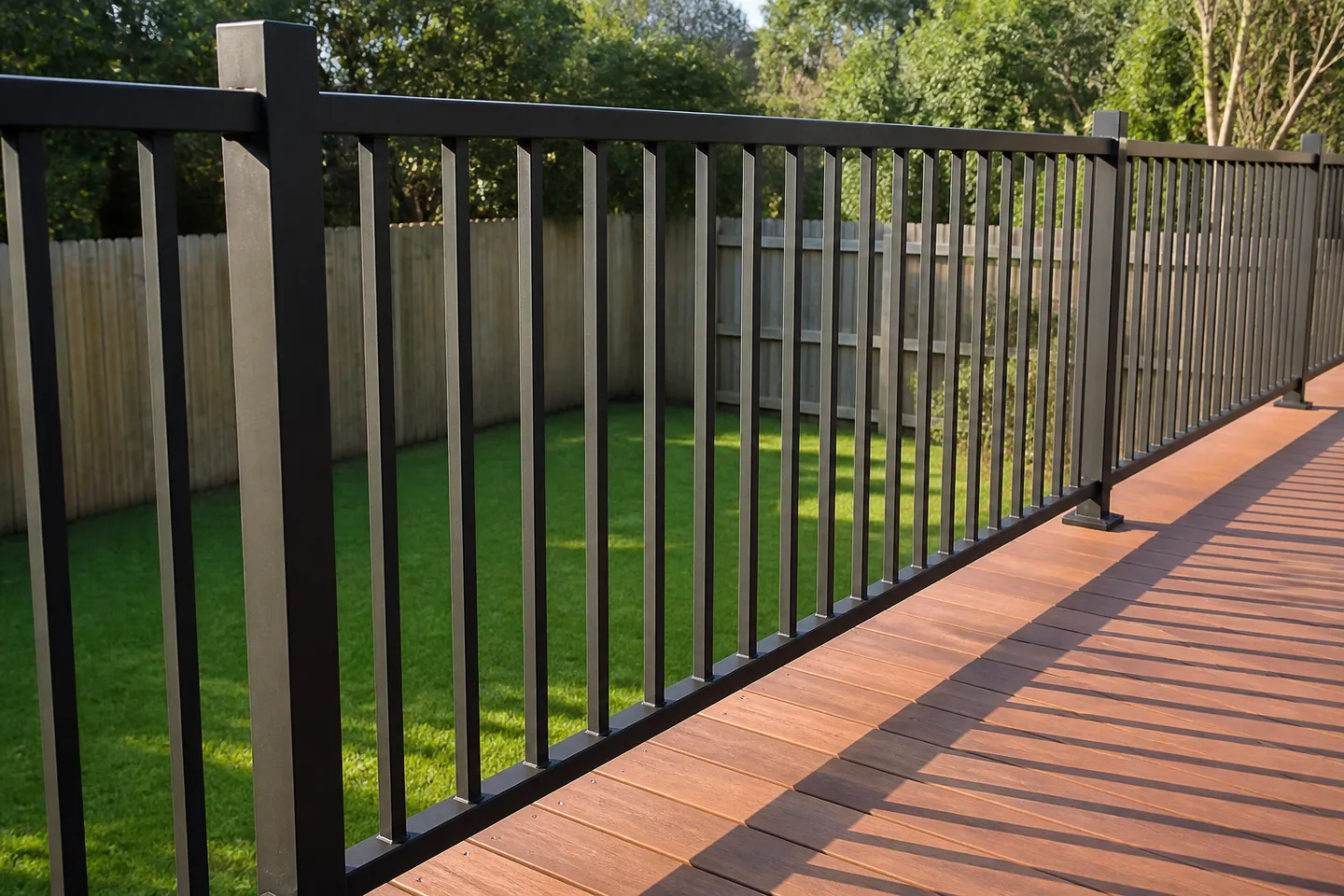
| Aluminium picket | Vertical bars between a top and bottom rail | Classic, tough, easy to powder coat |
| Wire | Stainless wires run through or between posts and tensioned | Light and open, keeps the view |
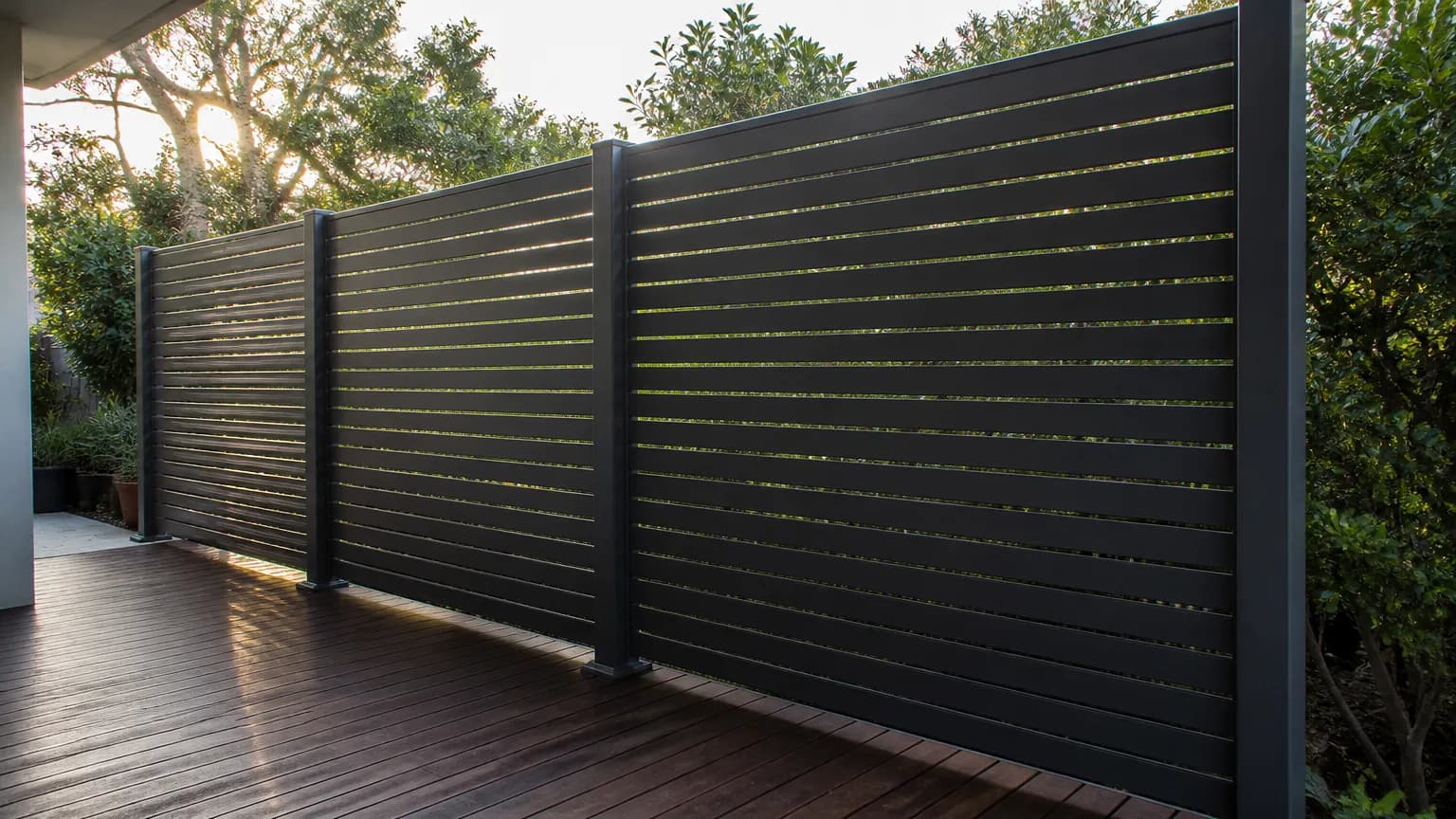
| Slat | Horizontal or vertical aluminium slats | More privacy, matches slat fences and screens |
Glass comes in two styles. Frameless glass has no posts, just the panels on spigots or in a channel. Semi-frameless has posts between the panels with clamps holding the glass. Slat balustrades use the same slats as a screen. If you are spacing them, the slat gap guide shows the maths.
Where do you use a balustrade and where a handrail?
Use a balustrade wherever there is an open edge people could walk off. Decks, balconies, landings, mezzanines, retaining walls beside a path and the open side of a stair.
Use a handrail where people need something to hold while they move. Stairs and ramps are the big ones, along with long walkways and the wall side of a stair.
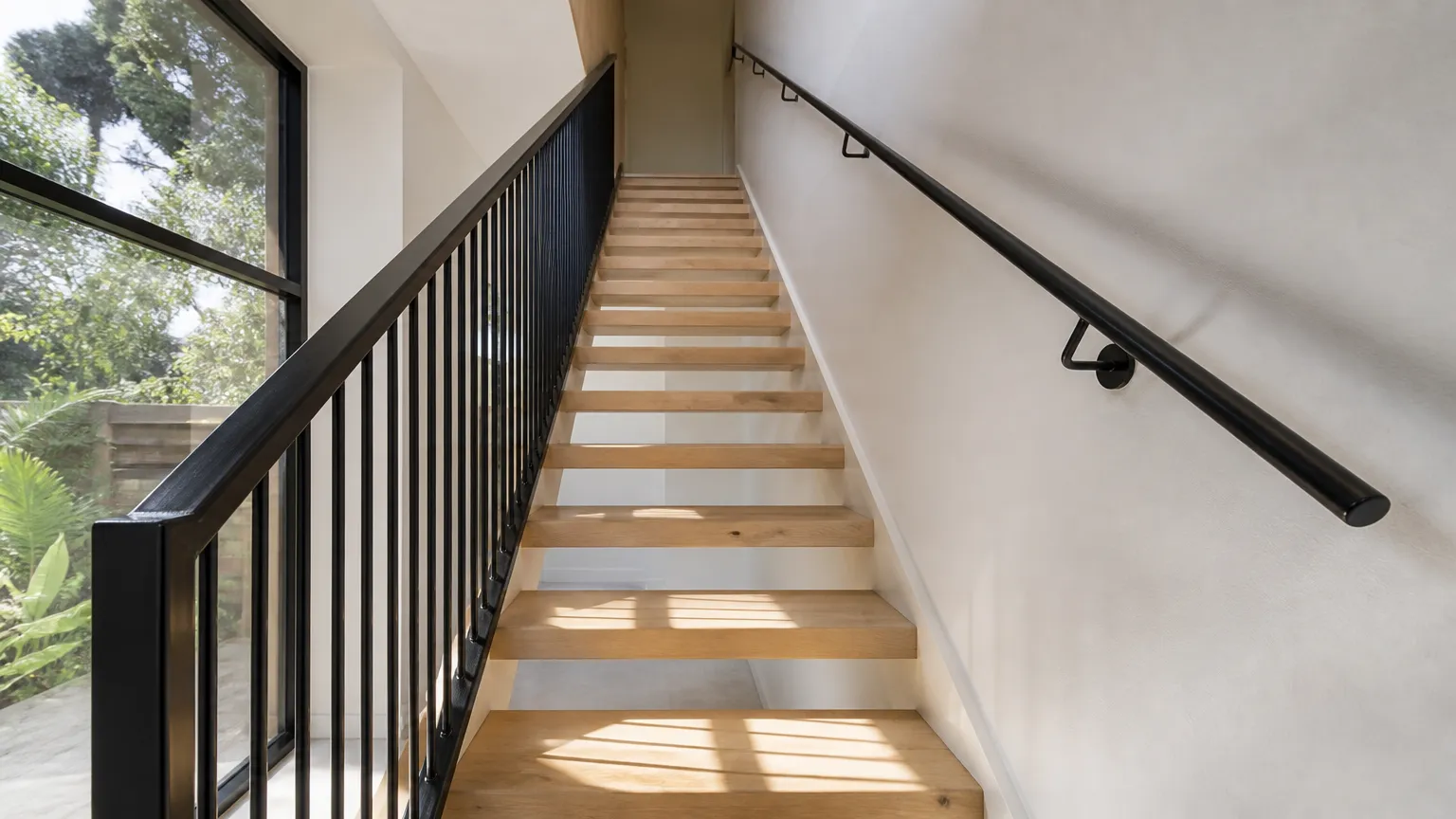
A lot of stairs get both:
- A balustrade on the open side, raked to follow the stair.
- A handrail on the wall side, on brackets.
A stair that runs between two walls has no open edge, so it may only need a handrail. A Juliet balcony sits across a door opening and is a short balustrade, not a handrail.
How are balustrades and handrails fixed?
Balustrade posts are fixed in one of a few ways:
- Top fixed on a base plate bolted down with chemical anchors or dynabolts.
- Side mounted to the face of a slab, beam or stringer. See side-mount post.
- Core drilled into holes drilled in the concrete and grouted. See core-drilled post.
- Spigots for glass, which grip each panel near its bottom. See spigot mount.
Handrails are simpler. On a wall they sit on brackets screwed or anchored into the wall. Away from a wall they sit on stanchions bolted to the floor or the stair. For how to put all this on paper, see how to draw a balustrade, and balustrade design software if you are picking a tool.
Baluster, banister, balustrade: which word is which?
- Baluster: one vertical bar or post in the infill.
- Balustrade: the whole barrier, balusters and rails together.
- Banister: a loose, everyday word. Some people mean the handrail on a stair, some mean the whole stair balustrade.
- Railing: another everyday word for a balustrade, used more for metal ones.
On a drawing or a quote, stick to balustrade and handrail. They are the clearest, and the builder will know exactly what you mean.
Common questions
Is a railing the same as a balustrade?
Mostly, yes. Railing is the everyday word, balustrade is the trade word. Both mean a barrier of posts, rails and infill along an edge. On a drawing, balustrade is clearer.
Is a banister a handrail or a balustrade?
It depends who is talking. Many people use banister for the rail you hold on a stair. Others use it for the whole stair balustrade. Ask the client which they mean.
Does a stair need a balustrade or a handrail?
It depends on the stair. An open side usually gets a balustrade, and a wall side usually gets a handrail on brackets. Many stairs have both, one on each side.
What is the rail on top of a glass balustrade called?
A top rail or cap rail if it sits on the glass. If it is a round rail on brackets fixed through or beside the glass, it is a handrail. Frameless glass can also have no rail at all.
What is a stanchion on a balustrade?
A stanchion is a post. The word is used most for the short posts that hold up a handrail, or the posts on a wire or glass balustrade.
What metal are most balustrades made from?
Powder-coated aluminium is the most common for homes, because it is light and does not rust. Stainless is popular for wire and glass fittings, and galvanised posts turn up on heavier commercial work.
Written by Harry Tolley
Harry builds CAD60 with his dad, who has run a fabrication business for 20 years. We write these guides from what goes wrong in a real shop.